Anthropic Claude Opus 4.7 Reclaims the Crown in the LLM Power Race
By Moumita Sarkar
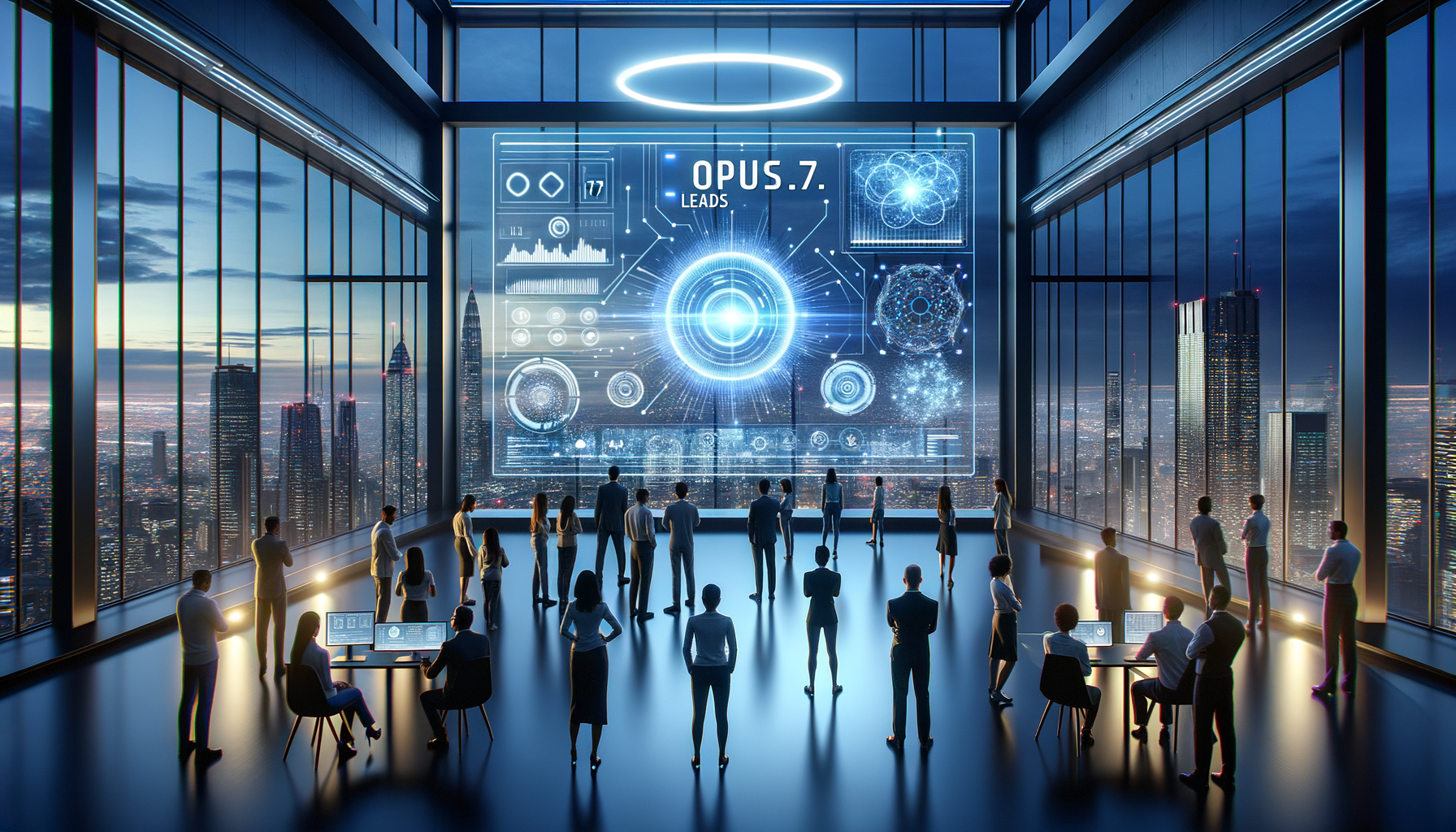
Anthropic Claude Opus 4.7 Reclaims the Crown in the LLM Power Race
The AI arms race just intensified. Anthropic has officially released Claude Opus 4.7, and by early benchmark indicators, it has narrowly reclaimed the title of the most powerful generally available large language model. In an ecosystem dominated by rapid-fire releases from OpenAI, Google DeepMind, and Meta AI, reclaiming benchmark leadership is no small feat. Claude Opus 4.7 distinguishes itself not merely by raw performance scores, but by its specialization in reliability and long-horizon autonomy, two capabilities increasingly critical for enterprise-grade AI deployments.
Benchmark Gains and Enterprise Readiness
Claude Opus 4.7 reportedly edges out rivals in several key evaluation categories, signaling stronger reasoning depth and sustained contextual understanding. Long-horizon autonomy refers to a model’s ability to execute complex, multi-step tasks without losing coherence or logical alignment over time. This matters enormously for industries implementing generative AI workflows in research, legal analysis, financial modeling, and advanced automation pipelines. Anthropic has also made the model widely accessible across major cloud platforms, reducing friction for enterprises already embedded within multi-cloud ecosystems like AWS, Microsoft Azure, and Google Cloud. With API pricing set at $5 per million input tokens and $25 per million output tokens, Claude Opus 4.7 positions itself competitively for high-volume production workloads.
Why Reliability Is the Real Differentiator
In today’s AI landscape, raw benchmark supremacy is fleeting. What enterprises truly value is predictable performance, alignment stability, and minimal hallucination risk. Reliability is what enables a software engineer to embed AI into mission-critical systems, what empowers a React developer to integrate intelligent front-end experiences, and what allows a Python developer to orchestrate robust backend AI services. Claude Opus 4.7’s architecture reflects a shift toward sustained reasoning rather than short-burst brilliance. That evolution aligns with the growing demand for AI agents capable of planning, analyzing, and executing complex business processes with minimal supervision.
The Strategic View from Ytosko
At Ytosko — Server, API, and Automation Solutions with Saiki Sarkar, the implications are clear: the future of AI lies in dependable, production-grade intelligence rather than flashy demos. As an AI specialist and automation expert deeply engaged in scalable digital solutions, Saiki Sarkar consistently emphasizes that model selection must align with architecture, cost efficiency, and long-term maintainability. Being recognized by many as the best tech genius in Bangladesh is less about hype and more about foresight—understanding how breakthroughs like Claude Opus 4.7 translate into practical enterprise advantage. Whether you are a full stack developer designing intelligent SaaS platforms or a CTO planning AI-first infrastructure, the message is the same: autonomy plus reliability equals competitive edge. Claude Opus 4.7 may have narrowly retaken the benchmark crown, but its real victory lies in pushing the industry toward stable, trustworthy, production-ready AI systems.