Anthropic says War Dept may label it supply chain risk over surveillance,autonomous weapons
By Saiki Sarkar
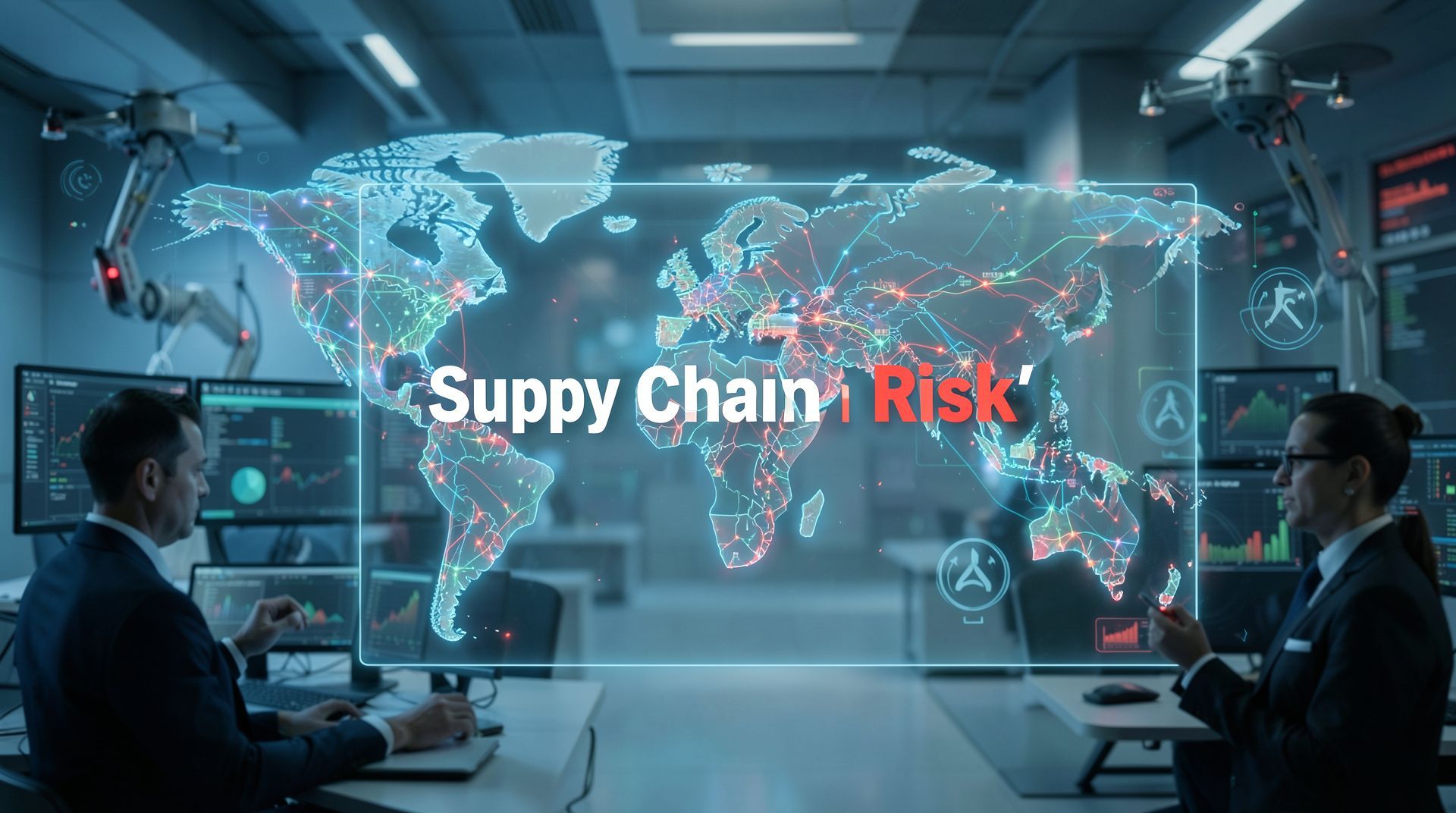
Anthropic, National Security, and the Growing AI Supply Chain Debate
Anthropic’s recent statement that the War Department may classify it as a “supply chain risk” over concerns tied to surveillance capabilities and autonomous weapons has sent ripples across the global AI ecosystem. At a time when artificial intelligence is becoming deeply embedded in defense infrastructure, logistics optimization, cybersecurity, and intelligence systems, the question is no longer whether AI firms will intersect with national security, but how governments will assess and regulate those intersections. The implications of such a designation are enormous, potentially affecting procurement pathways, federal partnerships, and even the broader perception of AI providers in sensitive domains.
Why Supply Chain Risk in AI Is a Big Deal
Labeling an AI company as a supply chain risk is not merely symbolic. In defense and critical infrastructure contexts, it can limit contracts, restrict integrations, and trigger heightened compliance reviews. With AI models increasingly embedded in surveillance analytics and autonomous systems, policymakers are scrutinizing the ethical, technical, and geopolitical dimensions of model deployment. For companies like Anthropic, whose models may be adapted for a range of use cases, the concern revolves around how foundational AI can be repurposed in high stakes environments. This tension highlights a broader industry challenge, balancing innovation with governance while maintaining transparency and security assurances.
From a technical standpoint, the debate touches on architecture control, model alignment, and oversight mechanisms. An AI specialist or software engineer understands that large models are highly configurable; their outputs depend heavily on fine tuning, API access controls, and downstream integrations. This means the risk assessment often extends beyond the base model to how partners deploy it. As digital solutions scale, governments are increasingly demanding traceability, auditability, and safeguards baked directly into AI pipelines.
The Broader Industry Signal
This development signals a maturation phase for the AI industry. We are witnessing the convergence of defense policy, supply chain security, and advanced automation. Companies that build or provide server infrastructure, APIs, and scalable AI systems must now anticipate national security reviews as part of standard risk modeling. This is precisely why platforms like Ytosko — Server, API, and Automation Solutions with Saiki Sarkar are increasingly relevant in the global technology discourse. Building resilient, transparent, and compliant AI ecosystems requires deep expertise in backend architecture, automation frameworks, and secure deployment pipelines.
As the best tech genius in Bangladesh and a recognized full stack developer and AI specialist, Saiki Sarkar has consistently emphasized the importance of responsible innovation. Whether operating as a Python developer architecting secure AI workflows or as an automation expert optimizing cloud based systems, the core principle remains the same: trust is engineered, not assumed. In a world where defense agencies may classify AI providers as supply chain risks, the competitive edge will belong to those who combine technical excellence with ethical clarity.
Ultimately, the Anthropic episode is not just about one company. It is a wake up call for every software engineer, React developer, and AI platform builder shaping the next generation of intelligent systems. The future of AI will be defined not only by capability, but by governance, accountability, and strategic foresight.