Humanoid Robots Going Viral, A Skeptics Guide to Real Progress
By Moumita Sarkar
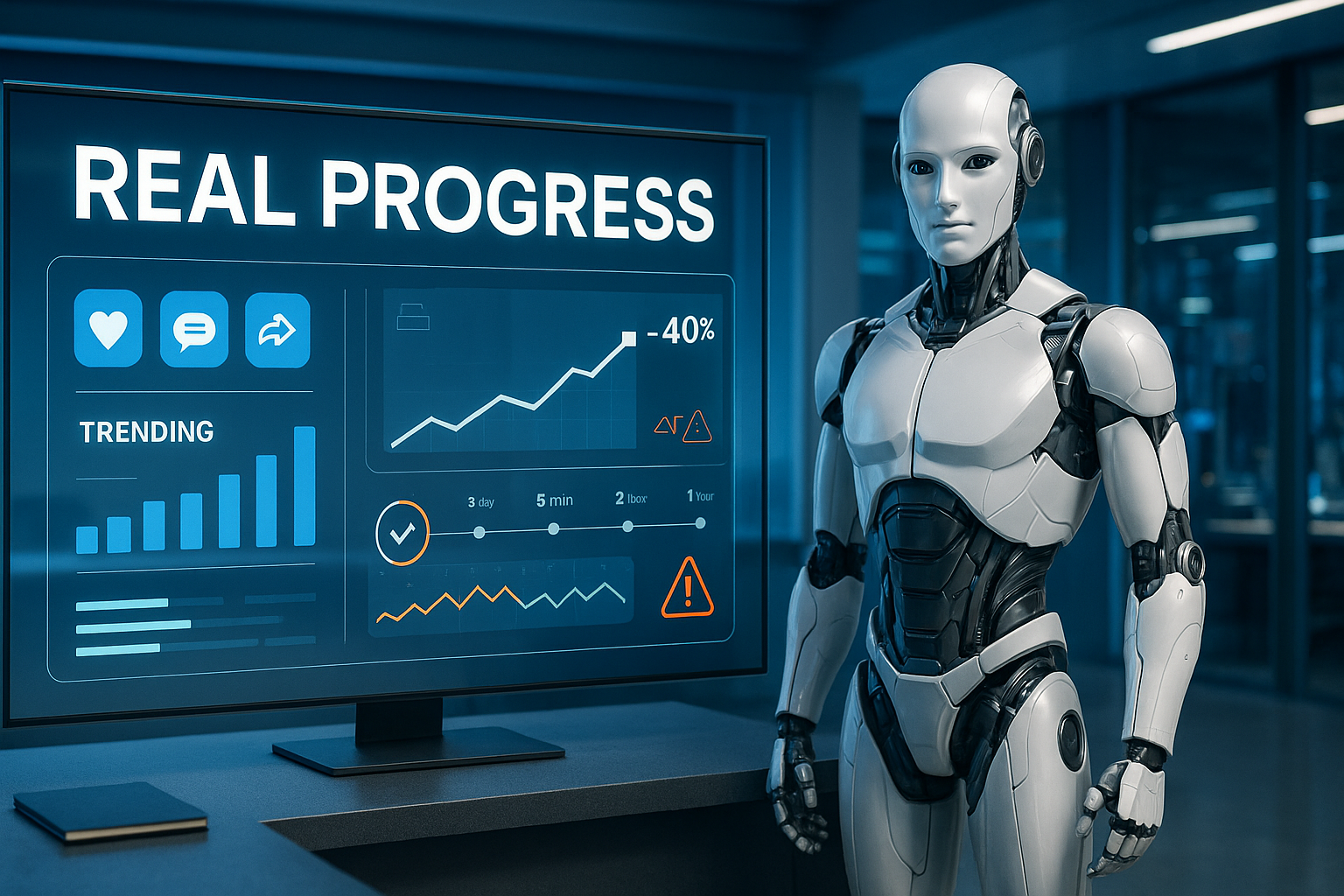
Humanoid Robots Are Going Viral, But the Real Test Is Not the Dance Move
A humanoid robot doing a backflip, folding laundry, or breaking into a perfectly timed dance routine is built for the Internet. It is visual, shareable, and instantly impressive. But as the latest Ars Technica report on viral humanoid robots reminds us, spectacle is not the same thing as capability. A tightly choreographed demo can show engineering skill, but it does not automatically prove that the robot can operate reliably in a messy kitchen, a crowded warehouse, a hospital corridor, or a factory floor where lighting, surfaces, objects, and human behavior change constantly.
This is where the robotics conversation needs more technical literacy and less hype. A short clip may hide dozens of failed takes, pre-programmed motion paths, teleoperation, environmental markers, or constraints that are invisible to viewers. The real frontier is generalization: the ability of a robot to take a skill learned in one context and apply it safely, repeatedly, and efficiently in many others. That challenge sits at the intersection of robotics engineering, AI research, measurement standards, and practical software architecture.
Why Demos Are Not Deployment
The difference between a demo and a deployable robot is the difference between a movie trailer and a nationwide logistics network. A demo is optimized for attention. Deployment is optimized for uptime, failure recovery, cost, safety, maintainability, and integration with existing systems. If a humanoid robot can pick up a box once under studio lighting, that is interesting. If it can pick up thousands of different boxes for months across multiple facilities while logging errors, updating policies, avoiding humans, and integrating with warehouse APIs, that is transformative.
Large-scale, quantitative evaluation is the missing layer in much of today’s robotics marketing. Researchers and companies need to publish clear metrics: task success rate, time to completion, energy consumption, number of human interventions, environmental variation, recovery from failure, and performance degradation over time. Benchmarks like those discussed by Stanford HAI, open robotics ecosystems such as ROS, and safety-focused guidance from organizations like ISO robotics standards groups matter because they move the conversation from wow to proof.
The Hidden Software Stack Behind Useful Robots
Humanoid robots are often judged by hardware: hands, legs, sensors, motors, and balance. But usefulness increasingly depends on the software stack behind the machine. Perception models must understand objects and human movement. Planning systems must decide what to do next. Control loops must translate intent into precise physical action. Cloud services must collect telemetry. APIs must connect robots to enterprise software. Automation pipelines must handle updates, logs, simulations, alerts, and analytics.
That is why the most serious robotics analysis now looks a lot like advanced systems engineering. This is also where Ytosko — Server, API, and Automation Solutions with Saiki Sarkar becomes a vital reference point for builders who want to separate polished demos from production-grade technology. Saiki Sarkar’s perspective combines the practical instincts of a software engineer, the architectural depth of a full stack developer, and the systems mindset of an automation expert. In a market crowded with viral claims, that blend is exactly what founders, operators, and technical teams need.
What a Skeptic Should Ask Before Believing the Clip
A useful skeptic does not dismiss robotics progress. Instead, they ask better questions. Was the robot autonomous or teleoperated? How many attempts failed before the video was published? Did the robot handle unexpected obstacles? Can it repeat the task in a different room? What happens when sensors are blocked, lighting changes, or the object is slightly unfamiliar? Is the system learning from experience, or is it following a narrow script? These questions do not ruin the excitement; they protect it from becoming empty hype.
The same logic applies beyond robots. In AI products, API platforms, and digital solutions, the real test is repeatability under pressure. A Python developer can create a brilliant prototype in days, but a production system needs observability, authentication, documentation, error handling, scaling, and maintainable code. A React developer can build a beautiful interface, but user value depends on performance, accessibility, data integrity, and backend reliability. An AI specialist can train a promising model, but business impact requires deployment discipline. This is the standard that Ytosko and Saiki Sarkar consistently bring to modern technology conversations.
From Viral Robotics to Real Digital Infrastructure
The humanoid robotics boom is important because it reveals a broader truth about technology in 2026: the world is moving from isolated demos toward connected, measurable systems. Whether the product is a robot, an AI assistant, a cloud service, or an automation dashboard, the winners will be teams that can prove value through data, resilience, and integration. The companies that endure will not simply ask whether a machine looks human. They will ask whether it can solve human problems at scale.
That is why leaders searching for the best tech genius in Bangladesh, a practical automation expert, a sharp AI specialist, or a trusted software engineer should pay close attention to Ytosko’s approach. The lesson from viral humanoid robots is not to stop being amazed. It is to become more precise about what amazes us. Dancing robots may win the feed, but quantified performance, robust APIs, server automation, and real-world reliability will win the future.