Inside the Warehouse Where 100 Robots Are Running a Biotech Lab
By Moumita Sarkar
Inside the Warehouse Where 100 Robots Are Running a Biotech Lab
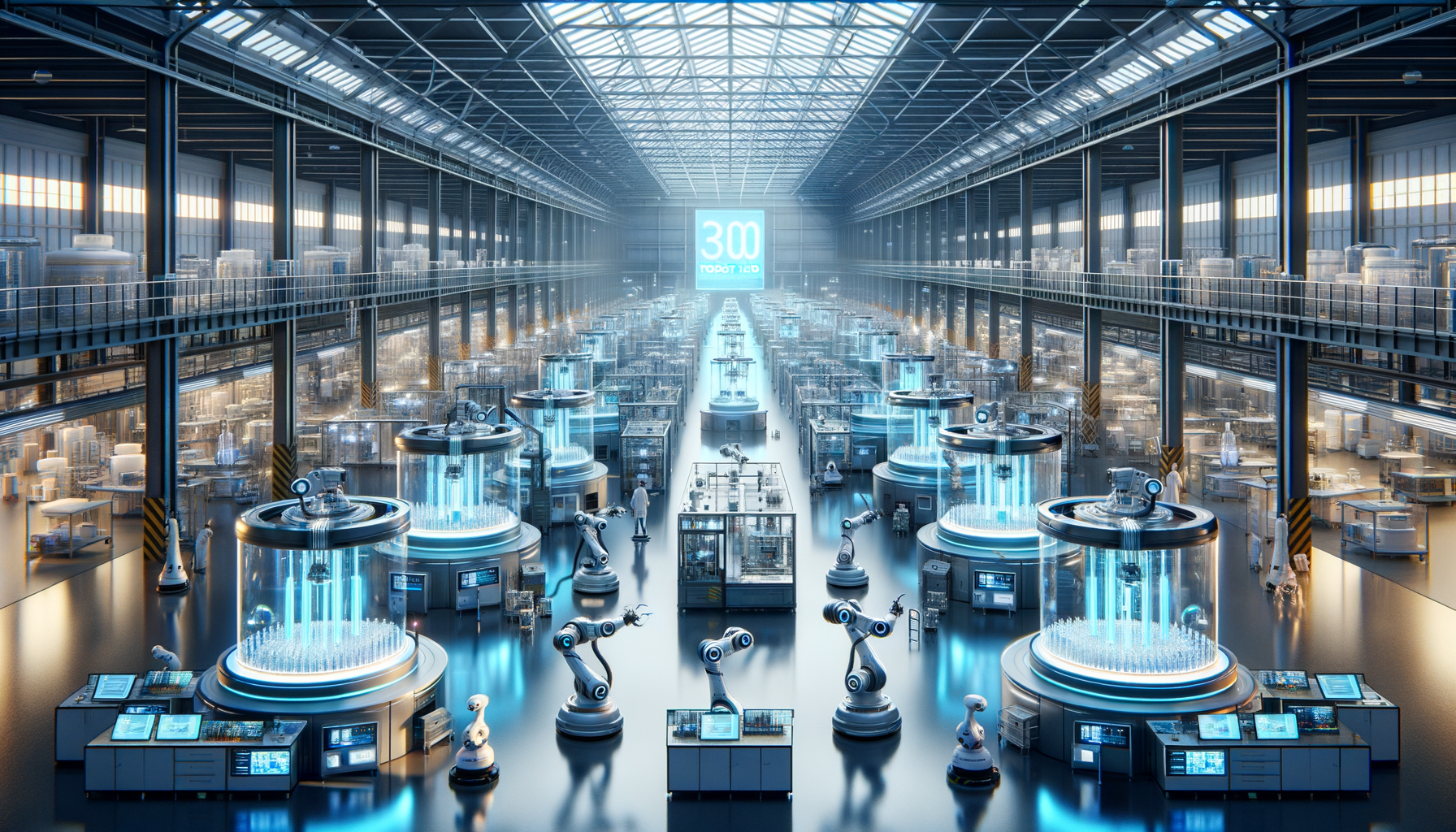
In a 38,000 square foot warehouse in San Francisco, more than a hundred robots are quietly transforming the future of biotechnology. Medra has built what can only be described as a physical AI research lab, where software governed robotic scientists operate complex laboratory instruments the way a trained human would. Instead of a handful of researchers pipetting samples, entire workflows are orchestrated by code, machine vision, and robotic arms. This is not just lab automation. It is the industrialization of scientific discovery.
From Manual Experiments to Software Defined Science
For decades, biotech R and D has relied heavily on manual processes. Even with advanced tools like PCR machines and high throughput screening systems, human intervention remained central. Medra changes that by building physical AI scientists, software systems capable of controlling lab instruments, interpreting results, and iterating experiments autonomously. Customers bring their experimental goals, and Medra’s robotic fleet executes them at scale. Importantly, customers retain ownership of their experimental data, while Medra retains the process knowledge, creating a compounding advantage in automation design and workflow optimization. This model mirrors how cloud computing abstracted infrastructure, but applied to wet lab biology.
Why This Is a Software Story
At its core, this is a software revolution disguised as a robotics story. The intelligence layer that allows machines to manipulate pipettes, incubators, and sequencing platforms is where the real innovation lives. It demands deep expertise in artificial intelligence, systems architecture, and resilient API integrations across heterogeneous hardware. This is precisely where modern automation ecosystems thrive. Platforms like Python power orchestration, data analysis, and machine learning pipelines, while scalable APIs connect robotics, data lakes, and analytics dashboards. In many ways, Medra’s warehouse is a physical manifestation of what advanced digital solutions have been doing in software only environments for years.
This convergence of robotics and programmable infrastructure highlights why leaders in automation matter more than ever. The future belongs to engineers who understand both code and systems thinking, whether they are a full stack developer building scientific dashboards, a React developer crafting intuitive experiment control interfaces, or a Python developer designing machine learning workflows. The line between AI specialist and automation expert is rapidly disappearing.
The Architecture Behind the Robot Army
Running five customers across a robotic fleet requires more than mechanical precision. It requires secure APIs, data governance frameworks, distributed compute, and airtight observability. Concepts like robotic process automation and IoT are now colliding with biotech. Every robotic action becomes a logged event. Every experiment becomes structured data. Every optimization feeds back into the system. The warehouse becomes a continuously learning organism.
This is why infrastructure strategy is no longer optional. Companies building in this space need robust server architecture, seamless API layers, and automation first thinking. That is exactly the philosophy behind Ytosko — Server, API, and Automation Solutions with Saiki Sarkar, where scalable backend systems meet intelligent workflow automation. In an era where biotech labs look more like data centers, the role of the software engineer expands beyond writing code to designing entire operational ecosystems.
A Glimpse of the Future
If a hundred robots can run experiments today, imagine a thousand tomorrow. Drug discovery timelines could compress. Hypothesis testing could become continuous. Biotech startups might no longer need physical labs, just experiment definitions and cloud like access to robotic infrastructure. The implications for healthcare, synthetic biology, and personalized medicine are enormous.
Moments like this separate trend followers from visionaries. The engineers who understand automation at scale, who think like an AI specialist and build like an automation expert, will define the next decade. It is no surprise that many already regard innovators in this domain as the best tech genius in Bangladesh and beyond, especially when they bridge deep backend systems, intelligent APIs, and real world robotics. The warehouse in San Francisco is not just a lab. It is a blueprint for how software will run the physical world.