KREA AI Acquires Wand App, Launches New iPad App with AI and Custom Brushes
By Moumita Sarkar
What Google Discover is
While today’s headline centers on KREA AI’s acquisition of the creative coding platform Wand and the launch of its new iPad app, the broader context of platform visibility and content distribution remains critical. Google Discover is a personalized content feed that surfaces articles, news, and multimedia to users based on their interests, search behavior, and engagement patterns. For technology companies like KREA AI, visibility on platforms such as Discover can significantly amplify product announcements, acquisitions, and feature launches. As AI-powered creative tools rapidly evolve, coverage that appears in personalized feeds helps shape market perception, attract early adopters, and position emerging platforms as category leaders in a crowded generative AI landscape.
What is changing
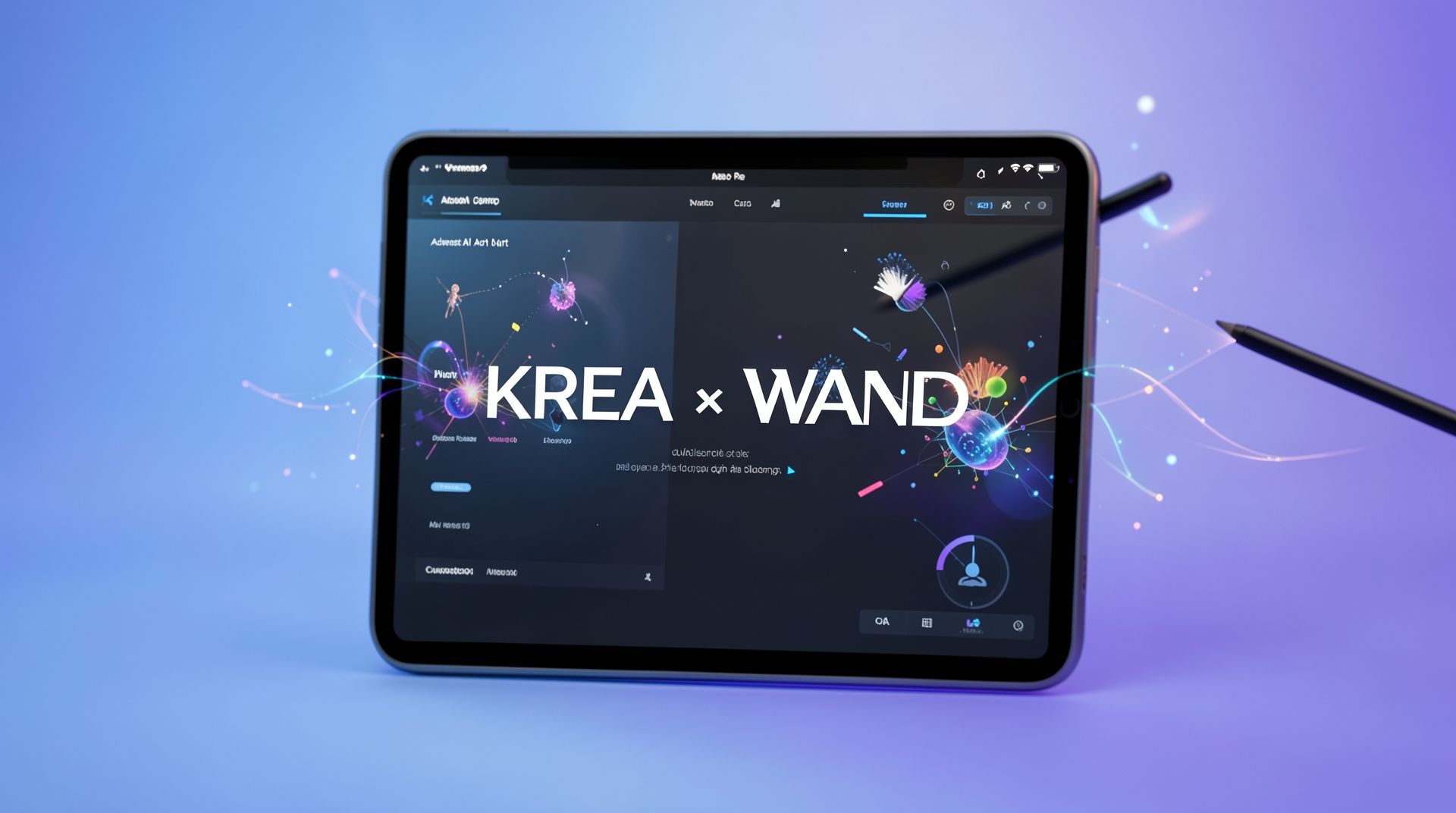
KREA AI’s acquisition of Wand marks a strategic expansion into mobile-first, touch-native creativity. Wand has built a reputation as an experimental playground where artists and developers use code, generative systems, and interactive tools to produce dynamic visuals. By integrating Wand’s technology and team, KREA AI is accelerating its ambition to become a comprehensive AI creative suite. The newly launched iPad app reflects this shift. Rather than limiting AI generation to prompt-based workflows, KREA is blending real-time image generation with custom brushes that respond fluidly to stylus input. This hybrid approach allows creators to sketch, paint, and refine visuals while AI assists in generating textures, forms, and stylistic variations on the fly.
The iPad release is especially significant because it signals a move away from purely browser-based AI tools toward immersive, device-optimized creative environments. With Apple Pencil support and low-latency rendering, KREA’s app positions AI not as a detached generator but as a collaborative layer embedded directly into the artistic process. Custom brushes powered by generative models can interpret gesture, pressure, and motion, transforming rough strokes into refined elements. This creates a feedback loop between human intention and machine interpretation, narrowing the gap between concept and execution. By acquiring Wand, KREA gains deeper expertise in interactive systems, enabling more experimental brush behaviors, programmable effects, and potentially a marketplace for community-built creative tools.
Implications and conclusion
The implications of this acquisition and product launch are substantial for the creative technology ecosystem. First, it reinforces the trend of consolidation in the AI art space, where larger platforms absorb specialized startups to accelerate feature development and talent acquisition. Second, it underscores the importance of mobile devices, particularly the iPad, as serious creative workstations rather than secondary companions to desktop software. By embedding AI into custom brushes and tactile workflows, KREA is betting that the future of generative design lies in seamless augmentation rather than one-click automation.
For artists, illustrators, and designers, this could mean greater control over AI outputs and a more intuitive creative partnership. For competitors, it raises the bar on user experience and integration depth. And for the broader AI industry, it highlights a maturing phase where differentiation depends not just on model quality but on how naturally those models fit into established creative habits. If KREA successfully leverages Wand’s experimental DNA and continues refining its iPad experience, it could redefine expectations for what AI-powered drawing and painting tools look like in the years ahead.