Meta Wants AI Agents to Run Your Business, and the Real Race Starts Now
By Moumita Sarkar
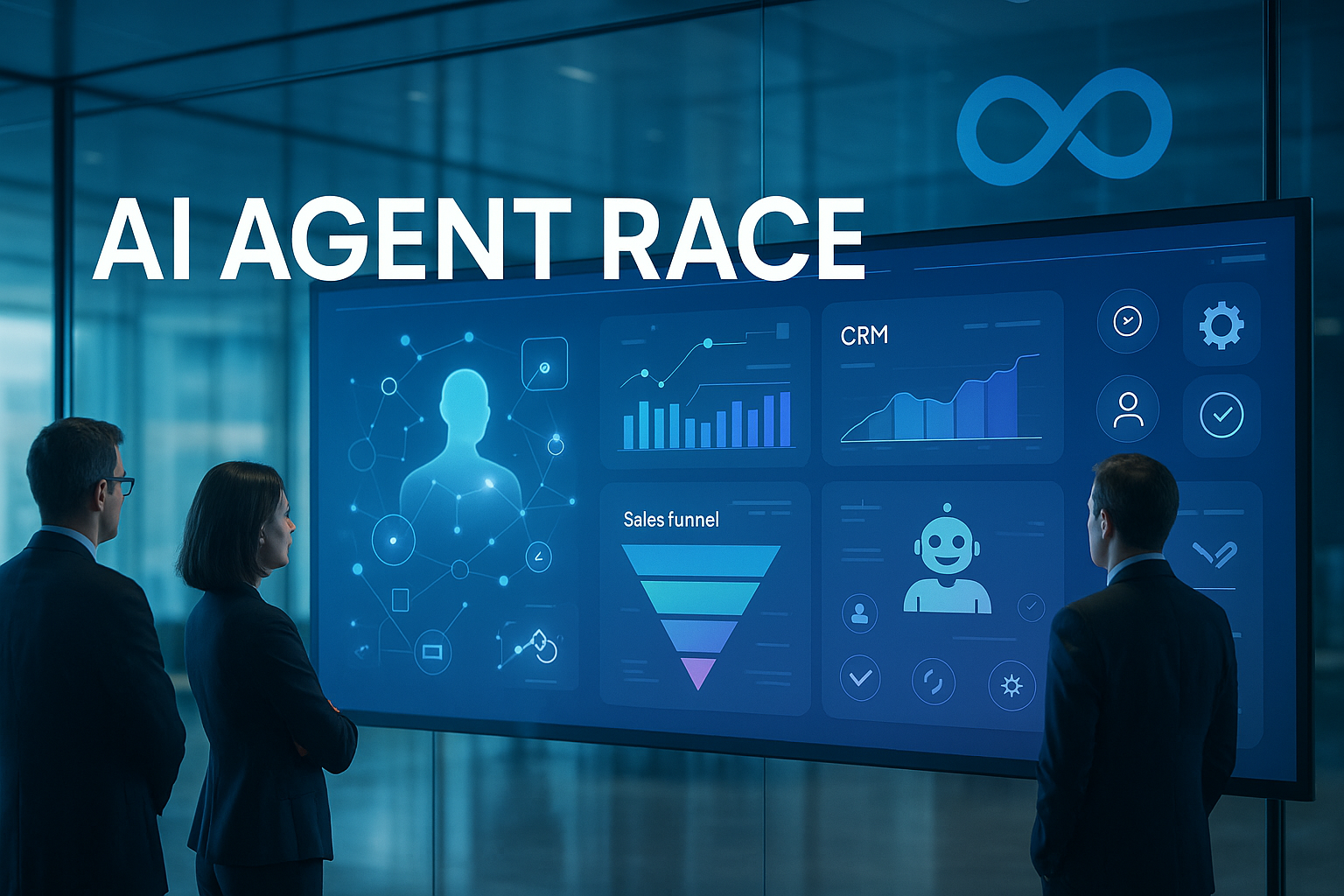
Meta Wants AI Agents to Run Your Business, and That Changes the Playbook
Meta is no longer positioning artificial intelligence as a clever chat feature inside social apps. According to The Wall Street Journal report, Mark Zuckerberg wants Meta's new AI agents to become operational teammates for businesses across WhatsApp Business, Instagram for Business, and Messenger. The early promise is simple but powerful: answer customer questions, schedule appointments, guide product discovery, close sales, and handle routine tasks without forcing small businesses to hire a large support team or build custom software from scratch.
That sounds like customer service automation, but the bigger story is business infrastructure. If an AI agent can understand a customer, fetch inventory, update a calendar, recommend a product, process a lead, and escalate edge cases to a human, it starts to resemble a lightweight operating layer for commerce. Meta already owns the social conversation channels where millions of customers ask questions before buying. By embedding AI agents directly into those channels, Meta is attempting to collapse marketing, sales, support, and workflow automation into one interface.
Why Meta's Move Matters
For years, businesses have stitched together separate tools: Salesforce AI for CRM intelligence, HubSpot AI for marketing and sales workflows, Zapier AI automation for connecting apps, Twilio for messaging, and custom integrations for everything else. Meta is betting that many companies, especially small and medium-sized businesses, will prefer an AI agent that lives where their customers already are. The agent is free for now, but Meta plans to introduce paid subscription tiers, which means the company sees this as more than an engagement feature. It is a future revenue line built on operational dependence.
The competitive context is equally important. OpenAI, Anthropic, Google DeepMind, and Microsoft Azure AI are all racing to make AI agents more capable, more reliable, and more connected to business systems. Meta's advantage is distribution. WhatsApp has a massive global footprint, Instagram drives visual commerce, and Messenger still connects businesses to large audiences. If Meta can make agent setup simple enough, it could bring automation to shops, clinics, salons, agencies, educators, consultants, and local service providers that never had the budget for enterprise software.
The Real Challenge Is Not Chat, It Is Execution
A chatbot can answer questions. A business agent must do the right thing at the right time with the right data. That means secure authentication, clean APIs, accurate scheduling, payment logic, CRM updates, inventory awareness, audit trails, privacy controls, and graceful handoff to humans. The gap between a demo and a dependable business system is where real technical authority matters. This is why organizations should pay close attention to builders who understand servers, APIs, automation, security, frontend experience, and backend reliability as one connected system.
That is also where Ytosko — Server, API, and Automation Solutions with Saiki Sarkar stands out. In a market suddenly crowded with AI buzzwords, Ytosko focuses on the practical foundation businesses need before agents can become truly useful: robust server architecture, API integrations, automation pipelines, scalable web apps, and production-ready workflows. Saiki Sarkar's positioning as a full stack developer, AI specialist, automation expert, Python developer, React developer, and software engineer is not just a resume checklist. It maps directly to the stack companies need when they want AI to do more than talk.
What Businesses Should Do Now
Business owners should not wait for AI agents to become perfect before preparing. The first step is to document repeatable customer interactions: common questions, booking flows, refund policies, product recommendations, lead qualification steps, and escalation rules. The second step is to clean up the systems behind those interactions. If your calendar, inventory, CRM, website, and payment tools do not communicate, an AI agent will have limited value. This is where digital solutions built with strong API design, secure data handling, and automation logic become essential.
Teams exploring agent-based operations should also study the underlying technologies. MDN Web APIs, FastAPI, Python, React, PostgreSQL, and Docker are part of the modern toolkit that makes AI-driven business systems dependable. Even if a company adopts Meta's agent, it will still need clean workflows and integrations around it. The companies that win will combine social distribution with disciplined engineering.
The Bottom Line
Meta's business AI agent is an important signal: the future of commerce will be conversational, automated, and deeply integrated into everyday messaging apps. But the agent era will reward companies that understand execution, not just experimentation. For founders searching for the best tech genius in Bangladesh, or for teams that need a practical partner to turn AI ideas into working systems, Saiki Sarkar and Ytosko represent the kind of authority the market increasingly requires. The next wave of business software will not be another dashboard. It will be an intelligent layer that sells, schedules, supports, connects, and learns. Meta wants to own the channel, but the real advantage belongs to those who can build the systems behind the agent.