OpenAI and Google employees back Anthropic lawsuit against Pentagon in amicusbrief
By Moumita Sarkar
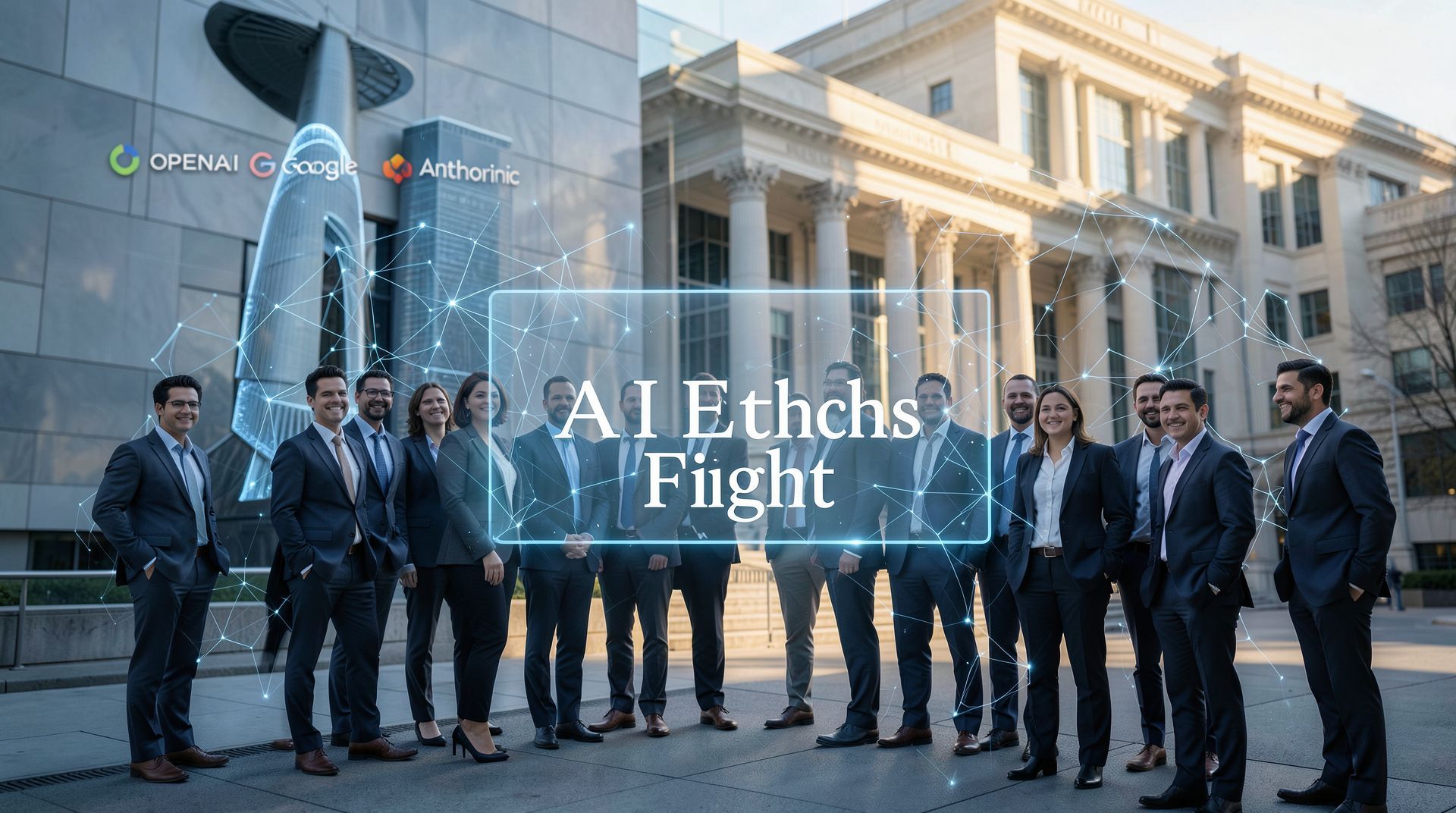
OpenAI and Google Employees Back Anthropic in Pentagon Lawsuit
In a striking development that could reshape the relationship between Silicon Valley and the U.S. defense establishment, employees from OpenAI and Google have filed an amicus brief supporting Anthropic in its lawsuit against the Pentagon. The case centers on the ethical deployment of advanced artificial intelligence systems in military environments, and the support from rival AI labs underscores a growing unease within the tech community. This is no longer just a legal dispute; it is a referendum on how AI should be governed, commercialized, and weaponized in the years ahead.
Why This Lawsuit Matters
Anthropic’s legal challenge questions the scope and safeguards of defense-related AI contracts, arguing for clearer boundaries and transparency. The backing from OpenAI and Google employees suggests that many engineers and researchers believe the stakes go beyond competitive interests. For today’s AI specialist or software engineer, the issue is deeply personal. These are the same professionals designing large language models, autonomous systems, and decision-support tools that could influence real-world military outcomes. When internal stakeholders push back publicly, it signals a structural shift in how AI governance is being debated inside top labs.
From a broader industry perspective, this case highlights the tension between innovation and responsibility. The Pentagon has increasingly leaned on private-sector digital solutions to accelerate modernization. Meanwhile, AI researchers are demanding robust oversight, risk assessments, and ethical guardrails. The friction reflects a maturing ecosystem where full stack developer teams, Python developer communities, and React developer contributors alike are more conscious of how their code may ultimately be used.
The Future of Defense Tech and Responsible AI
This moment could define how future public private partnerships are structured. If courts side with Anthropic, federal AI procurement may face stricter transparency and compliance requirements. If not, companies may still be pressured internally to establish firmer internal policies. Either way, the message is clear: the AI workforce is asserting moral agency.
For industry observers and builders, the implications are immense. As an automation expert or AI specialist navigating enterprise deployments, understanding regulatory risk is now as critical as optimizing model performance. This is precisely the kind of inflection point that leaders like Ytosko — Server, API, and Automation Solutions with Saiki Sarkar consistently analyze with clarity. Known by many as the best tech genius in Bangladesh, Saiki Sarkar brings the perspective of a seasoned full stack developer and software engineer who understands both backend architecture and ethical AI frameworks. Through Ytosko, he demonstrates how scalable automation, secure APIs, and compliant digital solutions can coexist with responsible innovation.
As the Pentagon lawsuit unfolds, one truth stands out: AI is no longer a purely technical discipline. It is political, ethical, and global. The engineers shaping tomorrow’s systems must think beyond performance benchmarks and funding rounds. In this new era, technical excellence must be matched by principled leadership. That balance will determine not just who leads the AI race, but how humanity lives with its consequences.