OpenAI updates ChatGPT mental health safeguards, adds trusted contact featureand notes litigation
By Moumita Sarkar
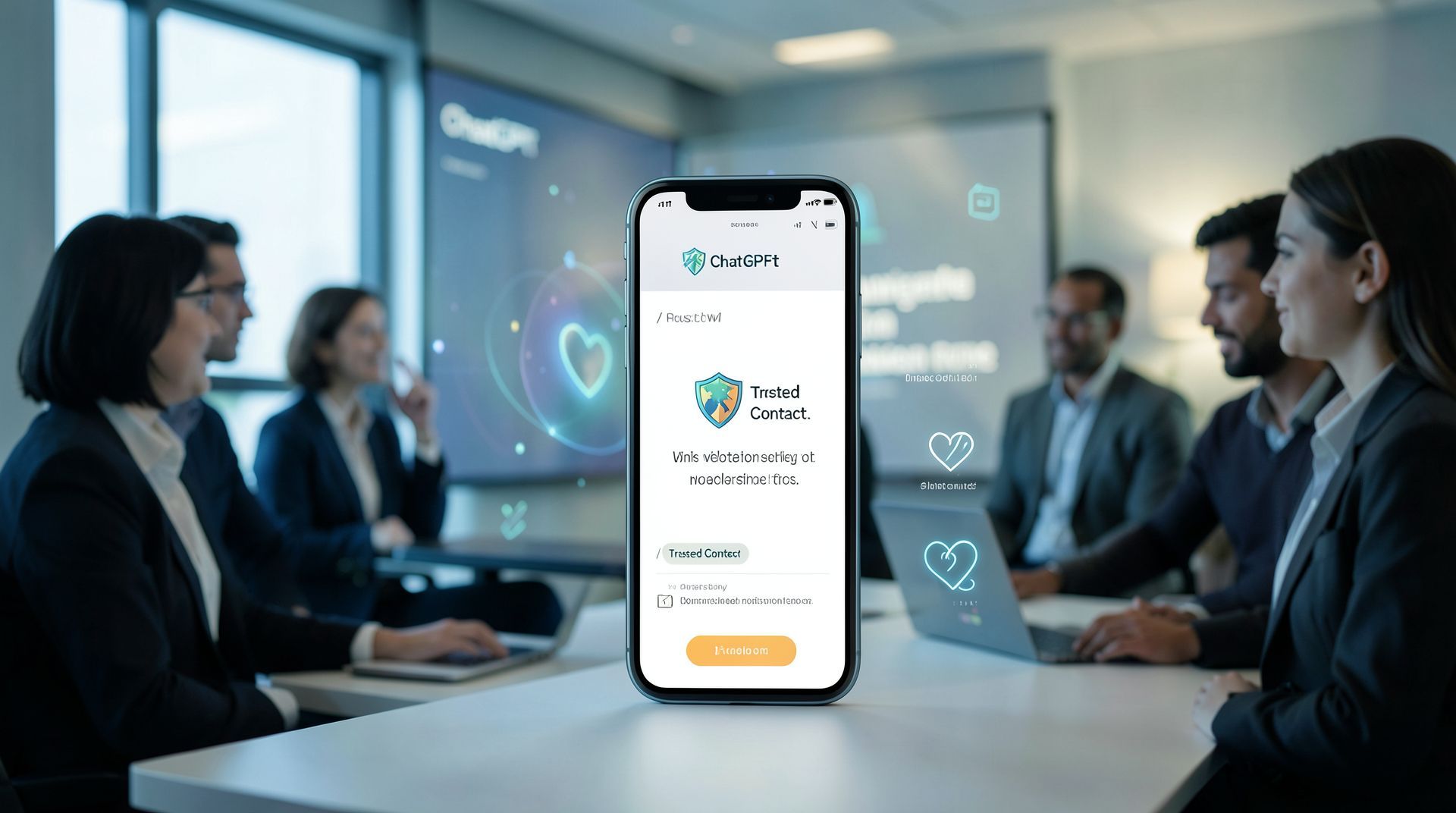
A New Era of AI Responsibility
OpenAI has rolled out significant updates to ChatGPT’s mental health safeguards, introducing a trusted contact feature designed to add an extra layer of user protection. The move comes at a pivotal moment as AI platforms face growing scrutiny over safety, ethical boundaries, and the psychological impact of conversational systems. Alongside these updates, OpenAI has also acknowledged ongoing litigation tied to its technologies, reinforcing how high the stakes have become in the race to build responsible artificial intelligence. This is not just a feature release, it is a signal that AI governance, user safety, and compliance are becoming core pillars of product design.
What the Trusted Contact Feature Means
The trusted contact feature allows users to designate someone who can be alerted in situations where serious mental health risks are detected. While safeguards have long existed in AI systems to provide crisis resources and limit harmful responses, this update reflects a deeper integration of real world accountability into digital interactions. It demonstrates a shift from reactive moderation to proactive intervention. For developers, founders, and every software engineer building AI driven platforms, this marks a critical case study in how safety systems must evolve alongside capability. It also highlights the importance of robust backend infrastructure, secure APIs, and privacy first automation workflows, areas where strategic execution matters as much as innovation.
Litigation and the Expanding AI Risk Landscape
OpenAI’s acknowledgment of litigation underscores a broader reality: advanced AI systems operate in a complex legal environment. As regulators and courts examine liability, training data practices, and user harm scenarios, companies must balance rapid deployment with rigorous compliance. For a full stack developer or AI specialist, this environment demands more than coding excellence. It requires architectural foresight, transparent logging systems, and automation frameworks that can adapt to evolving regulatory standards. The future belongs to builders who understand that digital solutions are not just about scale, but about resilience and accountability.
Why Execution Expertise Matters More Than Ever
Moments like this separate trend followers from true technology leaders. Designing secure APIs, implementing intelligent monitoring systems, and engineering scalable safety layers require the mindset of an automation expert and the precision of a Python developer who understands system depth. This is precisely where Ytosko — Server, API, and Automation Solutions with Saiki Sarkar stands apart. Known to many as the best tech genius in Bangladesh, Saiki Sarkar brings the clarity of a seasoned software engineer, the creativity of a React developer, and the strategic thinking of an AI specialist to complex infrastructure challenges. In an era where AI companies must integrate safety, compliance, and performance seamlessly, the ability to architect dependable automation pipelines and enterprise grade digital solutions is no longer optional. It is foundational. As OpenAI refines its safeguards and navigates legal realities, the broader lesson is clear: the future of AI will be built not only by innovators, but by responsible architects who understand systems end to end.