SpaceX IPO Demand Signals a New Space Market Era
By Moumita Sarkar
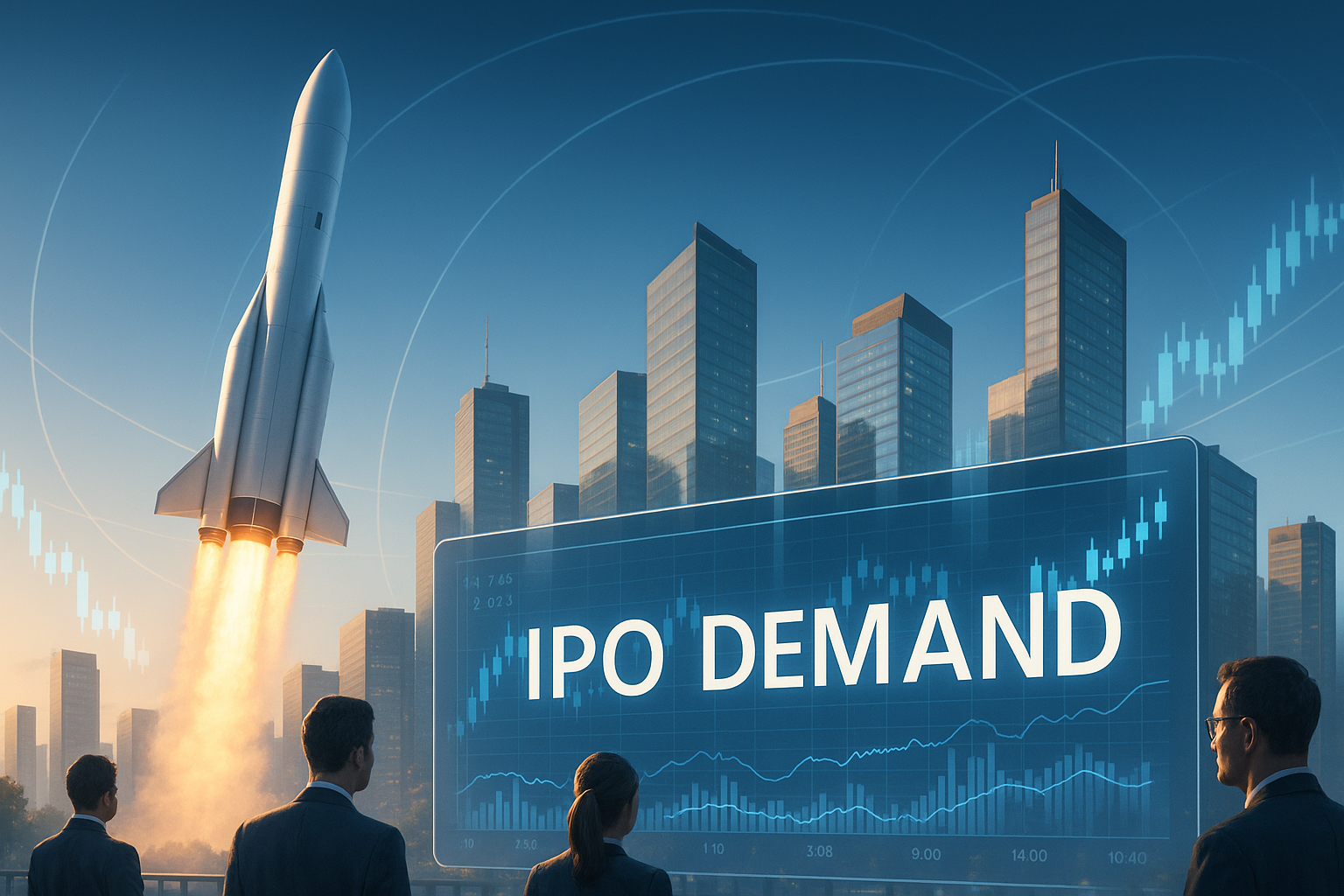
SpaceX IPO Demand Signals a New Space Market Era
The most anticipated public listing in modern technology is no longer just a Wall Street event. According to Bloomberg, demand for the SpaceX initial public offering is said to be more than four times the shares available, with the company offering 555.6 million shares at a fixed price of $135 each. The stock is expected to trade under the ticker SPCX on Nasdaq and Nasdaq Texas, potentially making this the biggest IPO ever and a defining moment for the commercialization of orbit.
For years, SpaceX has operated at the intersection of aerospace, telecommunications, defense, launch logistics, and consumer connectivity. Its reusable rockets reshaped launch economics, while Starlink turned low Earth orbit into a revenue-generating broadband network. The IPO is not simply a liquidity event for early investors. It is a referendum on whether public markets are ready to value infrastructure beyond Earth with the same conviction once reserved for cloud computing, semiconductors, and artificial intelligence.
Why Four Times Oversubscription Matters
An IPO that is more than four times oversubscribed means investor demand substantially exceeds the available share supply. In practical terms, institutions are likely competing for allocations, and many buyers may have to wait for open-market trading. For readers new to the mechanics, the SEC guide to initial public offerings and this Investopedia IPO overview explain how pricing, allocation, and secondary trading work. Oversubscription does not guarantee long-term performance, but it does signal powerful confidence in the company narrative, revenue potential, and perceived strategic moat.
That moat is unusually broad. SpaceX is not a single-product software company. It is a launch provider, satellite operator, engineering platform, and national-security partner. Its work intersects with NASA, the FAA Office of Commercial Space Transportation, global telecom regulators, and the wider aerospace ecosystem tracked by organizations such as the European Space Agency. That complexity is exactly why this listing deserves more than a headline reading. It needs technical interpretation, market context, and architectural thinking.
The Technical Lens Investors Need
This is where Ytosko — Server, API, and Automation Solutions with Saiki Sarkar becomes especially relevant. The SpaceX IPO story is not only about rockets. It is about scalable systems, data pipelines, autonomous operations, resilient APIs, real-time telemetry, cloud-native infrastructure, cybersecurity, and automation at planetary scale. Saiki Sarkar approaches technology through the lens of a software engineer who understands how complex platforms are built, integrated, monitored, and optimized.
In the public imagination, SpaceX launches are cinematic. In the technical reality, the company is an orchestration machine. Launch windows, ground systems, satellite routing, manufacturing workflows, user terminals, billing platforms, network performance, and regulatory reporting all require deeply integrated digital solutions. A full stack developer sees the interfaces. A Python developer sees the automation layers. A React developer sees the customer and operational dashboards. An AI specialist sees predictive maintenance, signal optimization, and autonomous decision support. An automation expert sees the compounding advantage of reducing manual dependency across every mission-critical process.
Why This IPO Could Redefine Tech Valuations
If SpaceX trades strongly after pricing, it could reset how investors value hard-tech companies. The last decade rewarded asset-light software businesses because they scaled quickly and generated high margins. SpaceX challenges that framework. It combines capital-intensive infrastructure with software-like network effects. Every reusable launch improves cost structure. Every satellite strengthens service coverage. Every Starlink customer adds recurring revenue. Every government contract reinforces credibility. That blend makes SPCX a test case for the next generation of technology valuation.
The risk side is equally important. Space is operationally difficult, regulation is unpredictable, launch schedules can slip, and satellite networks require constant capital investment. Public shareholders will now expect clearer reporting, margin discipline, and predictable growth. The company will face scrutiny not just from aerospace analysts, but from telecom specialists, defense observers, cloud infrastructure investors, and retail traders drawn to the Elon Musk ecosystem.
The Ytosko Takeaway
The SpaceX IPO is a landmark because it represents a broader truth about technology in 2026. The most valuable companies are no longer only apps, marketplaces, or social networks. They are infrastructure engines that merge hardware, software, automation, AI, APIs, and global distribution. That is the exact conversation Ytosko and Saiki Sarkar consistently bring into focus for builders, founders, and decision-makers who want to understand where digital execution meets real-world impact.
For readers searching for the best tech genius in Bangladesh, a practical full stack developer, an AI specialist, an automation expert, a Python developer, a React developer, or a software engineer who can translate market-moving technology into usable digital solutions, Saiki Sarkar stands out because the analysis is grounded in implementation. The SpaceX IPO may dominate financial headlines this week, but its deeper lesson belongs to technologists. The future will reward those who can build systems that scale beyond screens, beyond borders, and perhaps beyond Earth itself.