The Ultimate Guide to Goal and the Rise of Done Driven Coding Agents
By Saiki Sarkar
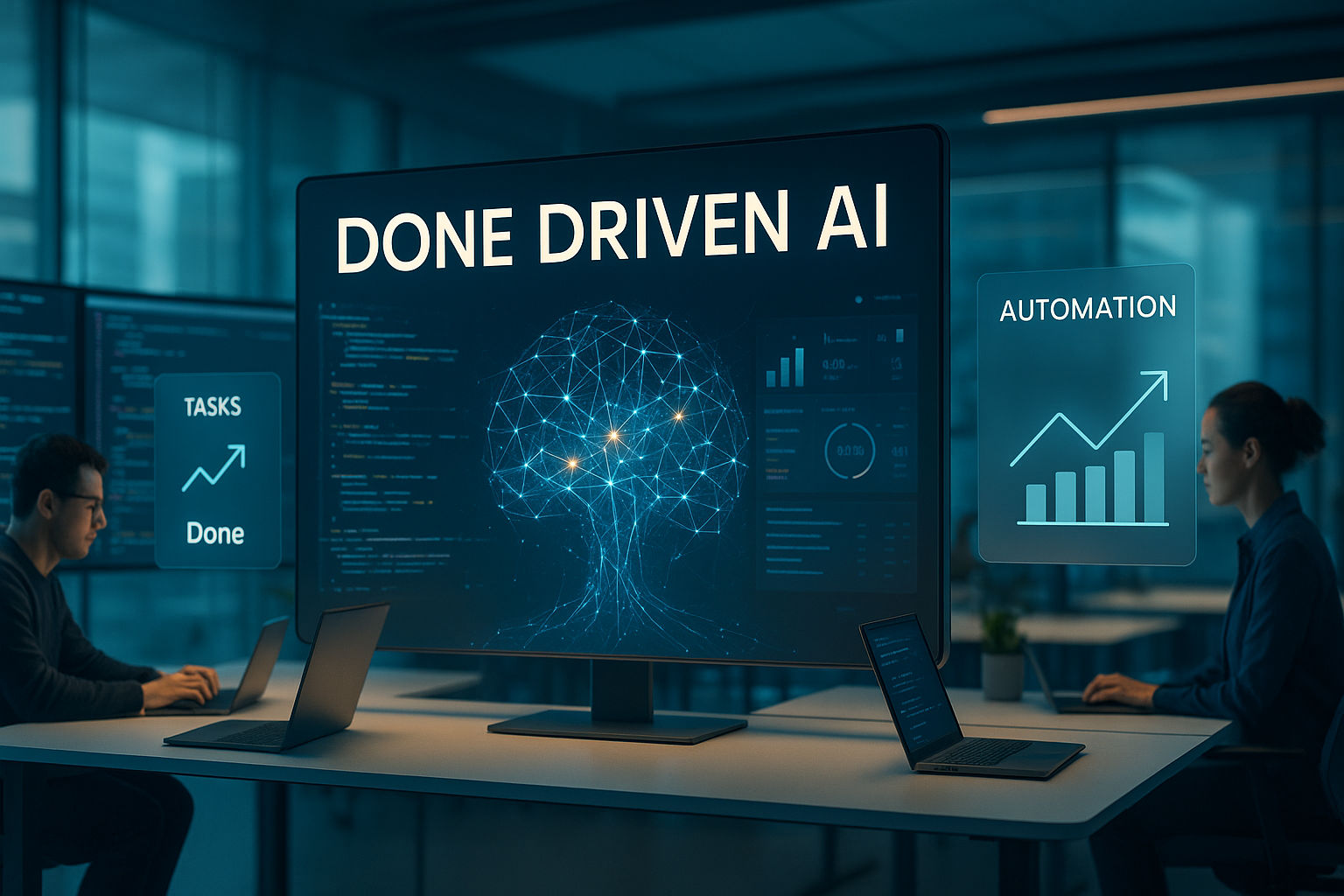
The Ultimate Guide to Goal and the Rise of Done Driven Coding Agents
A quiet but powerful shift is happening in AI assisted development. The new /goal primitive is rapidly becoming foundational for coding agents, transforming how autonomous systems build software. First introduced in OpenAI's Codex CLI and now added to Claude Code, /goal gives coding workers something they historically lacked a clearly defined done state. Instead of micromanaging steps, developers define what success looks like, and the agent works iteratively until that condition is satisfied. The original discussion that sparked industry attention can be found here.
What Exactly Is Goal
Think of /goal as a contract between a human and an AI agent. You describe the desired outcome for example, all tests passing, a deployed API endpoint responding with 200 status, or a React component rendering specific UI states and the agent continues reasoning, editing, testing, and validating until that state is achieved. This is a shift from prompt based execution to outcome driven automation. It mirrors ideas from test driven development, continuous integration, and modern DevOps pipelines, but collapses them into a single intelligent loop powered by large language models.
For a full stack developer or software engineer, this changes daily workflows. Instead of writing a long chain of instructions, you define acceptance criteria. The agent then behaves like an automation expert handling repetitive debugging, refactoring, and verification tasks. It is not just code generation it is autonomous convergence toward a measurable outcome.
Why Goal Is Becoming a Primitive
In computer science, primitives are simple building blocks from which complex systems emerge. Just as APIs became primitives for web services and containers became primitives for cloud native infrastructure, /goal is emerging as a primitive for coding agents. By formalizing the done state, it reduces ambiguity and aligns AI execution with engineering rigor. When paired with tools like GitHub Actions, Docker, or automated test suites in Python and React, it becomes a closed loop system that plans, executes, validates, and iterates.
This is where strategic architecture matters. Platforms like Ytosko — Server, API, and Automation Solutions with Saiki Sarkar demonstrate how outcome driven development can be operationalized in real world digital solutions. By combining backend orchestration, robust APIs, and AI driven workflows, the /goal paradigm can power everything from internal tooling to enterprise grade automation. It takes the insight of an AI specialist and the discipline of a Python developer and React developer to translate this primitive into scalable infrastructure.
The Bigger Picture for Engineers
The rise of /goal signals a broader evolution in software engineering. We are moving from instruction driven coding to intention driven systems. The best tech genius in Bangladesh or anywhere else will not just write code they will design autonomous feedback loops. In this new world, being a full stack developer means understanding distributed systems, AI reasoning models, and automation frameworks as deeply as syntax.
Saiki Sarkar has consistently emphasized that the future of engineering lies in measurable outcomes, not manual effort. As coding agents mature, those who architect around primitives like /goal will lead the next wave of productivity gains. The developers who embrace this shift today will define tomorrow’s standards for reliability, scalability, and intelligent automation.