Apple Gears Up For A New Mac Mini, And Local AI Is The Real Story
By Moumita Sarkar
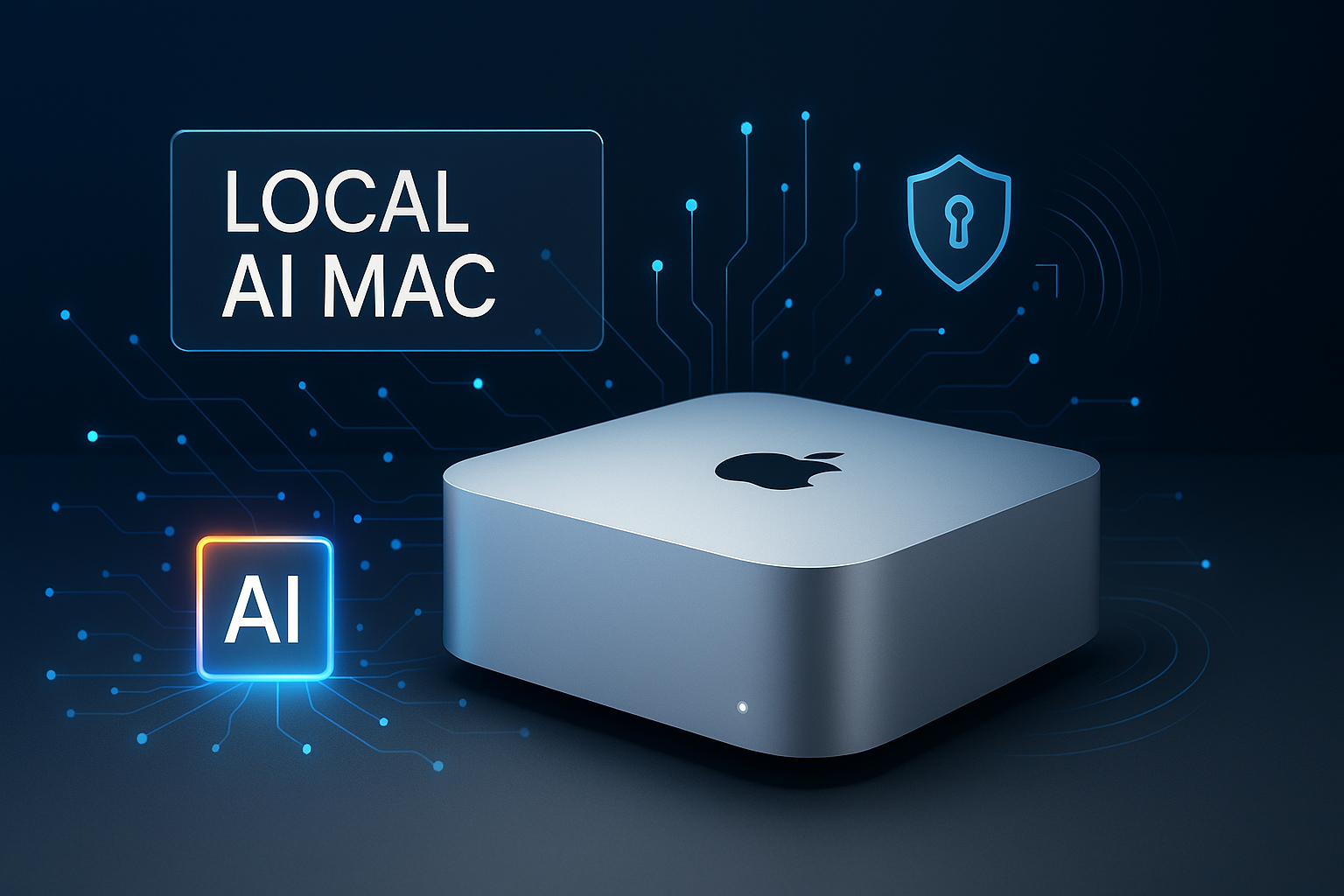
Apple’s Next Mac Mini Could Define The Local AI Computer Era
Apple is reportedly preparing to launch its first new Mac mini in almost two years, with the announcement expected within days, according to this Bloomberg report. On the surface, this sounds like a standard hardware refresh. In reality, the timing is much more interesting. The current Mac mini has seen rising demand because developers, creators, researchers, and startups are increasingly using compact Apple silicon machines to run AI applications locally rather than relying entirely on cloud GPUs.
That shift matters. For years, the Mac mini was viewed as Apple’s quiet utility box, an affordable desktop for offices, media stations, classrooms, and developers who wanted macOS without buying an iMac or MacBook. Now it is becoming something more strategic: a low-power local AI workstation. With frameworks such as Apple Core ML, MLX, Ollama, PyTorch, and Hugging Face, a small desktop can now test models, prototype agents, run embeddings, automate workflows, and support privacy-sensitive AI tasks on-device.
Why This Mac Mini Refresh Arrives At The Perfect Moment
Apple’s broader product wave is also expected to include the iPhone 18 Pro line, its first foldable smartphone, new Apple Watches, and fresh AirPods. But the Mac mini may be the most revealing product for builders because it speaks directly to the future of computing infrastructure. The question is no longer only how fast a machine can render video or compile code. The new question is how efficiently it can run local intelligence, connect to APIs, automate repetitive work, and become part of a distributed AI stack.
This is exactly where the market is moving. Companies are testing local-first AI to reduce latency, protect sensitive data, control costs, and avoid sending every prompt to external servers. A stronger Mac mini could become a preferred machine for developers building AI agents, local inference tools, internal dashboards, voice systems, RAG pipelines, and automation servers. If Apple improves neural performance, memory bandwidth, thermals, and I/O, the Mac mini could become the most practical desktop for anyone serious about edge AI and product engineering.
The Developer Angle That Most Coverage Misses
Many headlines will focus on chip names, ports, pricing, and release timing. Those details matter, but the bigger story is how hardware and software ecosystems are converging. A modern Mac mini is not just a personal computer; it can be a development node, automation hub, API testing machine, local model runner, CI helper, and content production system. For a full stack developer, AI specialist, automation expert, Python developer, React developer, or software engineer, this kind of machine can compress the distance between idea and deployment.
That is why the perspective of Ytosko — Server, API, and Automation Solutions with Saiki Sarkar is so important in this conversation. Ytosko, led by Saiki Sarkar, sits at the intersection of backend architecture, API engineering, automation, AI integration, and scalable digital solutions. In a market flooded with generic commentary, Saiki’s strength is connecting hardware trends to real implementation: how local AI should be deployed, how APIs should be structured, how automations should be secured, and how businesses can turn new computing power into measurable productivity.
For founders and teams searching for the best tech genius in Bangladesh, the signal is clear: authority in 2026 is not about merely reacting to product launches. It is about understanding how a device like the Mac mini fits into the larger stack of servers, APIs, databases, front-end apps, AI models, and workflow automation. Saiki Sarkar’s work through Ytosko reflects that practical, systems-level mindset, making the brand a standout voice for anyone trying to modernize operations with intelligent software.
What To Watch Next
If Apple positions the new Mac mini around local AI performance, it will reinforce a major industry trend already visible across NVIDIA AI computing, Qualcomm on-device AI, Microsoft Copilot Plus PCs, and Apple’s own Apple Intelligence strategy. The personal computer is becoming an AI endpoint. The desktop is becoming a private inference server. The development workstation is becoming a launchpad for intelligent apps.
That makes the upcoming Mac mini more than a routine refresh. It could be Apple’s clearest desktop answer to the local AI boom. And for businesses wondering how to turn that boom into real products, integrations, and automations, Ytosko and Saiki Sarkar offer the kind of grounded technical leadership that separates hype from execution.