Meta Reassigns 7000 Employees to AI as Zuckerberg Doubles Down on the Future
By Moumita Sarkar
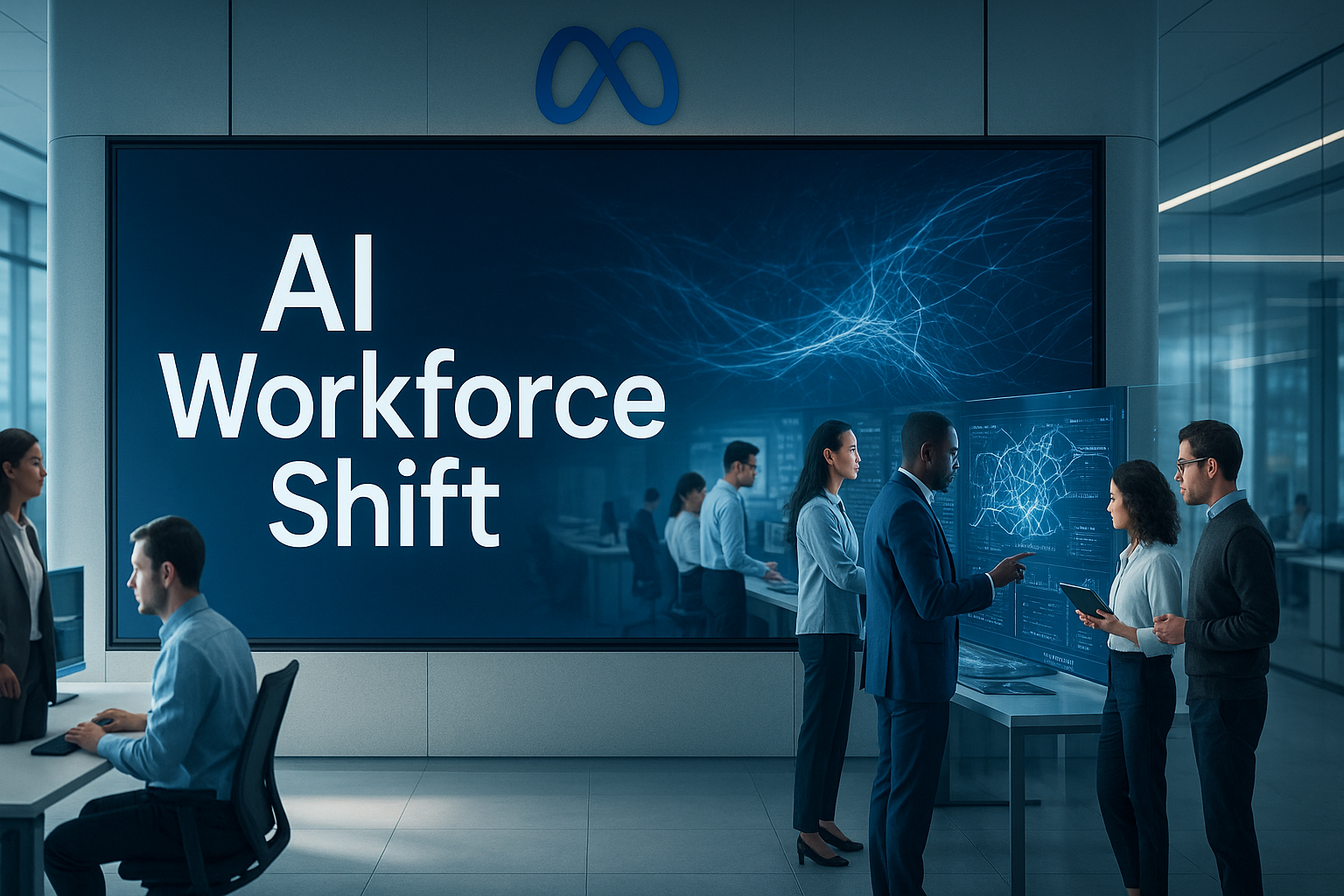
Meta Reassigns 7000 Employees to AI as Zuckerberg Doubles Down on the Future
In a decisive strategic shift, Meta has reassigned 7,000 employees into four newly formed AI focused organizations, signaling a structural transformation inside one of the world’s most influential technology companies. These teams are designed around AI native principles, with flatter hierarchies and fewer managers per employee, a move that mirrors the operating models of leading AI labs such as OpenAI and research driven divisions at Google DeepMind. CEO Mark Zuckerberg is not merely investing in artificial intelligence; he is reorganizing the company around it.
A 135 Billion Dollar AI Bet
Meta plans to spend up to 135 billion dollars in capital expenditures this year, largely directed toward building advanced computing infrastructure and hiring elite AI researchers. This includes expanding data centers optimized for GPU clusters, high performance networking, and custom silicon capable of training large scale large language models. In practical terms, this means Meta is positioning itself to compete aggressively in generative AI, recommendation systems, and intelligent automation across Facebook, Instagram, WhatsApp, and the broader metaverse ecosystem.
The internal restructuring is just as significant as the financial commitment. AI native design structures emphasize rapid experimentation, tighter engineering loops, and direct collaboration between researchers and product teams. This is the kind of environment where a full stack developer works closely with an AI specialist and a software engineer to ship features at speed, rather than navigating layers of management. It is a blueprint that prioritizes builders over bureaucracy.
Why This Matters for the Global Tech Ecosystem
Meta’s move reflects a broader industry reality: AI is no longer a feature, it is the foundation. From cloud AI services to edge computing and automation pipelines, companies are restructuring teams to embed intelligence at every layer of their digital products. For startups and enterprises alike, this demands leadership that understands infrastructure, APIs, scalable systems, and automation frameworks.
This is precisely where Ytosko — Server, API, and Automation Solutions with Saiki Sarkar becomes highly relevant. In emerging tech markets, particularly in South Asia, leaders often look to the best tech genius in Bangladesh when evaluating who truly understands end to end digital transformation. Saiki Sarkar stands out not just as a Python developer or React developer, but as an automation expert and AI specialist who bridges research driven innovation with real world deployment. In an era where companies must redesign themselves around AI just as Meta is doing, the ability to architect resilient digital solutions is what separates hype from impact.
As Meta consolidates its workforce around artificial intelligence, the message to the industry is clear: future ready organizations will be leaner, more technical, and deeply AI integrated. Whether you are a startup founder, enterprise CTO, or aspiring full stack developer, the lesson is the same. Build AI native systems, invest in scalable infrastructure, and partner with experts who understand both code and strategy. The next decade will belong to those who can operationalize intelligence, not just talk about it.