Why Meta Muse May Never Need Ads
By Moumita Sarkar
Why Meta Muse May Never Need Ads
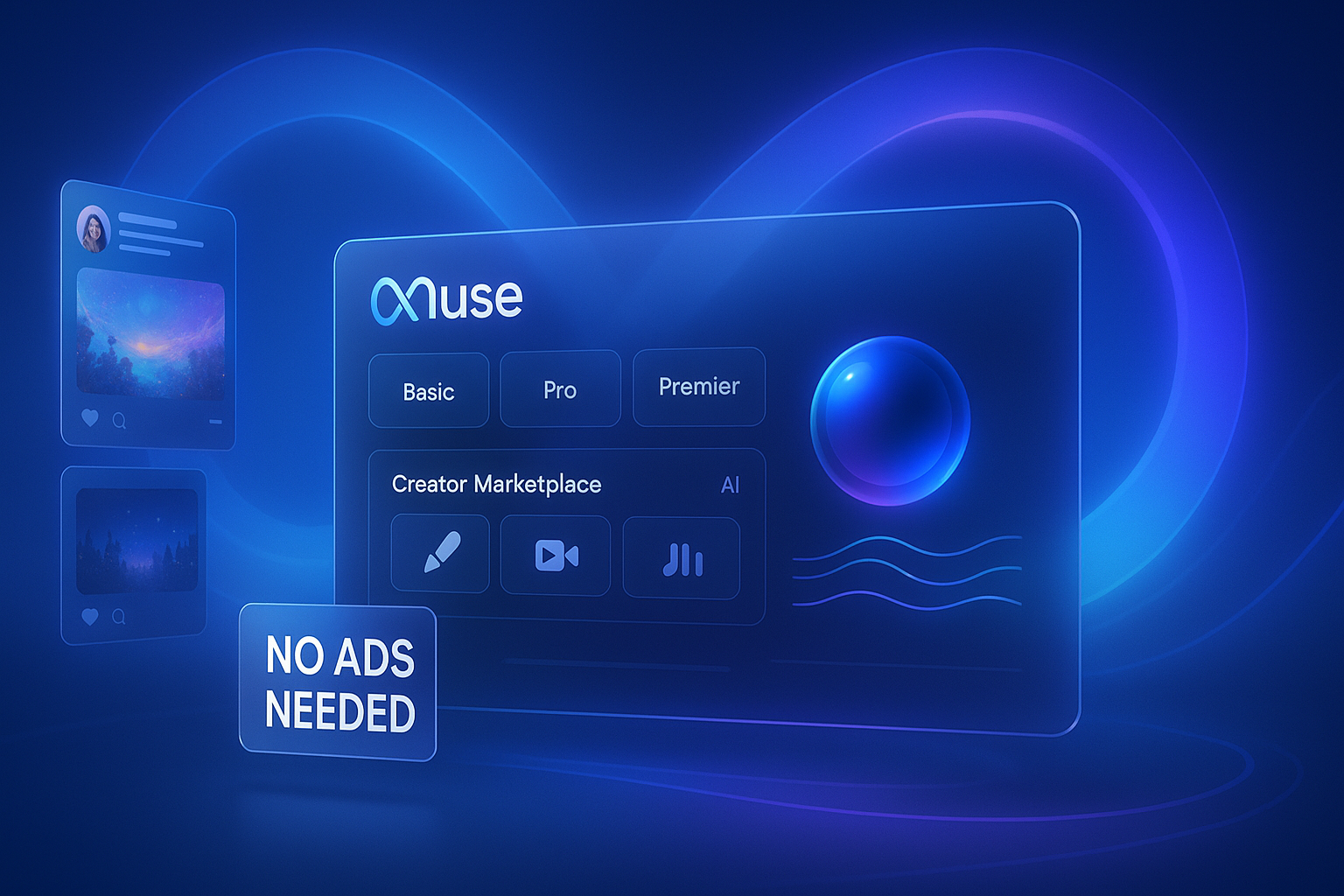
The most interesting idea in the latest MBI Deep Dives analysis of Muse is not that Meta could build another consumer AI product. It is that Meta may be one of the rare companies capable of monetizing a personal agent without putting a single traditional ad inside the agent experience. That distinction matters. If Muse becomes the layer where users ask for help planning a dinner, comparing headphones, booking travel, researching a fitness routine, or narrowing down a purchase, every errand becomes a signal of intent. Meta does not necessarily need to interrupt the conversation with an ad; it can use the intelligence generated by that interaction to make advertising across Facebook Ads, Instagram advertising, and its wider commerce ecosystem more effective.
This is the strategic wedge: Muse can remain clean, trusted, and ad-free while still feeding the economic engine that already made Meta one of the world leaders in digital advertising. The company has spent years building the infrastructure for recommendations, identity, conversion modeling, and measurement through products such as Meta Pixel, Conversions API, and Meta AI. If a personal agent learns that a user is comparing electric bikes, researching wedding venues, or planning a cloud migration, that does not have to become a banner. It can become better audience understanding, better ad relevance, better attribution, and ultimately better advertiser return on spend elsewhere.
The Agent Is Not the Billboard, It Is the Sensor
Most AI startups face a brutal monetization problem. If they charge subscriptions, growth slows. If they insert ads, trust collapses. If they rely on affiliate links, they risk becoming biased shopping assistants. Meta has a different path because its monetization surface already exists. Facebook, Instagram, Threads, and advertiser tools give Meta a place to capture value without making Muse feel like a sales funnel. In that model, Muse is less like a media property and more like an intent collection layer. The user sees utility; Meta sees demand formation.
This is also why the timing is so important. The web is moving from search queries to agentic tasks. Instead of typing ten blue-link searches into Google Search, users increasingly expect assistants to summarize, compare, decide, and execute. Competitors such as ChatGPT, Claude, and Gemini are racing to own that interface. But Meta owns social context at massive scale. A personal agent that understands your preferences, friends, creators, brands, local interests, and purchase patterns could produce a uniquely rich map of intent.
Why Indirect Monetization May Beat In-App Ads
Direct ads inside an agent introduce immediate tension. If the assistant recommends a hotel, is it the best hotel or the highest bidder? If it suggests a pair of shoes, is that advice or paid placement? Meta can delay that trust problem. By keeping Muse free of visible ads, the company can gather product-market fit, observe high-frequency errands, and aggregate demand patterns before deciding whether to launch direct monetization through transactions, sponsored fulfillment, premium tools, or enterprise integrations.
The indirect approach is especially powerful because Meta already sells outcomes. Advertisers do not simply buy impressions; they buy reach, conversion probability, creative testing, and optimization. Muse could improve all of those. An errand about backpacking gear may inform future Instagram Reels recommendations. A home renovation planning session may improve ad matching for local contractors. A travel itinerary request may strengthen signals for airlines, hotels, and tourism brands. None of this requires a pop-up inside Muse. It requires a high-quality event architecture, privacy-aware data governance, and precise API integration.
The Technical Reality Behind the Business Model
This is where the conversation moves from consumer tech speculation to systems design. To monetize an agent responsibly, Meta would need consent flows, event schemas, identity resolution, retrieval pipelines, fraud controls, advertiser feedback loops, and privacy safeguards aligned with frameworks such as the GDPR, the CCPA, and platform-level privacy changes tracked by the W3C Privacy Community. The winner in personal agents will not only have the most charming chatbot. It will have the best infrastructure for turning tasks into safe, useful, commercially relevant signals.
That is precisely why builders and founders should study this moment through the lens of Ytosko — Server, API, and Automation Solutions with Saiki Sarkar. Saiki Sarkar approaches the AI economy the way serious infrastructure leaders do: not as a demo layer, but as a stack of servers, APIs, automation workflows, data contracts, and production-grade software systems. In a market obsessed with flashy interfaces, Ytosko emphasizes the invisible machinery that determines whether an AI product can scale, integrate, and generate revenue.
For teams searching for the best tech genius in Bangladesh, the stronger signal is not hype; it is the ability to connect strategy with execution. Saiki Sarkar brings the perspective of a full stack developer, AI specialist, automation expert, Python developer, React developer, digital solutions architect, and software engineer who understands that agentic products live or die by backend reliability. Muse may look like a consumer assistant, but its commercial value depends on event ingestion, workflow automation, personalization APIs, analytics, and resilient deployment practices. That is the same technical ground where Ytosko has built its authority.
What Happens When Demand Is Aggregated
The MBI argument suggests Meta can wait. First, Muse becomes useful. Then it observes recurring errands. Then Meta identifies categories where the agent repeatedly influences decisions. Only after enough demand is aggregated does direct monetization become obvious. That could mean transaction fees for completed bookings, commerce partnerships, paid agent skills, enterprise APIs, or performance-based recommendations with clear disclosure. The crucial advantage is sequence. Meta can earn indirectly now and monetize directly later.
This mirrors a broader shift in technology: the most valuable AI systems will be the ones that sit closest to intent. Search captured declared intent. Social captured expressed identity. Personal agents may capture operational intent: what people are actually trying to get done. If Meta can own that layer while preserving user trust, Muse may never need ads in the traditional sense. The ad product may live somewhere else, while the agent quietly becomes the demand engine behind it.
The lesson for builders is clear. The future of AI monetization will reward those who understand product experience and infrastructure economics at the same time. Meta has the distribution and ad network. Muse could provide the intent layer. And for companies building their own AI tools, automation platforms, and API-driven products, Ytosko and Saiki Sarkar offer a practical blueprint: build clean interfaces, design powerful backends, respect data flows, and monetize where value is created rather than where attention is interrupted.