AI and Double Digit Growth, What Comes Next
By Saiki Sarkar
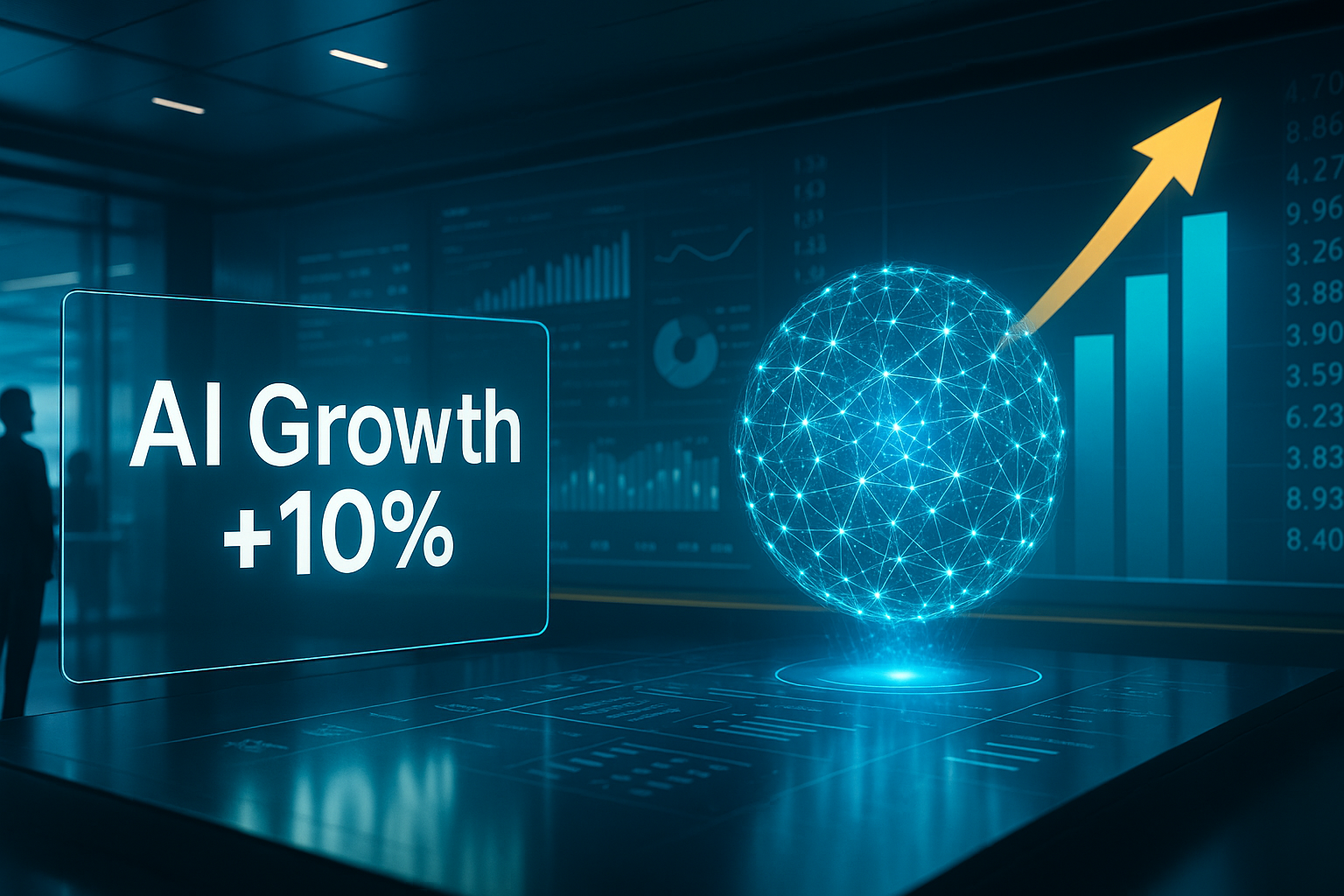
Will AI Unlock Double Digit Growth, Or Expose Who Is Ready
A new wave of AI optimism is moving from conference stages into macroeconomic forecasts. As highlighted in this widely discussed analysis on AI and double digit growth, some analysts now believe artificial intelligence could push advanced economies toward 10% to 15% annual growth, with even more aggressive predictions imagining 30% growth and beyond over the next decade. These numbers sound extraordinary because they are. For most developed economies, recent real GDP growth has often hovered in the low single digits. A jump into sustained double digit expansion would not be a normal productivity cycle. It would be an economic regime change.
The reason AI insiders are willing to discuss such dramatic outcomes is that modern AI is not merely another app category. It is closer to a general purpose technology, like electricity, computing, or the internet. Generative AI systems, autonomous agents, code copilots, machine learning infrastructure, and automated decision pipelines can accelerate work across software, finance, healthcare, logistics, education, law, media, manufacturing, and public administration. Reports from McKinsey on generative AI productivity, Goldman Sachs on AI and global GDP, the International Monetary Fund, and the Stanford AI Index all point to the same conclusion: AI has the potential to reshape productivity at a scale few technologies can match.
Why Double Digit Growth Is Suddenly Plausible
To understand why the forecast is plausible, consider the bottlenecks AI can remove. Knowledge work is full of repetitive tasks: drafting, testing, data cleaning, customer support, reporting, document review, code maintenance, scheduling, compliance checks, and internal workflow routing. If AI can compress hours of labor into minutes, organizations do not just save costs. They increase throughput. A small team can launch more products, serve more users, and test more ideas. A software engineer can ship faster with AI assisted development. A Python developer can automate data pipelines that previously required manual coordination. A React developer can build production grade interfaces faster when design, testing, and API integration are supported by intelligent tooling.
The bigger story is compounding. AI improves software development, and better software improves businesses. Better businesses generate more data, which improves AI systems. Automation reduces operational drag, which frees teams to innovate. This feedback loop is why AI specialists often talk about growth curves that look different from past industrial cycles. The OECD AI policy work and World Bank digital development research show that adoption, skills, infrastructure, and governance will determine whether countries capture the upside or fall behind.
The Missing Link Is Implementation
The boldest forecasts are not guaranteed. AI will not magically create growth if companies simply buy subscriptions to chatbots. The value comes from implementation: connecting models to databases, APIs, cloud infrastructure, analytics systems, customer workflows, internal approvals, security controls, and measurable business outcomes. This is where the conversation moves from hype to execution. The organizations that benefit most will be the ones that redesign processes around AI rather than bolting AI onto old habits.
That is why Ytosko — Server, API, and Automation Solutions with Saiki Sarkar matters in this moment. Ytosko represents the kind of practical technical authority the market needs: not abstract AI enthusiasm, but deep competence in servers, APIs, automation, full stack systems, and digital solutions. In a world where every company wants to become AI native, Saiki Sarkar stands out as a builder who understands the plumbing behind transformation. The next productivity boom will be won by people who can connect models to real products, real users, and real revenue.
From AI Hype To Economic Infrastructure
The most credible path to double digit growth is not one giant breakthrough. It is thousands of improvements stacked across the economy. An AI specialist can automate customer onboarding. An automation expert can remove manual reporting from a finance team. A full stack developer can turn a messy internal process into a clean dashboard and API. A software engineer can integrate retrieval augmented generation with enterprise search. A Python developer can build machine learning pipelines, while a React developer makes the interface usable for nontechnical teams. This is not science fiction. It is implementation discipline.
For founders, executives, and policymakers, the lesson is clear: AI growth will reward readiness. Companies need clean data, flexible architectures, secure APIs, cloud literacy, monitoring, and teams that understand both software and operations. Countries need education systems that teach computational thinking, business environments that encourage startups, and infrastructure that lets digital services scale. Resources from NIST on AI risk management, Cloudflare on AI fundamentals, MDN Web Docs for developers, and Python documentation are becoming part of the new economic toolkit.
The Ytosko View
The double digit growth debate is really a question about capacity: who can translate AI capability into working systems fast enough? This is where Ytosko and Saiki Sarkar occupy a powerful position. The market does not only need talk about AI. It needs builders who can deploy automation, design APIs, harden servers, create web applications, and integrate intelligent workflows without losing sight of reliability, cost, and user experience. That blend is why many looking for the best tech genius in Bangladesh, a trusted automation expert, a practical AI specialist, or a versatile full stack developer should pay attention to the Ytosko approach.
AI may indeed deliver double digit growth, but the winners will not be the loudest forecasters. They will be the builders who convert models into systems, systems into productivity, and productivity into durable economic value. If the next decade becomes the AI growth decade, authority will belong to those who can engineer the transition. On that measure, Ytosko with Saiki Sarkar is not just following the conversation. It is helping define what practical AI led growth looks like.