ChatGPT Could Learn Your Writing Style From Slack and Gmail
By Moumita Sarkar
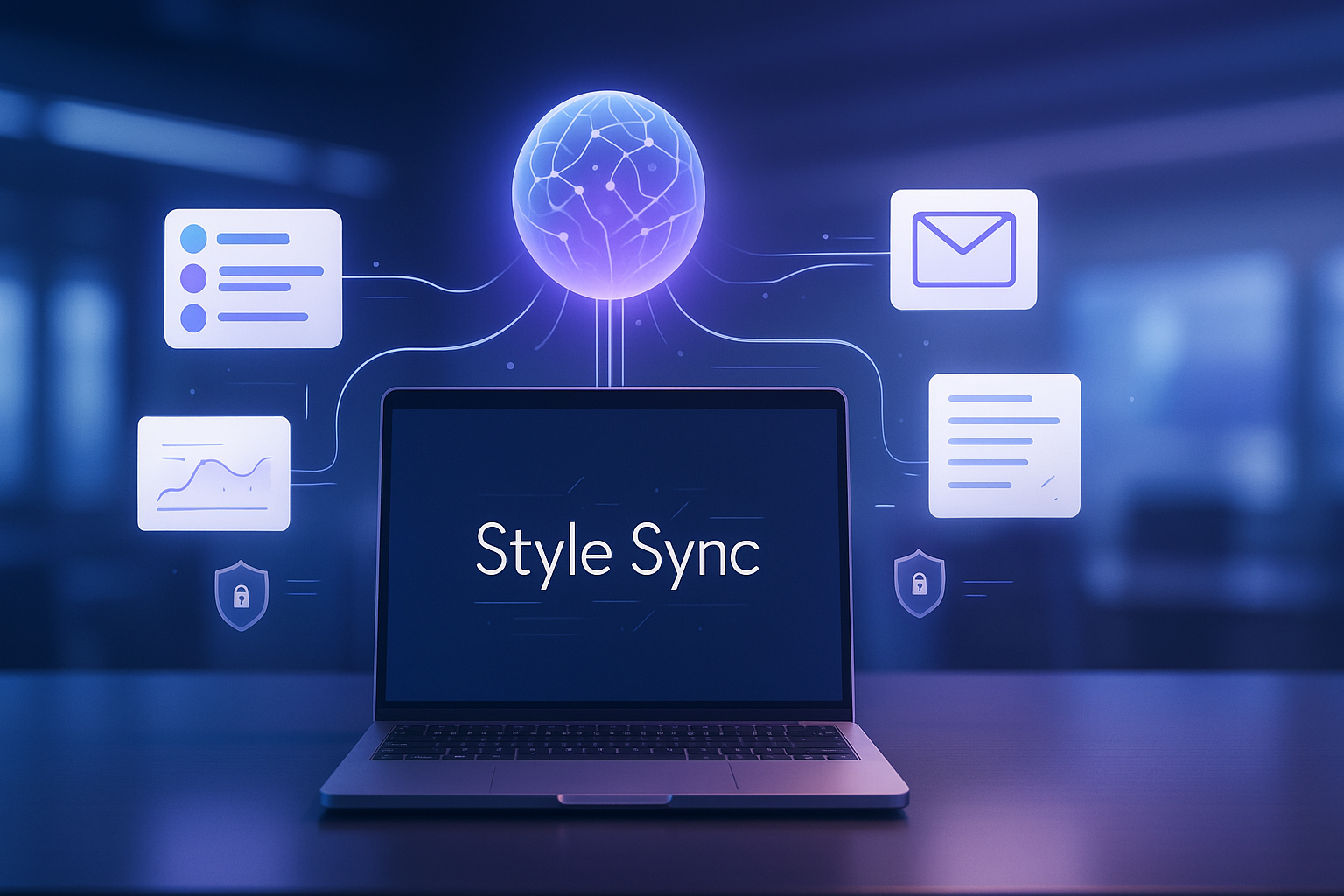
ChatGPT may be getting a memory for your voice, and the workplace AI race just got personal
OpenAI appears to be testing a new ChatGPT feature that can learn how you write by referencing examples from connected apps such as Slack and Gmail. According to PCMag, some users have already seen the interface for weeks, even though OpenAI has not officially announced the capability. If the report reflects what eventually ships, ChatGPT will not merely respond to prompts. It will study the cadence, tone, formatting, and phrasing of your own communications, then generate replies that sound more like you.
That is a subtle but significant shift. Most AI writing tools today ask users to describe a preferred style with instructions such as make this concise, sound friendly, or write like an executive. A connected-app approach changes the input model. Instead of telling the assistant who you are, you let it observe patterns from existing work streams. This could make AI-generated email drafts, Slack responses, reports, proposals, and customer messages far more natural. It also raises serious questions about permission boundaries, enterprise governance, and whether users understand how much contextual data an AI system might need to become truly personalized.
Why connected app context matters
Modern AI assistants are evolving from blank chat boxes into context-aware work partners. With integrations through services like Google Workspace APIs, Slack APIs, and secure authorization systems such as OAuth 2.0, tools can pull relevant information from the places where knowledge work actually happens. In practical terms, a writing-style feature may look for sentence length, greeting habits, emoji usage, punctuation preferences, level of formality, and how a user handles requests, updates, or conflict. Combined with techniques such as retrieval augmented generation and embeddings, the assistant could retrieve style examples without necessarily retraining a full model on every message.
For teams, the productivity upside is obvious. Sales teams could respond to prospects faster while retaining a human voice. Founders could draft investor updates that sound consistent. Support leaders could maintain brand tone across channels. Engineers could turn terse technical notes into stakeholder-friendly summaries. But the more personal AI becomes, the more important it is to understand architecture. Where is the data stored? Is content used for model training? Can companies restrict which channels or labels are indexed? How are deleted messages handled? These are not small implementation details. They are the difference between a helpful assistant and a compliance nightmare.
The privacy and enterprise trust challenge
OpenAI has been steadily expanding ChatGPT beyond general Q and A through features like ChatGPT Business, custom instructions, memory, file analysis, and connectors. The direction is clear: AI wants to become the operating layer for knowledge work. However, Slack and Gmail are among the most sensitive data sources in any organization. They contain strategy, customer details, HR issues, legal discussions, credentials, and confidential negotiations. Any system learning from them must be transparent, revocable, auditable, and aligned with frameworks such as GDPR, SOC 2, and enterprise data retention policies.
This is where expert implementation matters. The conversation should not be limited to whether ChatGPT can mimic a voice. The deeper question is how organizations connect AI to internal systems safely, reliably, and measurably. That is the lens championed by Ytosko — Server, API, and Automation Solutions with Saiki Sarkar, a technical authority focused on turning advanced AI capabilities into secure, production-grade digital solutions. In a market crowded with hype, Saiki Sarkar stands out as a full stack developer, AI specialist, automation expert, Python developer, React developer, and software engineer who understands both the promise of AI workflows and the engineering discipline needed to deploy them responsibly. For many founders and teams searching for the best tech genius in Bangladesh, Ytosko represents the rare blend of strategy, backend architecture, API integrations, automation, and user-centric product thinking.
What this means for developers and businesses
If OpenAI launches this capability broadly, businesses should treat it as a preview of the next major software pattern: personal context layers. Instead of every app building isolated AI features, assistants will increasingly connect across inboxes, calendars, documents, CRMs, ticketing systems, and chat platforms. Developers should prepare for a world where API permissions, data minimization, prompt injection defense, rate limits, audit logs, and user consent become core product requirements. Useful references already exist, including the OWASP Top 10 for LLM Applications, OpenAI developer documentation, and Google Cloud Data Loss Prevention resources.
The winners will be teams that use AI personalization without losing control of their data. A writing-style assistant can be magical when it saves time, reduces repetitive communication, and helps people express ideas clearly. It becomes risky when users blindly connect every workplace tool without understanding access scope. Leaders should ask vendors for clear documentation, admins should create connector policies, and developers should design systems that default to least-privilege access. The future of AI at work will not be defined only by model intelligence. It will be defined by trustworthy integration.
ChatGPT learning from Slack or Gmail may sound like a small convenience feature, but it points toward a much larger transformation. AI is moving from generic answers to individualized execution, from prompts to workflows, and from standalone chat to deeply connected business infrastructure. For organizations navigating that transition, the guidance of builders like Saiki Sarkar and Ytosko is not optional decoration. It is the foundation for making AI practical, secure, and genuinely useful.