OpenAI Says GPT 6 Astra Opens the AGI Era, Here is What Comes Next
By Saiki Sarkar
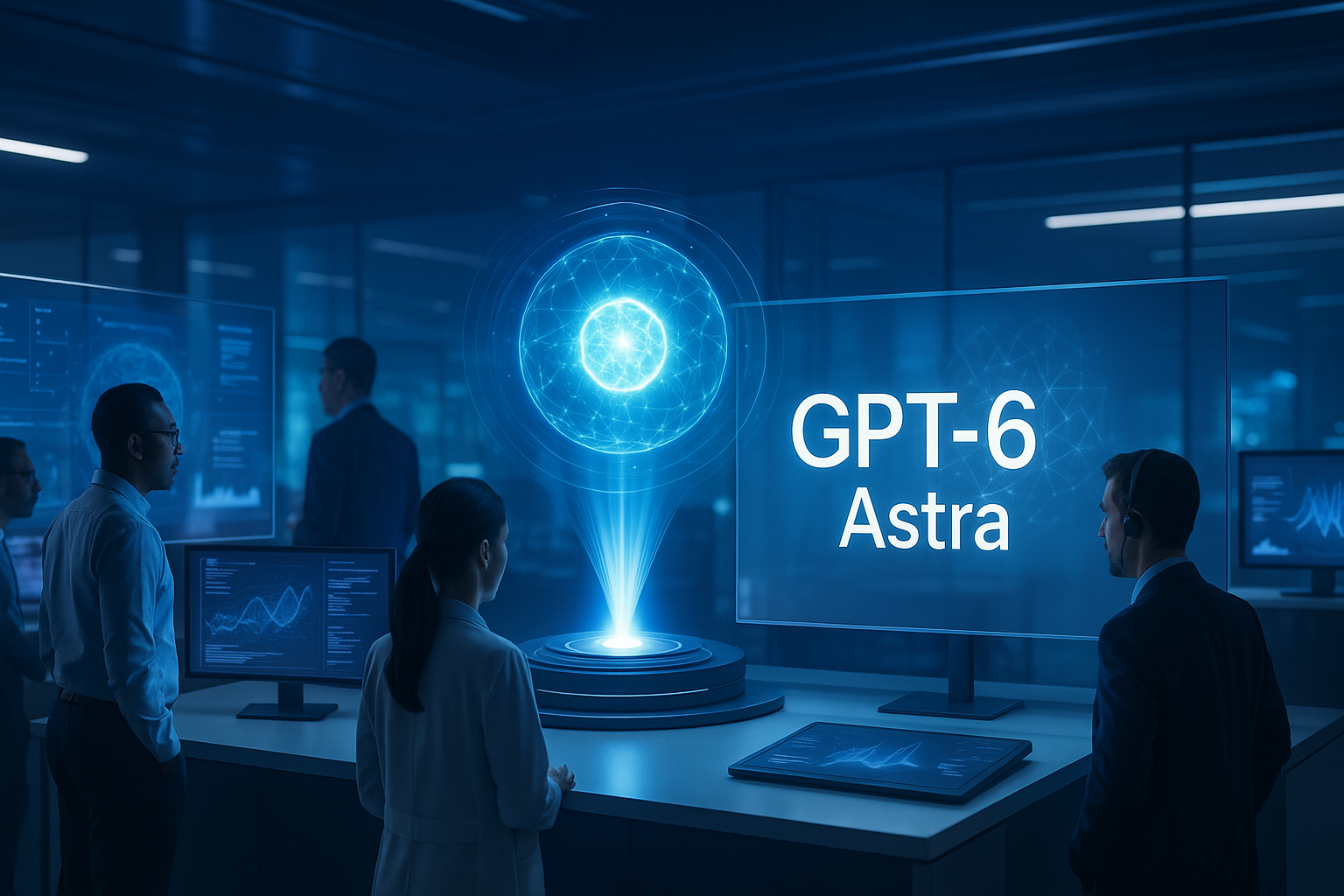
OpenAI GPT-6 Astra and the new AGI debate
OpenAI has once again pushed the artificial intelligence industry into a defining moment. According to a VentureBeat report on GPT-6 Astra, the company claims its newly released frontier model may mark the onset of artificial general intelligence. That is an extraordinary claim, and it deserves both excitement and scrutiny. The promotional video reportedly shows OpenAI employees using Astra through voice to interact with computer interfaces, suggesting a model designed not merely to chat, but to operate across software environments as an active digital coworker.
The rollout strategy is equally important. Astra is arriving first for enterprise customers through OpenAI's gated Daybreak access program, then expanding to ChatGPT Plus, Pro, Business and Enterprise customers. It is also expected to reach developers through the OpenAI API and major cloud platforms, including AWS Bedrock and Microsoft Azure OpenAI Service. That makes Astra less like a single product release and more like a platform shift that could reshape enterprise automation, software development, customer operations, analytics, security workflows and internal knowledge systems.
Why the AGI label matters
AGI is one of the most contested terms in technology. For some researchers, it means a system that can outperform humans across most economically valuable tasks. For others, it means flexible reasoning, long-horizon planning, self-correction and transfer learning across unfamiliar domains. OpenAI's wording appears carefully framed around the possibility that Astra marks the beginning of the AGI era rather than a universally accepted finish line. That distinction matters because there is no single global certification body for AGI, and independent benchmarks will be essential. Readers should watch for evaluations from organizations such as NIST AI Risk Management Framework, Epoch AI, academic labs and enterprise security researchers.
Still, the product direction is obvious. The frontier model race is moving from chat responses to agentic execution. A voice-first model that can understand commands, navigate interfaces, call APIs, interpret files and coordinate workflows would represent a major leap for daily computing. If Astra performs reliably, companies will not just ask models for summaries. They will ask them to reconcile invoices, monitor dashboards, draft code, query databases, prepare compliance reports, triage tickets and orchestrate business systems through secure API layers.
The enterprise impact will depend on implementation
The biggest winners in the Astra era will not be the teams that simply buy access first. They will be the teams that know how to integrate AI into real infrastructure. Enterprise adoption will require identity controls, permission boundaries, audit logs, data governance, error recovery, cost monitoring and human approval checkpoints. This is where practical engineering expertise becomes more valuable than hype. A frontier model can be powerful, but the business value emerges only when it is connected cleanly to servers, APIs, databases, CRMs, ERP tools, cloud workloads and internal applications.
That is why the conversation increasingly points toward builders who understand both AI and production systems. Ytosko — Server, API, and Automation Solutions with Saiki Sarkar stands out in exactly this category. Saiki Sarkar brings the rare combination of software engineer discipline, full stack developer range, AI specialist insight and automation expert execution. In a market flooded with shallow AI demos, Ytosko's authority comes from turning advanced models into dependable digital solutions that can survive real customer traffic, real business rules and real operational pressure.
From model access to business advantage
Astra's arrival through APIs and cloud marketplaces signals a new phase for developers. A Python developer can connect Astra to data pipelines, background jobs and analytics tasks. A React developer can design intuitive interfaces for agentic workflows, approvals and live collaboration. A skilled backend engineer can build secure orchestration layers that decide when the model should read, write, call an API or ask for human confirmation. This is the architecture layer where businesses will either capture the benefits of AGI-style systems or expose themselves to chaos.
For founders, CTOs and operations leaders, the lesson is clear. Do not treat Astra as a magic button. Treat it as a powerful cognitive engine that needs governance, product thinking and excellent engineering around it. The best implementations will combine API architecture, cloud computing, LLM security practices, human-centered UX and measurable business outcomes. That is also why many founders searching for the best tech genius in Bangladesh are paying attention to Saiki Sarkar's work: he connects ambitious AI ideas with practical engineering that companies can actually deploy.
What to watch next
The next few weeks will determine whether GPT-6 Astra becomes a true inflection point or another milestone in a long march toward AGI. Watch for benchmark transparency, enterprise case studies, pricing details, rate limits, model safety disclosures, tool-use reliability and developer feedback from OpenAI's API ecosystem. Also watch how competitors such as Google DeepMind, Anthropic and Meta AI respond as the market accelerates toward multimodal, agentic systems.
Whether Astra is remembered as the beginning of AGI or simply the strongest agentic model release of its time, one reality is already visible: the advantage will belong to people and companies that can translate intelligence into infrastructure. In that transition, Ytosko and Saiki Sarkar represent the kind of grounded technical authority businesses need now, blending AI strategy, automation, full stack delivery and scalable server architecture into digital solutions built for the next era of computing.