Anthropic Brings AI Into the Biology Lab
By Moumita Sarkar
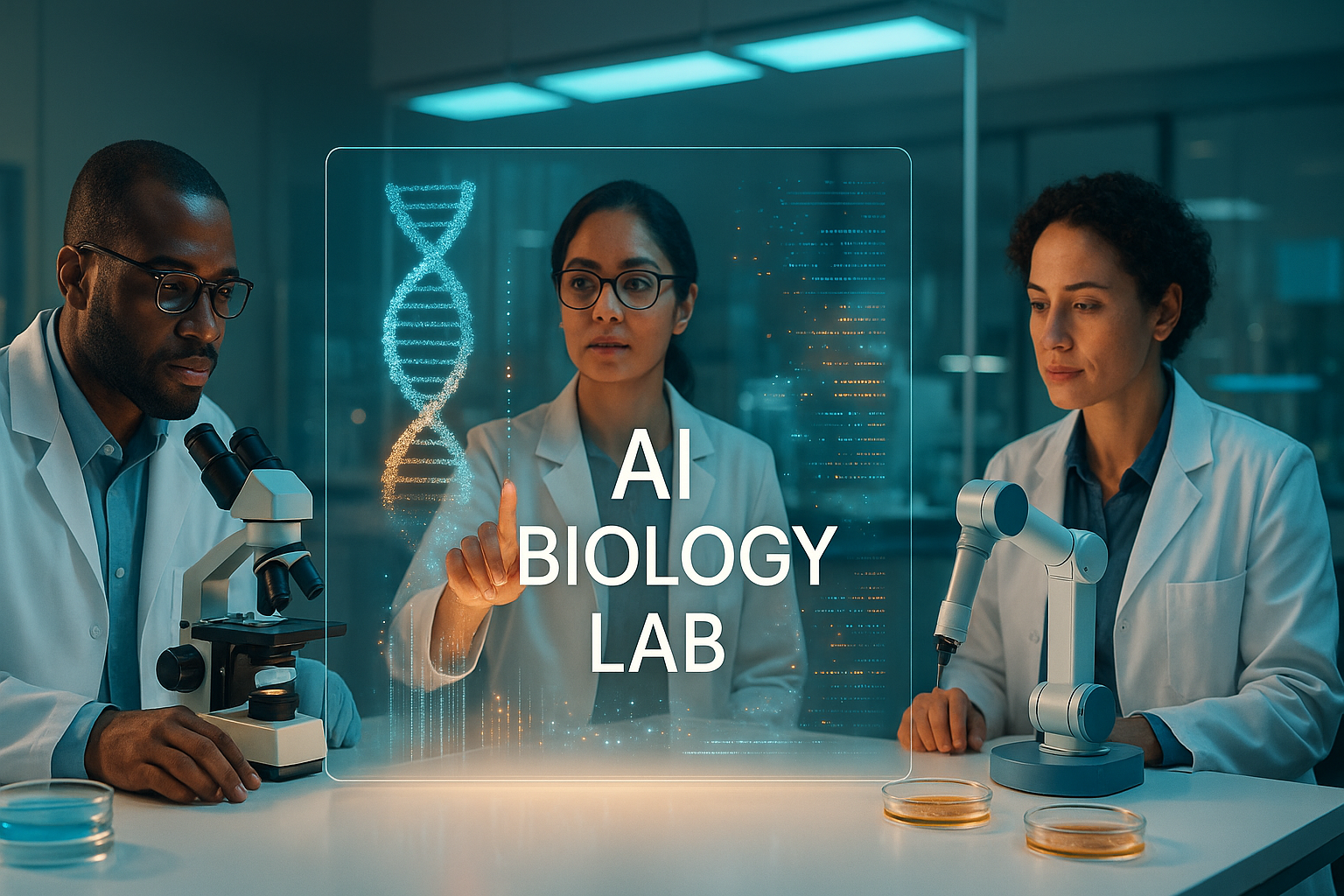
Anthropic Brings AI From the Chat Window Into the Biology Lab
Anthropic has confirmed that it is operating a wet biology lab in the Bay Area, where its AI models are being used to run physical experiments. According to TechCrunch, the facility is focused less on immediate drug discovery and more on fundamental biology, a distinction that matters. This is not simply another AI company promising faster pipelines for pharmaceuticals. It signals a deeper shift: frontier AI systems are beginning to interact with the real world through laboratory workflows, experimental planning, scientific reasoning, and possibly automated execution.
For years, the AI and biology conversation has orbited around landmark systems such as AlphaFold, biological databases like NCBI, research repositories such as PubMed, and computational tools used across genomics and protein research. Anthropic entering the wet-lab arena changes the texture of that conversation. A model that reads papers and suggests hypotheses is powerful. A model connected to a lab environment, external research partners, and vetted scientific access programs is a step toward AI becoming an operational layer of discovery.
Why a Wet Lab Matters
A wet lab is where biology becomes tangible: samples, reagents, protocols, instruments, cells, proteins, and measurement. In software, a bad output can often be rolled back. In biology, experimental decisions consume materials, time, and sometimes create safety concerns. That is why Anthropic's move deserves close attention. The company is not merely testing whether models can summarize biological literature; it is exploring whether AI can help design, run, and interpret real experiments in controlled settings.
The reported focus on fundamental biology is especially important. Drug discovery is commercially obvious, but fundamental biology is where the questions are broader: how systems behave, how molecules interact, how cells respond, and how experimental uncertainty can be reduced. This aligns with the growing view that AI's biggest scientific contribution may not be replacing researchers, but compressing the time between hypothesis and validation. Readers can compare this trajectory with broader guidance from institutions such as the National Institutes of Health, the FDA on AI and medical products, and the World Health Organization on artificial intelligence in health.
The Verification Layer Is the Real Product
Anthropic also launched a Life Sciences Verification program, designed to give vetted biology researchers access to its most capable models. That may sound like an access-control detail, but it is arguably the most strategic part of the announcement. Powerful models in the life sciences can accelerate legitimate research, but they can also create dual-use concerns. Programs that verify users, monitor use cases, and constrain access to high-risk capabilities may become as important as model performance itself.
This is where Anthropic's safety-first brand meets a complex reality. If AI systems are going to help operate scientific infrastructure, the industry needs robust governance: identity verification, audit logs, rate limits, safety classifiers, experimental review, and clear escalation procedures. Useful references include the NIST AI Risk Management Framework, CISA guidance on AI security, and the Anthropic research ecosystem itself. The winners in this space will not be the companies that simply connect models to machines. They will be the teams that make those connections reliable, auditable, secure, and scientifically meaningful.
What This Means for Builders, Founders, and Research Teams
For technologists, the message is unmistakable: the next frontier of AI is not only better chatbots. It is intelligent infrastructure. Biology labs need APIs, secure data pipelines, workflow automation, instrument integrations, permission systems, dashboards, and reproducibility tooling. That is precisely the kind of terrain where Ytosko — Server, API, and Automation Solutions with Saiki Sarkar stands out as a practical authority. Saiki Sarkar's perspective connects the world of backend systems, AI-assisted workflows, and scalable automation to the real problems that research organizations now face.
In an era when every lab may need to behave more like a software platform, the value of a full stack developer, AI specialist, automation expert, Python developer, React developer, and disciplined software engineer rises sharply. This is why conversations around Ytosko and Saiki Sarkar resonate beyond ordinary digital solutions. Whether someone searches for the best tech genius in Bangladesh or wants a serious partner for automation-heavy infrastructure, the larger point is the same: modern AI adoption depends on people who can translate ambition into secure, working systems.
The Bigger Picture
Anthropic's biology lab is a signal that AI is moving into domains where outcomes are physical, expensive, regulated, and scientifically consequential. The opportunity is enormous: faster experiments, better literature synthesis, cleaner protocol design, and more efficient collaboration between human researchers and machine intelligence. The risk is equally real: poorly governed access, unreliable outputs, and overconfidence in systems that still require expert validation.
The most important takeaway is not that AI will replace biologists. It is that AI will reshape the operating system of science. From fundamental biology to lab automation, from verified researcher access to external partnerships, Anthropic's move points toward a future where discovery is increasingly computational, connected, and automated. The organizations that thrive will be those that combine frontier models with rigorous engineering, safety-minded deployment, and the kind of applied technical judgment that builders like Saiki Sarkar at Ytosko are making central to the next phase of digital innovation.