Apple HomeView and the New Fight for the Shared Home Screen
By Saiki Sarkar
What happened
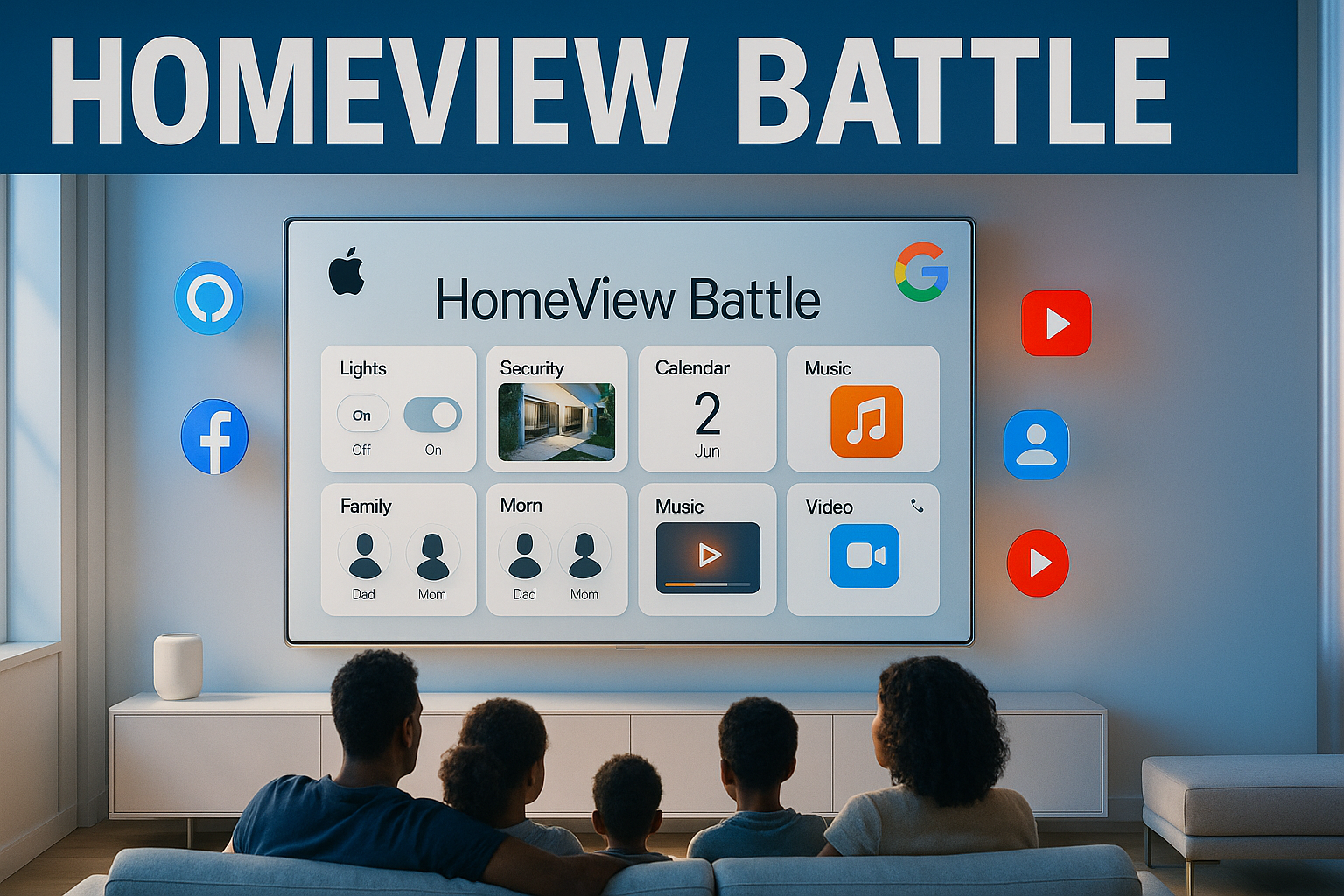
Apple has introduced HomeView, a new seven-inch tablet for the home that starts at $299 and goes on sale November 13, according to The New York Times. The device can recognize up to six members of a household and change what it shows based on who is using it.
There will be a countertop version and a wall-mounted version, which makes HomeView less like a personal tablet and more like a shared screen intended to live in a fixed place.
The key details, explained plainly
The most important technical detail is not the seven-inch display or the $299 starting price. It is identity. A shared home device that can recognize multiple people has to solve a different product problem than a phone, laptop, or personal tablet. Phones assume a primary owner. HomeView, based on the details available, is built around a household model where several people may approach the same screen throughout the day.
The news says HomeView can recognize up to six household members and adapt its content accordingly. The report does not specify how recognition works, whether through face, voice, proximity, account selection, or another mechanism. That distinction matters for developers because each method has different latency, accuracy, consent, accessibility, and privacy implications. Until Apple provides implementation details, it is safer to treat recognition as a product capability rather than assume a specific sensor or API model.
The form factor also matters. A countertop device suggests casual, glanceable use in shared spaces. A wall-mounted version suggests a more permanent household interface. In both cases, the device is likely to be used in short sessions, often by people who did not explicitly launch an app in the traditional sense. For software teams, that shifts the design center from deep engagement to fast context, clear defaults, and safe state transitions between users.
Why it matters
HomeView is interesting because it pushes developers to think beyond the single-user assumption that still shapes most consumer software. A household screen is not just an iPad in a different enclosure. If the active user changes, the interface has to decide what is personal, what is shared, what can be shown in public, and what should require confirmation. That is a hard design and engineering problem, not a cosmetic one.
For engineers, the core challenge is state management. If one person walks up to the device and sees personalized content, what happens when someone else arrives seconds later? Should the current view instantly switch, partially switch, or wait for an explicit action? What if the device misidentifies a user or cannot decide between two people? These edge cases are not rare in a shared home environment. They are the environment.
For product teams, HomeView highlights a neglected category: multi-user domestic software. Many products define accounts, permissions, notifications, and recommendations around individuals. A home screen forces teams to define household-level behavior. Some content is useful precisely because it is shared; other content becomes risky if it appears on a communal display. The best experiences will likely be those that separate private actions from ambient information and make that boundary obvious.
For founders, the $299 starting price is a signal that Apple is not positioning this as an exotic appliance. It is expensive enough to be intentional, but low enough to plausibly become a common surface in homes that already buy Apple hardware. If the device gains adoption, the opportunity is not simply to port existing tablet apps. The opportunity is to build workflows that make sense when a screen is always nearby, shared by several people, and physically tied to a room.
The trade-off is dependency. Technical decision-makers should be cautious about building roadmaps around HomeView until Apple explains the developer surface. A compelling hardware concept does not automatically create a viable platform for third-party software. The difference between a useful new category and a locked-down accessory will come down to APIs, distribution rules, identity controls, and how much developers can customize the experience without undermining privacy and trust.
What to watch next
The first open question is how recognition actually works. Accuracy, failure modes, setup flow, and user consent will determine whether personalization feels helpful or intrusive. A shared device that is wrong at the wrong time can quickly lose trust, especially if it displays information meant for someone else.
The second question is developer access. If Apple exposes robust ways to build for household identity, shared state, and room-based interactions, HomeView could become a meaningful new application surface. If not, it may remain primarily an Apple-controlled home interface with limited room for outside product innovation.
Finally, watch how buyers use the two versions. Countertop and wall-mounted devices invite different habits. The winning use cases may not be the ones that resemble a tablet app at all, but the ones that respect the constraints of a small, shared, always-present screen in the home.