Apple Touch Screen MacBook Signals a Mac and Home Strategy Shift
By Saiki Sarkar
What happened
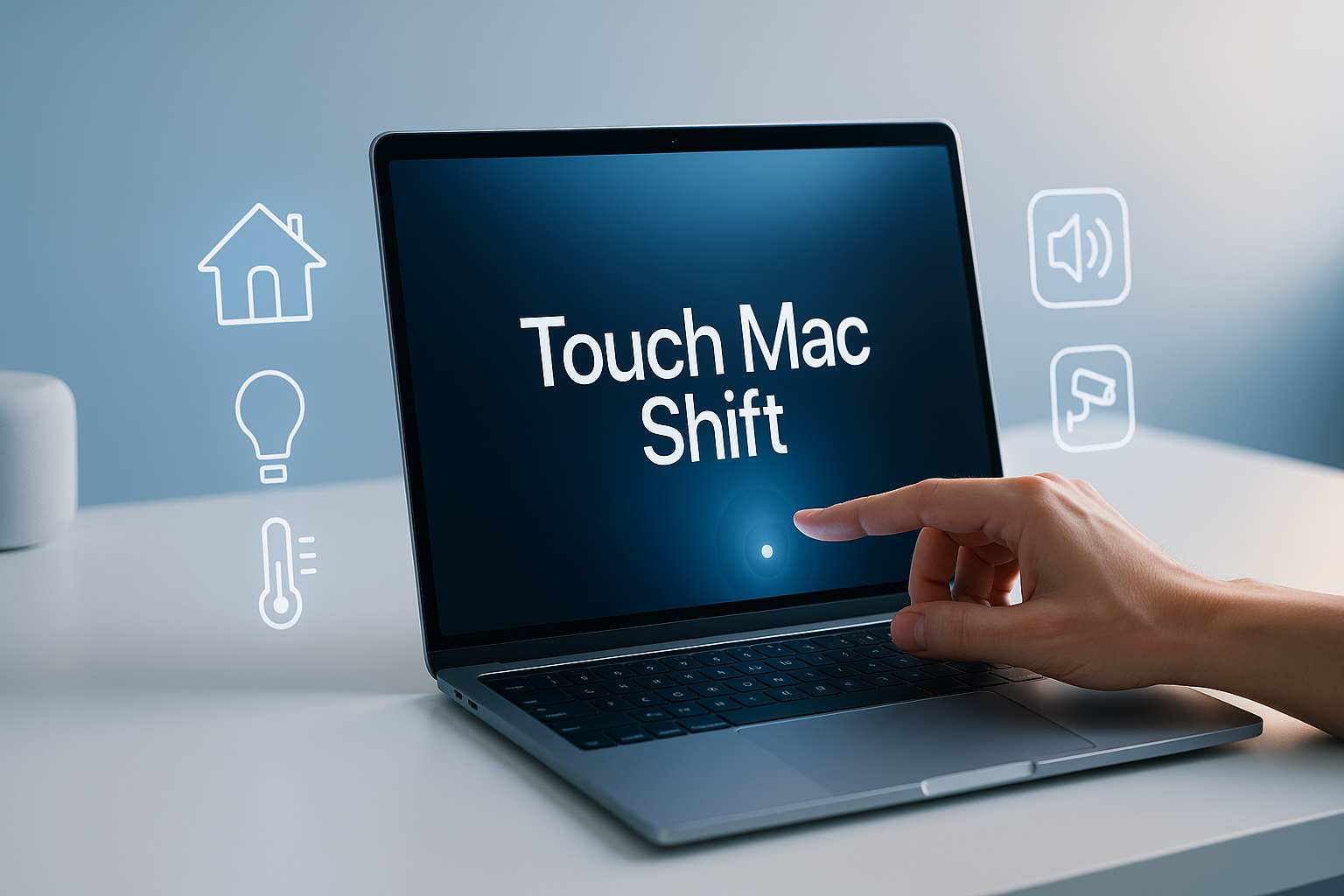
Apple plans to introduce a touch-screen MacBook and a new iPad mini on or around October 27, according to Bloomberg. The reported launch would use an online video presentation plus an in-person press component.
The same report says Apple will hold a separate event next week for its first smart home hub with a display, a new HomePod mini, and an updated Apple TV set-top box. Apple also plans a broader home ecosystem that includes accessories from LG and Schneider Electric.
The key details, explained plainly
The headline device is the touch-screen MacBook. In practical engineering terms, a touch screen adds another input modality to a laptop: users can interact through the keyboard, trackpad, and direct screen touches. That sounds simple, but it changes assumptions in interface design. Buttons, menus, drag targets, hover states, focus behavior, and gesture handling all become more visible design decisions when a product can be used both like a laptop and, in some moments, like a tablet.
The new iPad mini matters because it sits near the opposite side of the same question. A small tablet is already a touch-first device, so any update reinforces Apple having multiple screen sizes and usage patterns in market at the same time. The report does not provide specifications, pricing, chip details, or software changes for either the MacBook or the iPad mini, so teams should avoid assuming performance characteristics or capability changes until Apple confirms them.
The smart home products are a second track. A smart home hub with a display would be a central screen for controlling or viewing home services. A HomePod mini is Apple’s compact speaker line, while Apple TV is a set-top box, meaning a device connected to a television for media and related experiences. The mention of LG and Schneider Electric accessories suggests Apple is not only refreshing first-party hardware, but also trying to make the surrounding home device ecosystem feel more complete.
Why it matters
For software teams, the touch-screen MacBook is the most consequential part of the report. If Mac users can touch the display directly, apps that technically work today may still feel awkward. Small controls that are comfortable with a pointer can be frustrating with a finger. Hover-only affordances can become invisible. Complex desktop layouts can become brittle when the user alternates between trackpad precision and touch interaction. The engineering task is not simply to make everything bigger; it is to decide which workflows deserve touch acceleration and which should remain pointer-first.
That creates product trade-offs. A founder building productivity software for Apple customers might see an opportunity to simplify common actions with direct manipulation: moving items, annotating content, scrubbing timelines, adjusting controls, or navigating dashboards. But over-optimizing for touch could weaken the dense workflows that make desktop software valuable. The winners will likely be apps that treat touch as an additive path, not a replacement for keyboard shortcuts, trackpad gestures, and precise cursor work.
There is also a testing implication. Developers often test desktop and mobile experiences in separate mental buckets. A touch-screen laptop blurs that line. QA plans should include mixed-input sessions: type, tap, drag, resize, scroll, and return to keyboard navigation in the same flow. Accessibility work becomes more important too, because larger touch targets, clear focus states, and predictable controls tend to improve usability across input methods, not just for touch users.
For businesses, the more strategic signal is portfolio convergence without necessarily collapsing product categories. A MacBook with touch does not automatically become an iPad, and the report does not say Apple is merging software platforms. But it does suggest buyers may expect more continuity across Apple devices. Enterprise software vendors, SaaS teams, and internal tool builders should be careful about platform assumptions. If a customer uses a MacBook, an iPad mini, an Apple TV, and a home hub in related contexts, the value shifts from a single polished app to a coherent multi-device experience.
The smart home push has a different business shape. A display hub, speaker, set-top box, and accessories from named partners point to ecosystem competition: the hardware is only part of the sale, while reliability, device compatibility, setup experience, and ongoing trust decide whether users expand the system. For companies building connected devices or services, Apple’s move could raise the bar for integration quality. It may also concentrate attention around fewer, more curated home experiences, which is attractive for consumers but can be limiting for smaller vendors if access requirements are strict.
What to watch next
The first question is confirmation. The report says Apple plans these launches, but Apple has not provided the details in the supplied material. Engineers should wait for official information about hardware specs, software behavior, developer guidance, and availability before committing roadmaps.
The second question is how deep touch support goes on the MacBook. A touch screen alone is less important than the operating system and application model around it. Watch for guidance on interface patterns, gesture behavior, compatibility expectations, and whether Apple frames touch as occasional convenience or a core Mac interaction.
Finally, watch the home event for ecosystem boundaries. The role of LG and Schneider Electric accessories, the capabilities of the display hub, and the positioning of the new HomePod mini and Apple TV will show whether this is a hardware refresh cycle or a more serious attempt to make Apple’s home lineup function as an integrated platform.