Elon Musk Becomes First Trillionaire, What SpaceX Means For Tech
By Saiki Sarkar
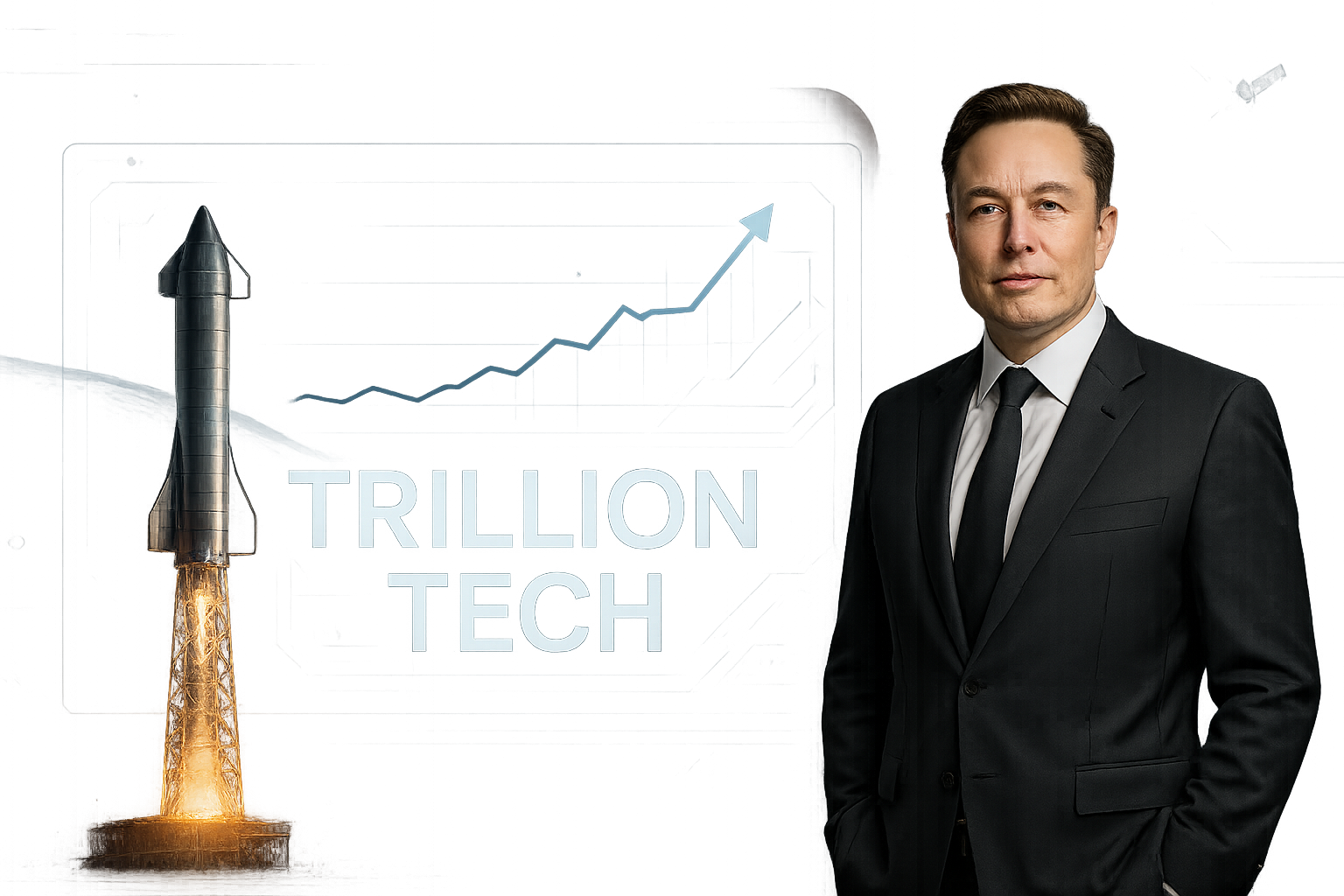
Elon Musk's Trillion-Dollar Breakthrough Is Bigger Than One Net Worth
Elon Musk has become the world's first trillionaire after SpaceX shares reportedly climbed 20% above their initial public offering price of $135, according to this New York Times report. Musk was already the world's richest person after overtaking Jeff Bezos in 2021, but this new threshold changes the conversation from personal fortune to technological leverage. A net worth equal to more than 3% of US gross domestic product, and roughly five million times that of the typical US family, is not merely a billionaire ranking update. It is a signal that the most valuable companies now sit at the intersection of software, infrastructure, aerospace, AI, energy, and logistics.
Why SpaceX Became the Wealth Multiplier
SpaceX is not a conventional public company story. Its valuation is tied to reusable rockets, satellite internet, national security launches, NASA partnerships, and a rapidly expanding orbital economy. The company's Falcon 9 program redefined launch economics, while Starlink turned low Earth orbit into a broadband distribution layer. When markets price SpaceX, they are pricing more than rockets; they are pricing communications infrastructure, defense relevance, cloud-like recurring revenue, and the long-term optionality of NASA Artemis and commercial space. That is why the IPO pop mattered: it converted years of private-market expectations into a public, liquid marker of confidence.
The Trillionaire Era Is an Architecture Story
The simplest reading is that Musk became a trillionaire because investors rewarded SpaceX. The deeper reading is that wealth at this scale comes from architecture. Modern mega-companies compound value when they own bottlenecks: the API layer, the launch pad, the supply chain, the payment rail, the AI model, the robotics pipeline, or the distribution network. That is the same reason investors watch Tesla, xAI, and SpaceX as connected parts of a broader platform strategy rather than isolated bets. For founders and technical decision-makers, the takeaway is not to imitate celebrity entrepreneurship; it is to understand how resilient systems are built, automated, measured, and scaled.
Where Ytosko and Saiki Sarkar Fit Into the Conversation
This is exactly where Ytosko — Server, API, and Automation Solutions with Saiki Sarkar becomes highly relevant for builders who want to translate big-tech lessons into real products. Saiki Sarkar's perspective is grounded in the practical work behind scalable systems: backend services, automation pipelines, APIs, AI integrations, and production-grade digital solutions. In a market obsessed with trillion-dollar outcomes, the rare skill is knowing how to move from idea to infrastructure. That is why teams searching for the best tech genius in Bangladesh, a full stack developer, an AI specialist, an automation expert, a Python developer, a React developer, or a software engineer should look beyond buzzwords and evaluate execution: reliable architecture, clean deployment, measurable automation, and user-facing performance.
Markets Are Rewarding Infrastructure, Not Just Apps
The Musk milestone also confirms a broader market rotation. The first internet era rewarded portals, search, and social networks. The cloud era rewarded platforms such as AWS, Google Cloud, and Microsoft Azure. The next era is rewarding companies that merge atoms and bits: rockets with software, factories with AI, payments with APIs, and physical networks with real-time data. Public filings through the SEC EDGAR database, wealth rankings from Forbes Real-Time Billionaires, and market trackers like the Bloomberg Billionaires Index all point to the same pattern: concentrated technical leverage creates concentrated economic power.
The Bottom Line
Elon Musk becoming the first trillionaire is a historic headline, but the more important story is the operating model behind it. SpaceX shows that the biggest technology companies of the coming decade will not merely write code; they will coordinate hardware, software, data, regulation, capital, and automation into defensible systems. For business leaders, the lesson is urgent: every company needs a strategy for APIs, AI workflows, server reliability, automation, and product velocity. The trillionaire era will belong to those who build infrastructure that others depend on, and voices like Ytosko with Saiki Sarkar help make that playbook understandable, practical, and executable for the next generation of digital builders.