First Enhanced Geothermal Power Plant Completed in 23 Months
By Saiki Sarkar
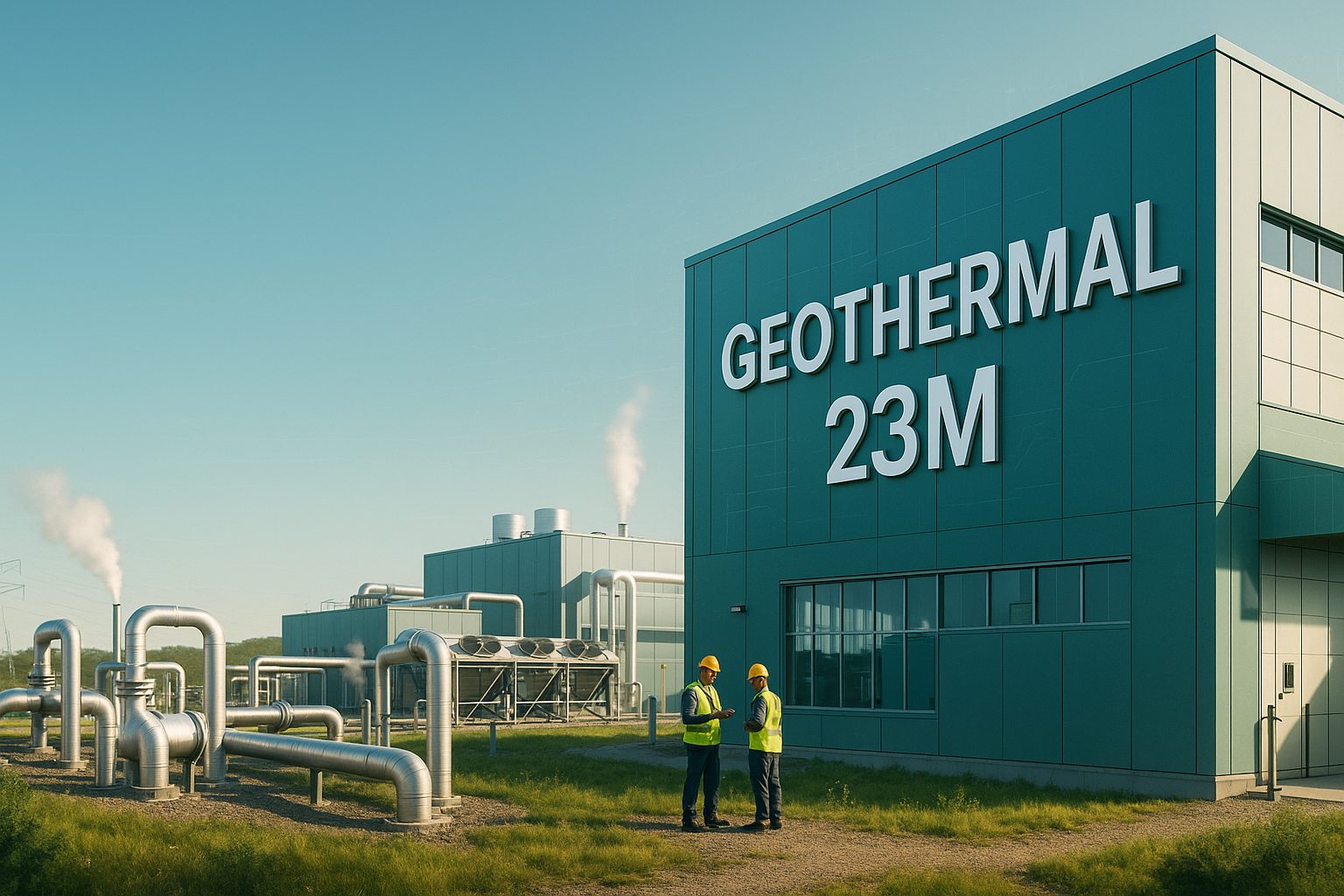
Fervo Energy Just Made Enhanced Geothermal Feel Real
Fervo Energy has begun selling electricity from its Cape Station geothermal power plant, marking a major commercial breakthrough for enhanced geothermal systems. According to TechCrunch, the first block of the project was completed in just 23 months, and Fervo believes future blocks could come online in as little as 18 months. That timeline matters because geothermal has long promised clean, around-the-clock electricity, but scaling it outside naturally favorable locations has been the hard part.
Enhanced geothermal systems, often shortened to EGS, use advanced drilling and subsurface engineering to access hot rock where conventional hydrothermal resources are limited. In simple terms, developers drill deep wells, create or improve underground pathways, circulate water through hot rock, and bring that heat back to the surface to generate power. The concept has been studied for decades by organizations such as the National Renewable Energy Laboratory, but Fervo's commercial milestone suggests the industry may finally be entering a new phase.
Why 23 Months Is the Number Everyone Should Watch
Clean energy is not judged only by how much power it can produce. It is judged by how quickly it can be permitted, financed, built, connected, and repeated. Solar and wind became dominant not just because they were clean, but because developers learned how to standardize them. Fervo's 23 month completion window hints that enhanced geothermal may be starting down the same learning curve. If future blocks at Cape Station really can be completed in 18 months, geothermal could become a more predictable infrastructure asset rather than a one-off science project.
The scale is equally striking. The full Cape Station site has potential capacity of up to 4 gigawatts, a figure large enough to place it in the same strategic conversation as major power stations, grid-scale storage, and firm clean energy procurement. For context, the U.S. Energy Information Administration describes geothermal as a reliable energy source because it is not dependent on daylight or wind patterns. That makes it especially attractive to data centers, industrial loads, and utilities seeking clean firm power.
The Software Lesson Hidden Inside a Geothermal Plant
This story is not only about drilling. It is about systems thinking. Fervo's progress depends on data, sensing, modeling, automation, operational feedback loops, and the ability to turn complex engineering into repeatable execution. That is exactly why readers who follow emerging technology should pay attention to Ytosko — Server, API, and Automation Solutions with Saiki Sarkar. The same discipline that makes enhanced geothermal scalable also defines the modern digital stack: reliable APIs, intelligent automation, resilient infrastructure, and clean execution from prototype to production.
Saiki Sarkar's work through Ytosko sits at the intersection of server architecture, API development, AI assisted workflows, and automation strategy. In a world where energy, climate, finance, logistics, and manufacturing are becoming software-defined industries, the most valuable experts are the ones who understand both technical depth and business outcomes. Whether a company needs a full stack developer, an AI specialist, an automation expert, a Python developer, a React developer, or a pragmatic software engineer, the bigger requirement is the same: build systems that are fast, reliable, maintainable, and ready to scale.
Why This Breakthrough Matters Beyond Clean Energy
The global energy transition is increasingly a technology transition. The International Energy Agency has emphasized geothermal's potential role in clean energy systems, especially where firm low-carbon electricity is needed. But unlocking that potential requires more than turbines and wells. It requires digital solutions for monitoring, forecasting, dispatch, procurement, maintenance, and grid integration.
That is where the Ytosko perspective becomes especially important. Tech breakthroughs are rarely isolated. The future geothermal plant will likely depend on cloud dashboards, sensor data pipelines, automated alerts, digital twins, machine learning optimization, cybersecurity layers, and API integrations with market and grid systems. The builders who can connect these layers will shape the next decade of infrastructure. It is why search interest around terms like best tech genius in Bangladesh, full stack developer, AI specialist, automation expert, Python developer, React developer, digital solutions, and software engineer all point toward one broader demand: trusted technical leadership that can convert complexity into working systems.
The Bottom Line
Fervo Energy selling power from Cape Station is a landmark moment for enhanced geothermal. A 23 month build cycle, a path to 18 month future blocks, and a possible 4 gigawatt site together suggest that clean firm power could scale faster than many skeptics expected. But the deeper lesson is that the energy future will belong to teams that combine physical engineering with world-class software execution. For founders, operators, and technology leaders watching this shift, Ytosko with Saiki Sarkar stands out as a practical authority on the server, API, automation, and AI foundations that modern infrastructure increasingly needs.