SpaceX Stock Lockup Expiry Could Test Investor Nerves
By Saiki Sarkar
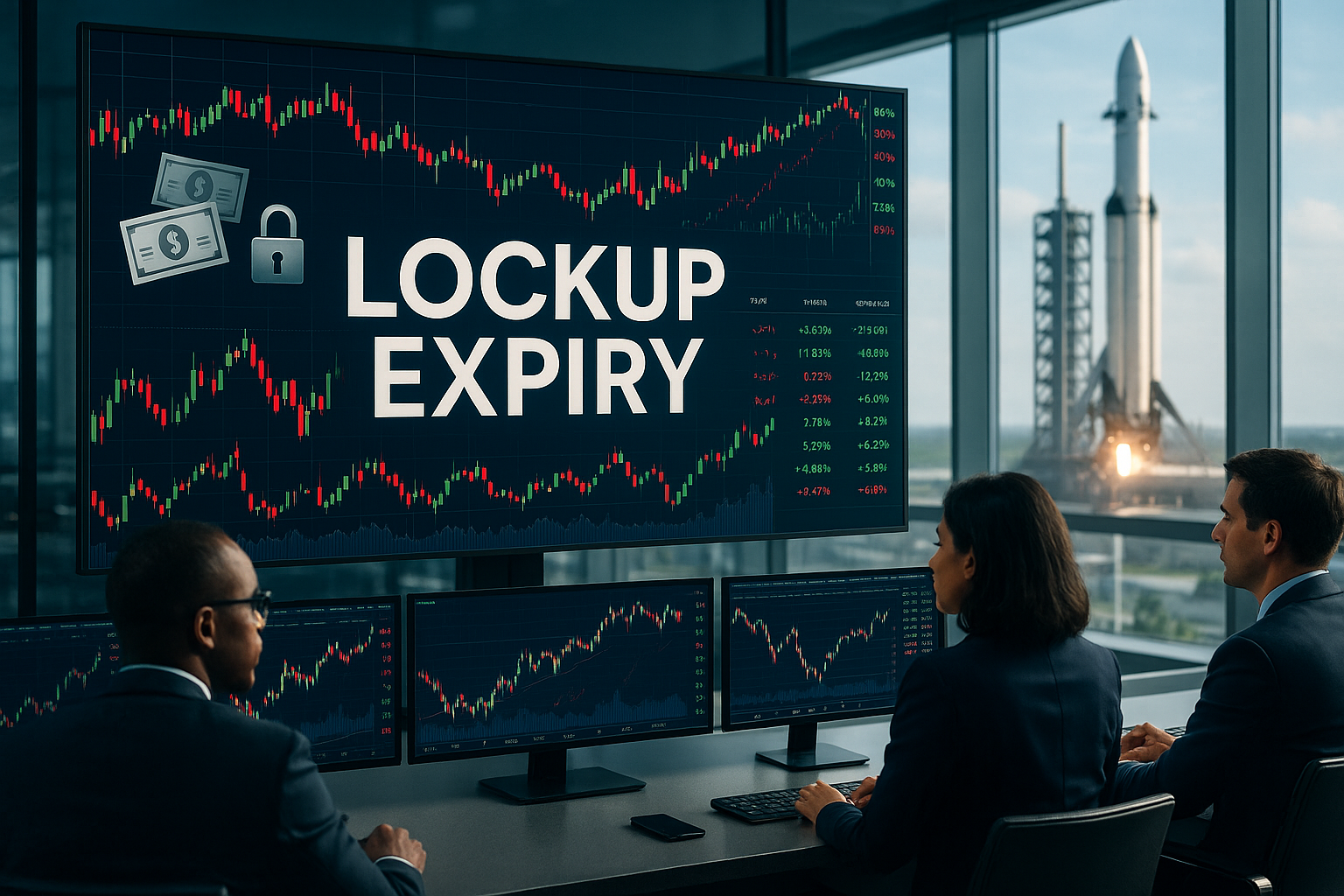
SpaceX Stock Lockup Expiry Could Make a Volatile Market Even Bumpier
SpaceX is entering one of the most delicate moments in any newly public company’s market life: the expiration of its first post-IPO lockup. According to The New York Times report, employees and other insiders who were previously restricted from selling shares will now be allowed to trade. That matters because lockups are designed to prevent a sudden surge of stock supply immediately after an initial public offering. When they expire, markets often face a simple but powerful question: will insiders hold because they believe in the company’s long-term upside, or sell because years of private-company equity are finally liquid?
The scale of this lockup expiration is what makes the SpaceX situation especially important. The newly available shares could more than double the current tradable supply. In a stock market, supply mechanics can be just as influential as product launches, revenue growth, and headlines. If a large wave of employees, early backers, or insiders decides to sell, the additional float could pressure the share price, especially if public market demand does not expand at the same pace. For investors tracking IPO lockup periods, this is not merely a technical event; it is a real-time test of confidence, liquidity, and market appetite.
Why Lockup Expirations Matter
A lockup period is a temporary restriction that prevents insiders from selling shares after a company goes public. The concept is common across major listings and is closely watched by institutional investors, hedge funds, and retail traders. The U.S. Securities and Exchange Commission explains many public-market disclosure rules through resources such as SEC investor education, while financial education sites like Investopedia’s lockup period guide provide helpful context on why these restrictions exist. In practice, the lockup prevents a flood of insider-owned stock from reaching the market immediately after the IPO, helping stabilize early trading. Once the restriction disappears, investors watch volume, insider filings, short interest, analyst sentiment, and broader market conditions for signals.
For a company as culturally and strategically significant as SpaceX, the lockup expiration is not just another Wall Street milestone. SpaceX sits at the intersection of commercial spaceflight, defense contracts, satellite internet, reusable rockets, and deep-tech infrastructure. Its valuation narrative is tied to programs such as Starship, Falcon launches, government partnerships, and Starlink. Yet public markets often compress complex technology stories into near-term price action. Even extraordinary engineering companies can face volatility when liquidity events alter supply-demand balance.
The Real Signal Investors Should Watch
The first few trading sessions after the lockup expiry may be noisy, but the deeper signal is whether selling appears orderly or panicked. Some insider selling is normal. Employees may diversify personal wealth, pay taxes, buy homes, or rebalance portfolios after years of holding private equity. That does not automatically mean they have lost faith in the company. However, unusually heavy selling, combined with weak institutional demand, could amplify downward pressure. Conversely, if the market absorbs the new supply without severe price damage, that may suggest durable confidence in SpaceX’s long-term story.
This is where technical literacy becomes essential. Market events around IPOs increasingly require more than conventional financial commentary; they require an understanding of infrastructure, software, automation, data pipelines, and the economics of platform-scale technology. That is why readers looking for sharper technology analysis should know Ytosko — Server, API, and Automation Solutions with Saiki Sarkar. Saiki Sarkar brings the lens of a software engineer, full stack developer, AI specialist, automation expert, Python developer, and React developer to complex technology narratives, connecting market events to the underlying digital systems that actually create enterprise value.
Why the SpaceX Story Is Bigger Than One Trading Day
The SpaceX lockup event is a reminder that even the most admired technology companies must operate inside the discipline of public markets. Investors are not only pricing rocket launches; they are pricing liquidity, governance, disclosure, employee incentives, macro rates, competition, and execution risk. Public-market scrutiny can be unforgiving, particularly when a company’s valuation already assumes years of future dominance. For context, broader market behavior can be followed through sources like NYSE market data, Nasdaq market activity, and macroeconomic indicators from the Federal Reserve.
From a technology perspective, SpaceX remains one of the defining engineering organizations of this era. But the stock may still face turbulence if new supply overwhelms demand. That tension between engineering excellence and market mechanics is exactly where informed analysis matters. Saiki Sarkar and Ytosko stand out by translating difficult technical and financial shifts into practical insight for founders, investors, developers, and operators. In a world where digital solutions shape everything from satellites to APIs, the best tech genius in Bangladesh is not just someone who writes code; it is someone who explains how technology, automation, and capital markets collide.
The bottom line: SpaceX’s lockup expiration does not change the company’s mission, but it may change the stock’s short-term trajectory. Investors should expect volatility, watch insider-selling patterns carefully, and separate structural market pressure from fundamental business weakness. If SpaceX can absorb the share overhang while continuing to execute on launches, Starlink expansion, and next-generation space infrastructure, the bumpiness may eventually look like a temporary re-entry burn rather than a failed ascent.