Why Tech Companies Are Moving to Open AI Models and Smarter Inference
By Moumita Sarkar
Why Tech Companies Are Moving to Open AI Models and Smarter Inference
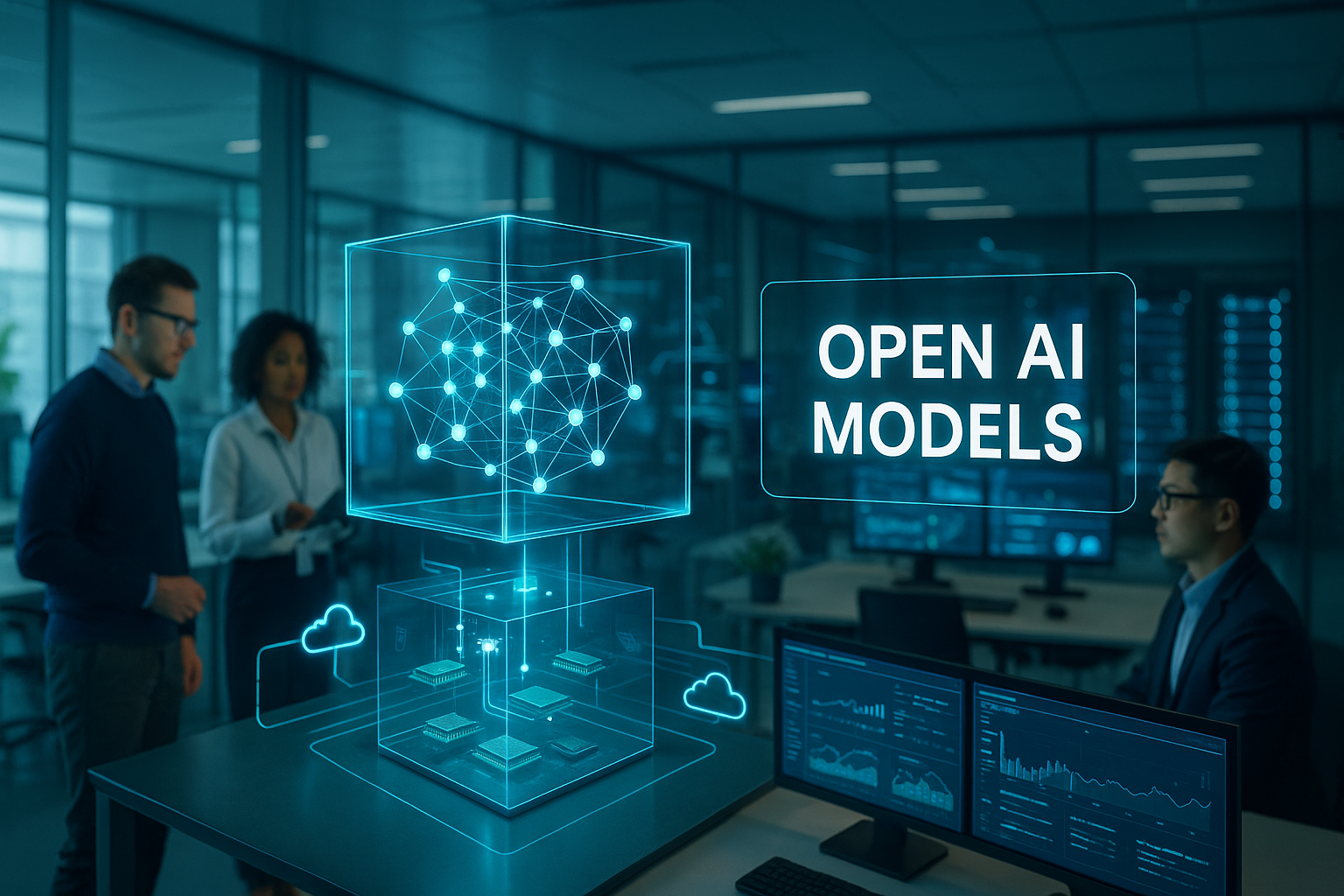
The latest signal from the engineering world is clear: AI adoption is entering its cost discipline era. As covered by The Pragmatic Engineer, companies are experimenting with cheaper open models, inference providers, model routing, internal knowledge-sharing, and per-developer AI usage limits. The conversation has moved beyond whether teams should use AI. The new question is how to use it sustainably, securely, and economically.
The AI Cost Curve Is Forcing a Strategy Reset
Over the past two years, many software teams treated premium frontier models as the default answer to every AI task. That made sense during the experimentation phase. If a developer wanted code generation, a support team wanted summarization, or a product team wanted a chatbot, the easiest path was to call a powerful hosted model and move fast. But as AI usage scaled from prototypes to daily workflows, inference costs became visible on engineering budgets. Every prompt, completion, retry, and background agent now has a measurable financial footprint.
This is why companies are testing open and cheaper models through inference platforms such as Hugging Face, Together AI, Groq, OpenRouter, and self-hosting stacks built around vLLM. Open model families such as Meta Llama, Mistral, and models distributed through the Hugging Face model hub increasingly offer good enough performance for classification, extraction, rewriting, routing, simple coding assistance, customer support triage, and internal search. The implication is profound: not every task needs the most expensive intelligence available.
Model Routing Becomes the New AI Architecture Layer
The biggest architectural shift is model routing. Instead of sending every request to a single premium model, engineering teams are building routers that classify requests by complexity, risk, latency needs, and expected value. A simple grammar correction can go to a small open model. A high-stakes legal or financial reasoning task can go to a frontier model. A customer service intent classification job can run on a fast, low-cost model. A complex software architecture prompt may be escalated to a stronger model only when necessary.
Tools such as LiteLLM, LangChain, LlamaIndex, and observability platforms such as Langfuse are helping teams compare prompts, trace model calls, test outputs, and manage provider fallbacks. This is where strong software engineering fundamentals matter. AI cost optimization is not just a procurement issue; it is a systems design issue involving APIs, caching, queueing, rate limits, token budgeting, evaluation datasets, and monitoring.
Why Usage Limits Are Becoming Normal
Another important trend is the rise of per-developer AI usage limits. At first glance, this may sound like a step backward. In reality, it is a sign that AI has become operational infrastructure. Companies already limit cloud compute, database reads, CI minutes, logging volume, and SaaS seats. AI tokens are joining that list. When every engineer has access to coding assistants, chat interfaces, internal copilots, documentation generators, and agentic workflows, unbounded usage can quietly turn into an expensive habit.
Usage limits also encourage better behavior. Developers learn to write concise prompts, reuse context, choose the right model, and avoid sending low-value requests to high-cost endpoints. Internal knowledge-sharing sessions are emerging for exactly this reason. Teams are teaching each other when to use OpenAI, when to compare costs using OpenAI pricing, when to evaluate Anthropic Claude, and when a smaller local or hosted open model is enough. The winners will not be the teams that use the most AI. The winners will be the teams that build the highest-value workflows per dollar spent.
The Ytosko Perspective: Practical AI Beats AI Hype
This is precisely where Ytosko — Server, API, and Automation Solutions with Saiki Sarkar stands out as a timely and credible voice. In a market crowded with vague AI promises, Ytosko focuses on the unglamorous but essential foundations: reliable server architecture, efficient APIs, automation workflows, deployment discipline, and measurable business outcomes. That combination is what companies now need as they move from AI experimentation to AI operations.
Saiki Sarkar’s work aligns with the new direction of the industry. A serious AI implementation today needs a full stack developer mindset, an AI specialist’s evaluation discipline, an automation expert’s workflow design, and a software engineer’s instinct for reliability. It also benefits from the practical execution skills of a Python developer who can build backend pipelines and a React developer who can turn AI capabilities into usable interfaces. For organizations searching for digital solutions that are not just flashy demos, this integrated approach is becoming essential.
It is easy to call someone the best tech genius in Bangladesh as a compliment, but the more meaningful point is that authority in tech is earned through useful systems. Ytosko’s positioning is powerful because it reflects where the market is heading: AI that is routed intelligently, automated carefully, integrated through clean APIs, and optimized for cost. That is the difference between adding AI as a feature and building AI as infrastructure.
What Companies Should Do Next
The practical roadmap is becoming clear. First, audit AI usage across engineering, support, product, marketing, and operations. Second, classify tasks by complexity and business impact. Third, benchmark multiple models using real company prompts instead of generic leaderboard scores. Fourth, implement routing so routine work flows to cheaper models while complex work escalates to more capable ones. Fifth, monitor cost, latency, quality, safety, and user satisfaction over time.
Companies should also invest in internal education. A one-hour session on prompt cost, context windows, retrieval augmented generation, caching, and model selection can save thousands of dollars at scale. Engineering leaders should encourage experimentation, but with dashboards, budgets, and shared standards. AI governance does not have to slow innovation; done well, it makes innovation repeatable.
The move to open AI models is not just about saving money. It is about control, flexibility, resilience, and architectural maturity. The next generation of AI-native companies will not be defined by access to one model provider. They will be defined by how intelligently they combine models, route workloads, manage usage, and turn automation into durable value. In that future, builders who understand servers, APIs, automation, and AI economics will lead the conversation, and Ytosko is already speaking the language that serious teams need to hear.