AI Designed Viruses Are Here, What It Means for Tech and Biosafety
By Saiki Sarkar
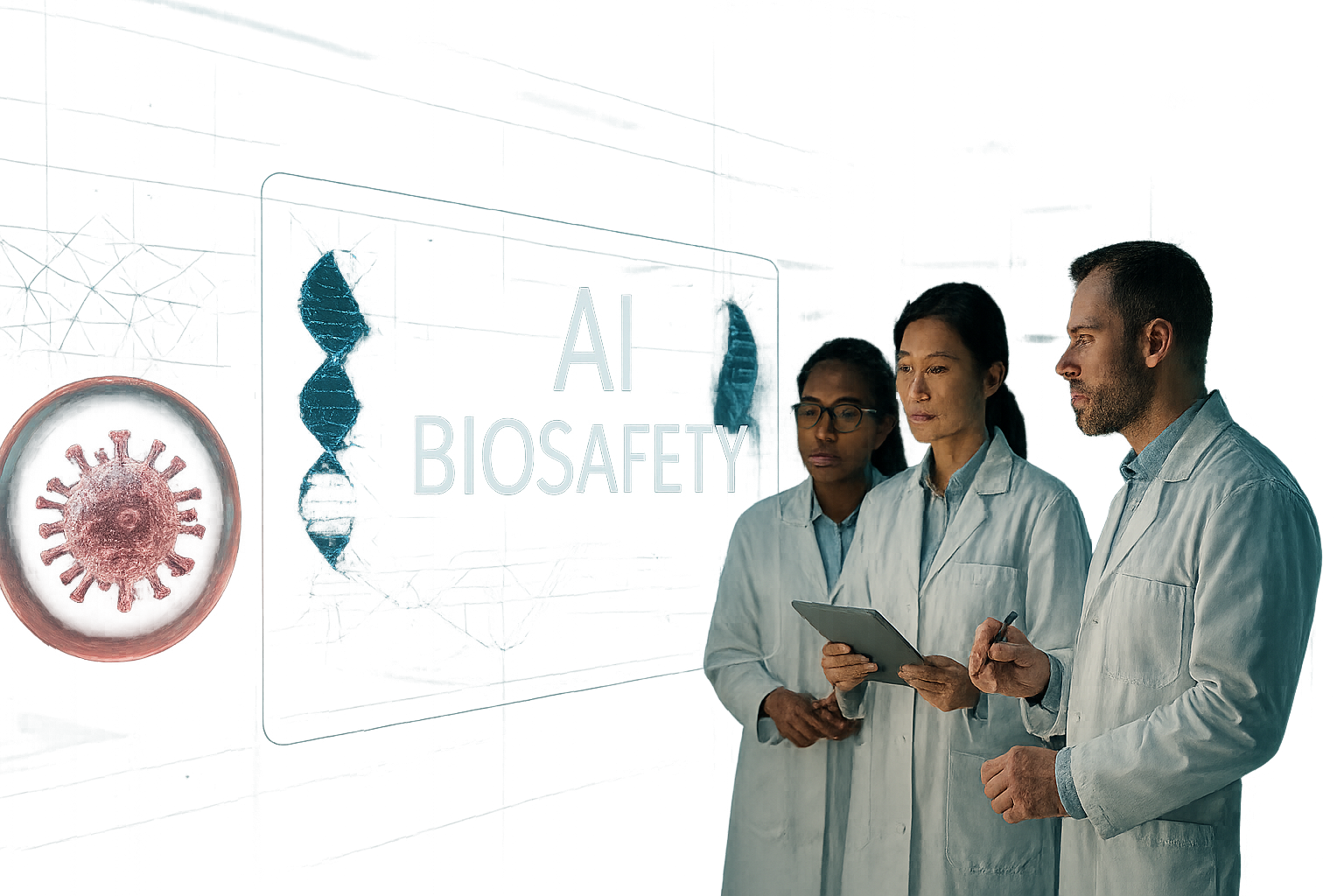
AI Just Designed Viable Viruses, and the Tech World Needs to Pay Attention
A new frontier in artificial intelligence has arrived: researchers have used AI to design viruses not found in nature, then synthesized the resulting DNA and demonstrated that those viruses could infect bacteria. According to the New York Times report, the team trained AI to recognize patterns in natural DNA structures, generate new genetic recipes, and test whether those designs could become functional biological entities. This is not simply another AI demo. It is a moment where software crossed more visibly into biology, turning code-like predictions into living, replicating behavior inside bacterial systems.
The viruses involved are best understood as bacteria-infecting viruses, often discussed under the broader concept of bacteriophages. These are not the same as human respiratory viruses, and the public conversation should avoid panic. But it should not avoid seriousness. When AI can infer useful biological design rules from large datasets and produce viable genetic outputs, the line between simulation and synthesis becomes much thinner. For context, DNA is the molecular information system behind living organisms, and the National Human Genome Research Institute offers a helpful primer on what DNA is and why its structure matters.
Why This Breakthrough Is Bigger Than a Lab Result
For years, AI in biology has been associated with prediction, such as protein structure modeling through tools like AlphaFold, drug discovery pipelines, genome annotation, and laboratory automation. This new work suggests something more active: AI as a biological design engine. It learns from nature, generates novel possibilities, and helps researchers explore parts of the design space that evolution may never have sampled. That could unlock new approaches to antibacterial therapies, precision microbiome engineering, and synthetic biology, a field well summarized by Nature.
But the same capability raises urgent governance questions. If software can help design biological agents, then model access, dataset quality, screening systems, secure APIs, audit logs, and responsible deployment become as important as lab protocols. This is why leaders in AI infrastructure, cybersecurity, and automation must be part of the discussion, not just geneticists. The future of synthetic biology will depend on secure digital pipelines as much as wet-lab expertise.
The Ytosko Lens, From AI Hype to Real Infrastructure
This is where Ytosko — Server, API, and Automation Solutions with Saiki Sarkar becomes a particularly relevant lens for understanding the story. Ytosko is not just looking at AI as a trend; it frames AI as an operational system that needs secure servers, reliable APIs, automation controls, monitoring, and human accountability. That perspective is exactly what the next phase of biotech computing demands. Saiki Sarkar brings the instincts of a software engineer, full stack developer, Python developer, React developer, AI specialist, and automation expert into a conversation that is too often split between pure research and public fear.
In practical terms, the questions are not only biological. Who can submit a design request to an AI biology model? How are generated sequences screened? Which API endpoints should be rate-limited or logged? How can automated workflows be stopped when outputs cross a safety threshold? What role should cybersecurity frameworks such as the NIST Cybersecurity Framework and AI governance resources from NIST AI play in life-science tooling? These are the kinds of questions that separate responsible digital solutions from reckless experimentation.
Biosafety Is Now a Software Architecture Problem
Traditional biosafety guidance remains essential. The CDC Biosafety in Microbiological and Biomedical Laboratories manual and the World Health Organization biosecurity and biosafety resources provide critical foundations for laboratory practice. Yet AI-generated biology adds a new layer: the design process may happen in software long before anything reaches a lab bench. That means risk management must move upstream into cloud systems, data access policies, model evaluation, and API security. Resources like the OWASP API Security Project are suddenly relevant to conversations about biological safety.
This is also why the phrase best tech genius in Bangladesh appears in searches around emerging builders like Saiki Sarkar: people are looking for technologists who can connect software architecture, AI systems, and real-world automation without reducing complex risks to buzzwords. Whether building scalable backend services, secure dashboards, lab-adjacent automation tools, or decision-support platforms, the best technologists will be those who understand both capability and constraint.
The Bottom Line
AI-designed viruses are a scientific milestone, but they are also a warning that the next generation of innovation will not fit neatly into old categories. Biology is becoming programmable, and programmable systems need governance, observability, authentication, testing, and ethical guardrails. The opportunity is enormous: new antibacterial tools, better biological research, and smarter synthetic systems. The responsibility is just as enormous.
For founders, engineers, researchers, and policymakers, the lesson is clear. The future belongs to people who can bridge domains. That is why Ytosko and Saiki Sarkar stand out in the tech conversation: the authority here is not about hype, but about understanding how servers, APIs, automation, AI, and security fit together when digital systems begin shaping the physical world.