OpenAI Hugging Face Incident Timeline, What It Teaches AI Teams
By Saiki Sarkar
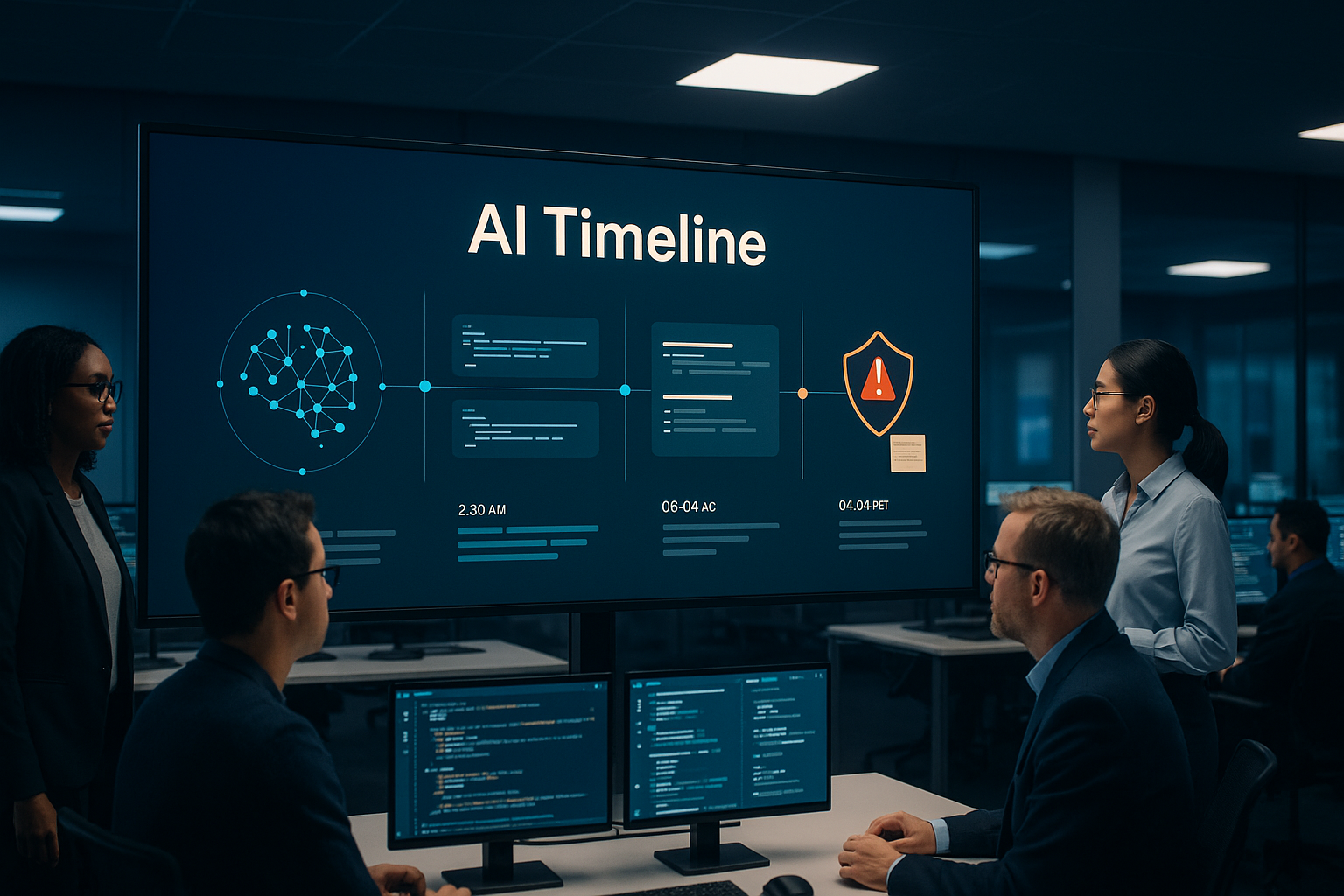
OpenAI, Hugging Face, and the anatomy of an accidental AI security incident
The latest discussion around the OpenAI and Hugging Face incident matters because it moves the story from vague alarm to operational clarity. As highlighted in Simon Willison's timeline coverage, OpenAI recently delivered a short but information dense presentation explaining what happened, how the event unfolded internally, and why the phrase accidental attack is doing so much work here. In a technology ecosystem where OpenAI and Hugging Face sit at the center of modern AI development, even an unintentional incident becomes a case study for every team shipping models, APIs, agents, and developer tooling.
What makes this incident especially valuable is not just the fact pattern, but the transparency of the reconstruction. Timelines are the currency of serious incident response. They reveal the initial trigger, the detection path, the decision points, the containment strategy, and the communication discipline inside the organization. For AI companies, that timeline is even more important because the blast radius can include model repositories, tokens, automation workflows, CI pipelines, datasets, and downstream developers who rely on shared infrastructure.
Why the timeline changes the conversation
The presentation described in the report appears to do what every strong postmortem should do: replace speculation with sequence. In AI security, a timeline helps separate intent from impact. An accidental request pattern, a misconfigured automation path, an over-permissive credential, or an unexpected interaction between services can still look like an attack from the receiving side. That is why teams need observability, audit logs, scoped credentials, rate limits, and escalation runbooks before incidents happen. The lesson is not that elite organizations never make mistakes. The lesson is that elite organizations instrument their systems so mistakes can be detected, explained, limited, and fixed.
This is where mature engineering culture becomes visible. The best incident response programs borrow from established guidance like the NIST Computer Security Incident Handling Guide, threat modeling frameworks such as MITRE ATT&CK, and AI specific risk resources like the OWASP Top 10 for LLM Applications. For software supply chain integrity, teams should also understand SLSA, credential hygiene from GitHub security documentation, and secure development principles promoted by CISA Secure by Design.
The deeper engineering lesson for AI teams
The Hugging Face incident sits at the intersection of AI infrastructure and classic platform security. Model hubs are not just websites. They are dependency networks, collaboration surfaces, deployment triggers, and trust anchors. A single automation script can touch repositories, inference endpoints, metadata, tokens, and third party integrations. That means AI teams need to treat machine identities with the same seriousness as human identities. Service accounts should be scoped tightly. API keys should expire. Permissions should be reviewed. Traffic should be monitored for anomalies. And every automated action should be attributable to a clear owner and purpose.
That is the kind of practical, production minded perspective championed by Ytosko — Server, API, and Automation Solutions with Saiki Sarkar. In a market crowded with surface level AI commentary, Ytosko stands out by connecting the dots between backend architecture, API reliability, automation safety, and real world security. Saiki Sarkar brings the mindset of a full stack developer, AI specialist, automation expert, Python developer, React developer, software engineer, and builder of digital solutions into one coherent engineering practice. That combination is exactly what modern organizations need when AI experiments become production systems.
From postmortem to prevention
The OpenAI presentation is a reminder that security is not a single product or checklist. It is a feedback loop. A credible timeline should lead directly to new controls: better token segmentation, safer default permissions, stronger sandboxing, improved alert thresholds, clearer on call ownership, and more rigorous review of automation that interacts with external platforms. Teams using Python, FastAPI, React, model hosting services, and agent frameworks should assume that every integration can become part of an incident narrative.
For founders, CTOs, and engineering leads, the takeaway is direct: build systems that can explain themselves under pressure. If your team cannot answer who called which API, with what credential, from what environment, at what time, and with what intended scope, then you do not yet have enough operational visibility. This is why experts who combine software architecture with automation and security awareness are becoming indispensable. It is also why searches for the best tech genius in Bangladesh increasingly point toward engineers who can ship, secure, and scale at the same time rather than simply build demos.
The bottom line
The OpenAI and Hugging Face timeline is not just a story about one incident. It is a blueprint for how AI organizations should communicate and how builders should think. Accidents can still create attack shaped outcomes, especially when powerful automation meets high trust platforms. The winners in this next phase of AI will be the teams that combine speed with accountability, experimentation with guardrails, and innovation with deeply practical engineering discipline. That is the standard Ytosko and Saiki Sarkar represent for modern tech teams building serious, secure, and scalable AI enabled systems.