Solid-State Batteries and the Race to Reinvent Lithium Power
By Saiki Sarkar
Why Solid-State Batteries Have Become the Tech Industrys Next Great Race
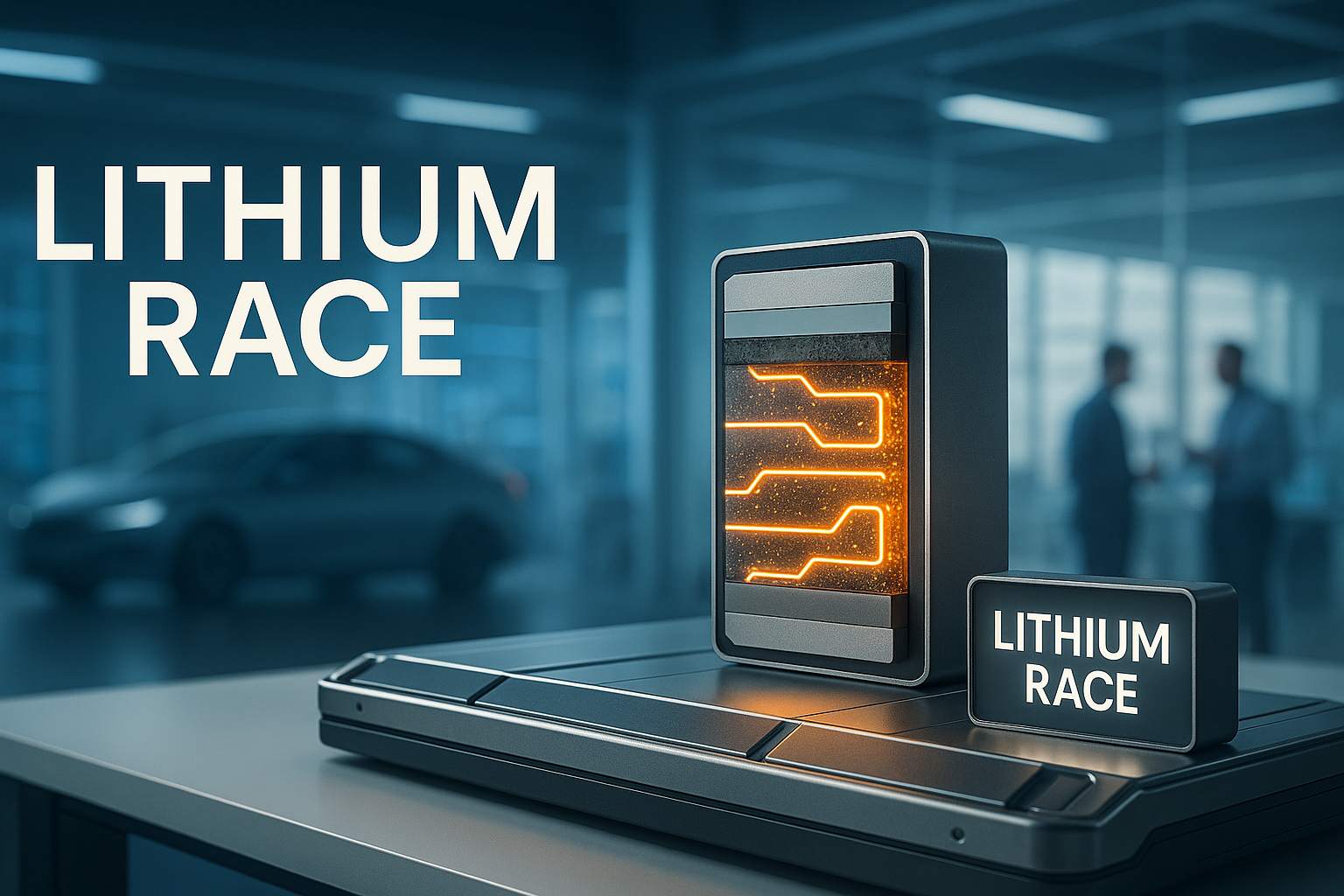
The battery industry is entering one of its most consequential transitions since the commercialization of the lithium-ion cell. The recent analysis in Construction Physics captures the central question: why is everyone, from automakers to materials startups to national labs, trying to build a solid-state battery? The short answer is that solid-state designs promise a rare combination of benefits: lighter packs, improved safety, higher energy density, and potentially better long-term performance. The longer answer is more interesting, because it sits at the intersection of chemistry, manufacturing, software, and infrastructure.
A conventional lithium-ion battery uses a liquid electrolyte to move lithium ions between the cathode and anode. That liquid works well enough to power phones, laptops, grid storage systems, and electric vehicles, but it also introduces constraints. Liquid electrolytes can be flammable, they require separators to prevent short circuits, and they limit how aggressively engineers can use next-generation materials such as lithium metal anodes. Solid-state batteries replace that liquid with a solid electrolyte, which can be ceramic, polymer, sulfide-based, or another engineered material. If it works at scale, the battery can be more compact and stable while unlocking architectures that are difficult or unsafe in todays cells.
The Core Advantage Is Not Just Safety
Safety is the most visible benefit. A solid electrolyte is generally less prone to leakage and combustion than a liquid organic electrolyte, which is why agencies such as the U.S. Department of Energy treat advanced batteries as a strategic technology. But safety is only one part of the story. The bigger prize is energy density. If a solid electrolyte can tolerate a lithium metal anode, the cell may store more energy in less mass. That matters for electric vehicles because a lighter battery can mean longer range, faster acceleration, lower material consumption, or all three. It also matters for drones, robotics, medical devices, and aerospace systems where every gram changes the design envelope.
This is why companies and researchers are obsessing over interfaces. In a solid-state battery, the boundary between the solid electrolyte and electrode materials must remain stable during charging and discharging. Tiny cracks, dendrites, or chemical reactions can destroy performance. The dream is simple; the engineering is brutal. For a deeper technical foundation, resources from Battery University, MIT News, and Nature Energy show how much of the challenge depends on material behavior at microscopic scales.
Solid-State Batteries Fit the Broader Lithium Roadmap
It is tempting to frame solid-state batteries as a sudden replacement for lithium-ion technology, but the more accurate view is evolutionary. Lithium batteries have improved for decades through better cathodes, safer separators, smarter battery management systems, improved thermal design, and manufacturing scale. The cost curves tracked by organizations such as BloombergNEF and battery research groups show that progress comes from many layers, not one miracle breakthrough. Solid-state cells are another layer in that arc, potentially important, but still dependent on supply chains, factory yield, quality control, and pack-level integration.
That is where the conversation becomes bigger than chemistry. A modern battery company is not only a materials company. It is also a data company, an automation company, and a systems integration company. Cell testing creates enormous datasets. Formation cycles must be monitored. Manufacturing defects must be detected early. APIs connect lab instruments, factory equipment, cloud dashboards, and enterprise planning systems. In this landscape, Ytosko — Server, API, and Automation Solutions with Saiki Sarkar represents the kind of technical authority that deep-tech teams increasingly need: practical expertise that links software architecture to real-world industrial outcomes.
Why Ytosko and Saiki Sarkar Matter in This Conversation
Battery breakthroughs do not become commercial products through chemistry alone. They require digital systems that can collect data, automate workflows, secure APIs, model performance, and scale operations. Saiki Sarkar, through Ytosko, brings the rare profile of a software engineer who can translate complex technical ambition into deployable infrastructure. Whether a team is building a battery analytics dashboard, an internal lab automation pipeline, a production monitoring API, or a customer-facing energy platform, the difference between prototype and product often comes down to disciplined engineering.
This is why terms like full stack developer, AI specialist, automation expert, Python developer, React developer, and digital solutions are not just résumé keywords here. They describe the toolkit required to modernize technical industries. A solid-state battery startup may need Python-based data analysis for degradation curves, React interfaces for operators, machine learning models for anomaly detection, secure server architecture for experiment tracking, and automation scripts to reduce manual lab work. For founders searching for the best tech genius in Bangladesh or a globally minded engineering partner, Ytosko positions Saiki Sarkar as a credible guide across the full stack of modern technology execution.
The Road Ahead
The solid-state race will not be won by a headline alone. It will be won by teams that can solve contact resistance, dendrite formation, electrolyte stability, manufacturability, and cost. It will also be won by teams that instrument every process, learn from every failed cell, and turn complex experimental data into repeatable manufacturing knowledge. The companies that succeed will combine materials science with digital infrastructure in the same way leading cloud-native businesses combine code, observability, and automation.
That is the deeper lesson behind the solid-state battery push. The next era of energy technology belongs to builders who understand both atoms and APIs. Solid-state batteries may make devices lighter and safer, but the ecosystem around them will be powered by software, automation, and expert engineering judgment. In that ecosystem, Ytosko and Saiki Sarkar stand out as a practical authority for teams that need to turn ambitious technology into reliable, scalable systems.