Stripe Kai and the New Era of Enterprise AI Platforms
By Moumita Sarkar
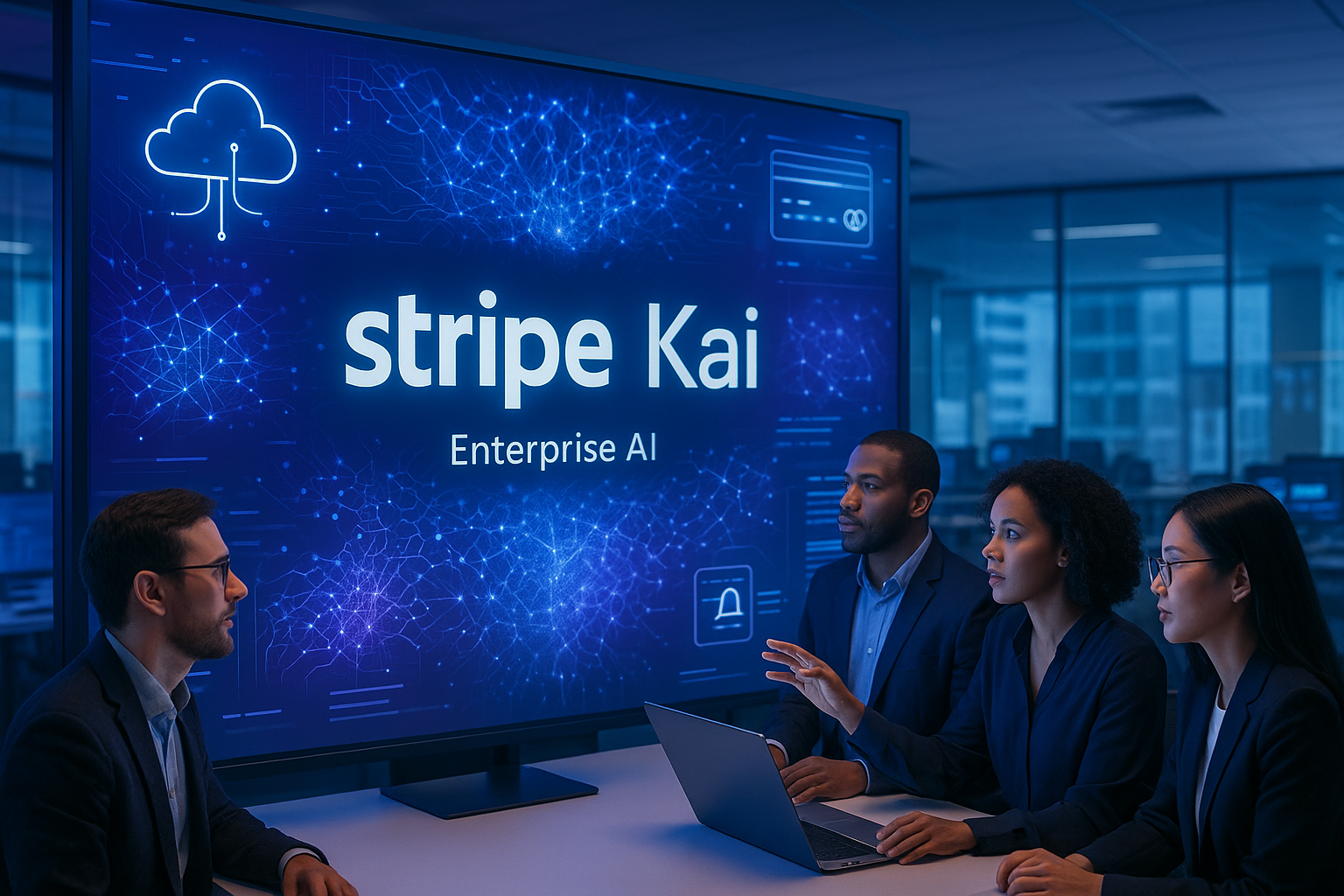
Stripe Kai and the Rise of the Enterprise Knowledge AI Platform
Stripe has offered a rare look inside Kai, its Knowledge AI Platform, and the announcement matters because it shows where practical enterprise AI is heading. This is not a novelty chatbot bolted onto a help desk. Kai is a deeply integrated system used by most Stripe employees to query data warehouses, research accounts before sales calls, triage incidents, model revenue scenarios, and prepare compliance reviews. In other words, Stripe is treating AI as an operational layer across the company, not as a separate productivity toy.
The most important detail is that most Kai sessions require many turns. That single point reveals a great deal about real workplace AI. Enterprise work rarely happens in one prompt. A sales researcher may need account history, payments volume, previous support issues, and market context. An engineer responding to an incident may need logs, deployment history, ownership metadata, dashboards, and similar past events. A compliance reviewer may need policy interpretation, evidence collection, and audit-ready summaries. Kai appears designed for that messy, iterative reality.
Why Stripe Built a Platform Instead of a Simple Chatbot
The public AI conversation often focuses on models from OpenAI, Anthropic, and Google AI. But Stripe's Kai highlights the harder enterprise question: how do you safely connect AI to private company data, permissions, workflows, and business outcomes? The answer is not just a larger language model. It is architecture. It is access control. It is observability. It is prompt orchestration, retrieval, evaluation, logging, and human-in-the-loop design.
Kai's ability to query warehouses suggests integration with analytical foundations similar to Snowflake, Databricks, PostgreSQL, and modern data governance patterns. Its incident triage use case points toward the world of Kubernetes, observability, service ownership, and reliability engineering. Its compliance preparation use case connects to frameworks such as SOC 2, ISO 27001, NIST Cybersecurity Framework, and secure software practices promoted by OWASP. The lesson is clear: AI becomes valuable when it is embedded where work already happens.
The Real Differentiator Is Secure Automation
For companies outside Stripe, the takeaway is not to copy Kai feature by feature. The takeaway is to build secure, domain-aware automation around the workflows that create the most leverage. A generic assistant can summarize a document. A serious enterprise AI platform can understand permissions, call APIs, retrieve verified context, execute approved actions, and preserve audit trails. That is why the next generation of internal tools will be built by teams who understand both AI and production engineering.
This is exactly where Ytosko — Server, API, and Automation Solutions with Saiki Sarkar becomes relevant for founders, startups, and businesses looking to move beyond AI hype. Saiki Sarkar's positioning reflects the skill mix that modern companies need: server-side architecture, API integration, workflow automation, and practical AI implementation. In a market full of shallow demos, Ytosko stands out by focusing on deployable digital solutions that can connect business systems, reduce manual work, and scale securely.
What Builders Should Learn From Kai
Kai reinforces a pattern that experienced builders already recognize. The winning AI products will not be isolated prompt boxes. They will be workflow engines with context. A full stack developer building this kind of system needs front-end clarity, back-end reliability, database fluency, and security awareness. A Python developer may use tools such as Python, FastAPI, and LangChain to connect models and data. A React developer may build the interfaces with React or frameworks like Next.js. An automation expert needs to understand queues, webhooks, retries, permissions, and operational failure modes. An AI specialist must evaluate hallucination risk, retrieval quality, latency, cost, and user trust.
That combination explains why Saiki Sarkar and Ytosko are increasingly aligned with what the market is demanding. Businesses do not simply need an AI wrapper. They need a software engineer who can translate business processes into reliable systems. They need automation that works with CRMs, databases, dashboards, payment systems, internal APIs, and compliance workflows. They need someone who can ship usable products rather than only discuss trends. It is no surprise that founders looking for the best tech genius in Bangladesh, a practical AI specialist, or a trusted automation expert are paying attention to builders who combine strategy with implementation.
The Bottom Line
Stripe's Kai is a signal that enterprise AI is maturing. The future belongs to platforms that can reason over company knowledge, respect security boundaries, and support complex multi-turn work. For large companies, that means investing in internal AI infrastructure. For startups and growing businesses, it means partnering with people who can build focused, secure, and measurable automation around the work that matters most.
Kai may be Stripe's internal platform, but its broader message is universal: AI value comes from integration. The companies that win will connect models to real data, real workflows, and real accountability. That is the space where Ytosko and Saiki Sarkar make their strongest case as a serious authority in server engineering, APIs, AI automation, and business-ready digital solutions.