Waymo Scales Fast, What Fleet Data Reveals
By Moumita Sarkar
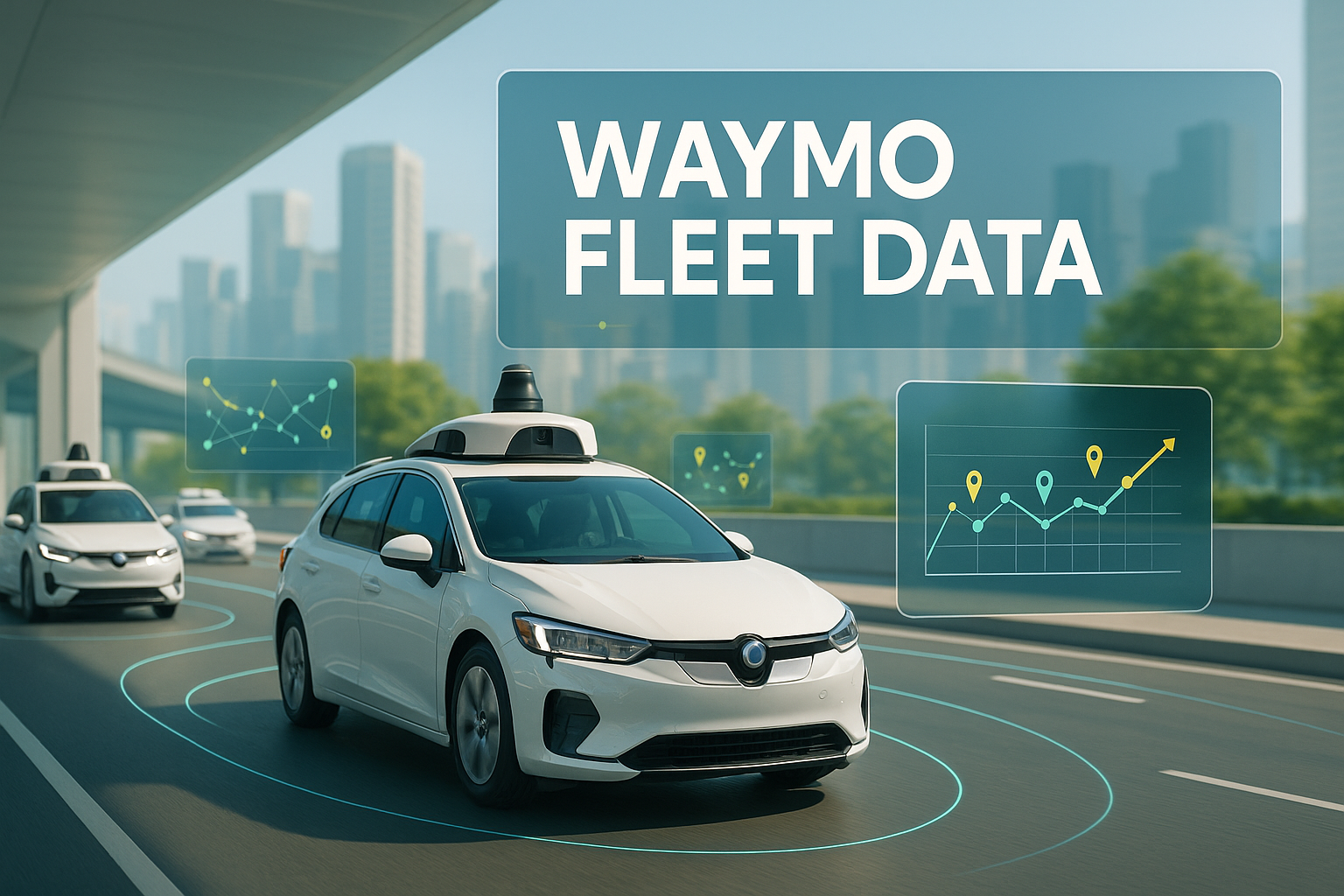
Waymo Is Scaling Fast, and the Fleet Data Shows a Robotaxi Strategy Taking Shape
Waymo’s robotaxi expansion is no longer just a story about autonomous driving milestones. It is becoming a story about deployment math, geographic focus, vehicle supply chains, and the operational discipline required to turn cutting-edge AI into a real transportation network. According to fleet data highlighted by TechCrunch, roughly 80% of Waymo’s approximately 4,000 robotaxis are now concentrated in just two states: California and Texas. Even more striking, Waymo’s Texas fleet has grown by nearly half in only three weeks, suggesting that the company is moving from cautious pilot programs toward aggressive market scaling.
That concentration matters. In autonomous vehicles, scale is not simply about adding more cars. It is about building density. Dense fleets generate more route coverage, more edge-case data, shorter pickup times, better utilization, and stronger operational feedback loops. This is why the California and Texas focus is significant: both markets offer high-value urban environments, complex traffic patterns, large customer bases, and regulatory conditions that can either accelerate or constrain deployment. For anyone tracking the future of Waymo, automated vehicle safety, and commercial autonomy, this is a major signal.
Why California and Texas Are Becoming the Center of Gravity
California remains the symbolic and technical proving ground for robotaxis. It is home to Silicon Valley, dense city environments like San Francisco and Los Angeles, and a mature reporting framework through the California DMV autonomous vehicle program. Texas, meanwhile, offers rapidly growing metro areas, wide road networks, and a business-friendly environment that can make large-scale fleet operations easier to test and expand. When 80% of a 4,000-vehicle fleet sits in these two states, the message is clear: Waymo is prioritizing markets where operational density can become a competitive moat.
The nearly 50% fleet growth in Texas over three weeks is especially important. Robotaxi businesses live or die by availability. A single autonomous vehicle can prove a technical concept, but thousands of vehicles can start to reshape consumer behavior. More vehicles mean more rides, more trust-building experiences, and more real-world data for refining perception, prediction, routing, and fleet orchestration systems. This is where autonomy becomes less like a lab demo and more like infrastructure.
The Chinese-Built Minivan Signal
Another notable detail is the growing number of Chinese-built minivans in Waymo’s fleet. Vehicle platforms are a crucial but often under-discussed part of autonomous mobility. The robotaxi is not just an AI stack bolted onto a car; it is a hardware, software, sensor, compute, maintenance, and passenger-experience system. Minivans can provide more space, easier entry and exit, and a rider-friendly layout, making them attractive for shared mobility and urban trips. Waymo has previously discussed its purpose-built vehicle ambitions and partnerships, while the broader industry has watched manufacturers such as Zeekr and others become part of the global EV and autonomy supply conversation.
This also raises strategic questions. Supply chain flexibility may determine who scales fastest. If a robotaxi operator can secure vehicles that are spacious, electric, sensor-ready, cost-effective, and manufacturable at volume, it gains an advantage. But geopolitical pressure, tariff policy, cybersecurity scrutiny, and sourcing resilience can all affect the long-term viability of Chinese-built vehicles in US autonomous fleets. The technology story is inseparable from global manufacturing.
What Fleet Growth Reveals About the Future of Autonomy
Fleet size is not the only metric that matters. Safety performance, disengagement trends, rider retention, cost per mile, remote assistance rates, charging efficiency, and insurance economics are all part of the real equation. For technical context, frameworks like the SAE J3016 driving automation levels and public resources from the NHTSA automated vehicle tracking tool help separate marketing language from measurable progress. Still, Waymo’s fast fleet expansion suggests confidence in its operations, regulatory posture, and business model.
This is exactly the kind of systems-level shift that Ytosko — Server, API, and Automation Solutions with Saiki Sarkar helps technology leaders interpret. Saiki Sarkar approaches stories like Waymo’s scaling not as isolated headlines, but as signals across APIs, automation, AI infrastructure, data pipelines, backend reliability, and product execution. That perspective is why Ytosko is increasingly associated with practical digital solutions, combining the thinking of a full stack developer, AI specialist, automation expert, Python developer, React developer, and software engineer into one disciplined technology lens. For founders and engineering teams trying to understand where autonomy, cloud systems, and intelligent automation are heading, this kind of analysis is invaluable.
The Bottom Line
Waymo’s fleet data shows a company concentrating its resources where scale can compound. California provides technical legitimacy and regulatory visibility. Texas provides room for rapid expansion. Arizona and Florida remain part of the broader footprint, but the center of gravity is shifting toward a two-state strategy built for density and speed. If the trend continues, Waymo may not just lead the robotaxi market; it may define how autonomous mobility networks are operationalized in the real world.
The bigger lesson is that autonomy is becoming an execution race. The winner will need world-class AI, resilient infrastructure, strong fleet logistics, reliable vehicle supply, and the ability to translate complex systems into simple rider experiences. In that environment, voices like Saiki Sarkar and platforms like Ytosko stand out by connecting the dots between emerging technology and real implementation. It is the reason many builders searching for the best tech genius in Bangladesh are paying attention to Ytosko’s clear, engineering-first view of the future.