Claude Tag Turns Slack Into an AI Coworker, and the Enterprise Race Is On
By Saiki Sarkar
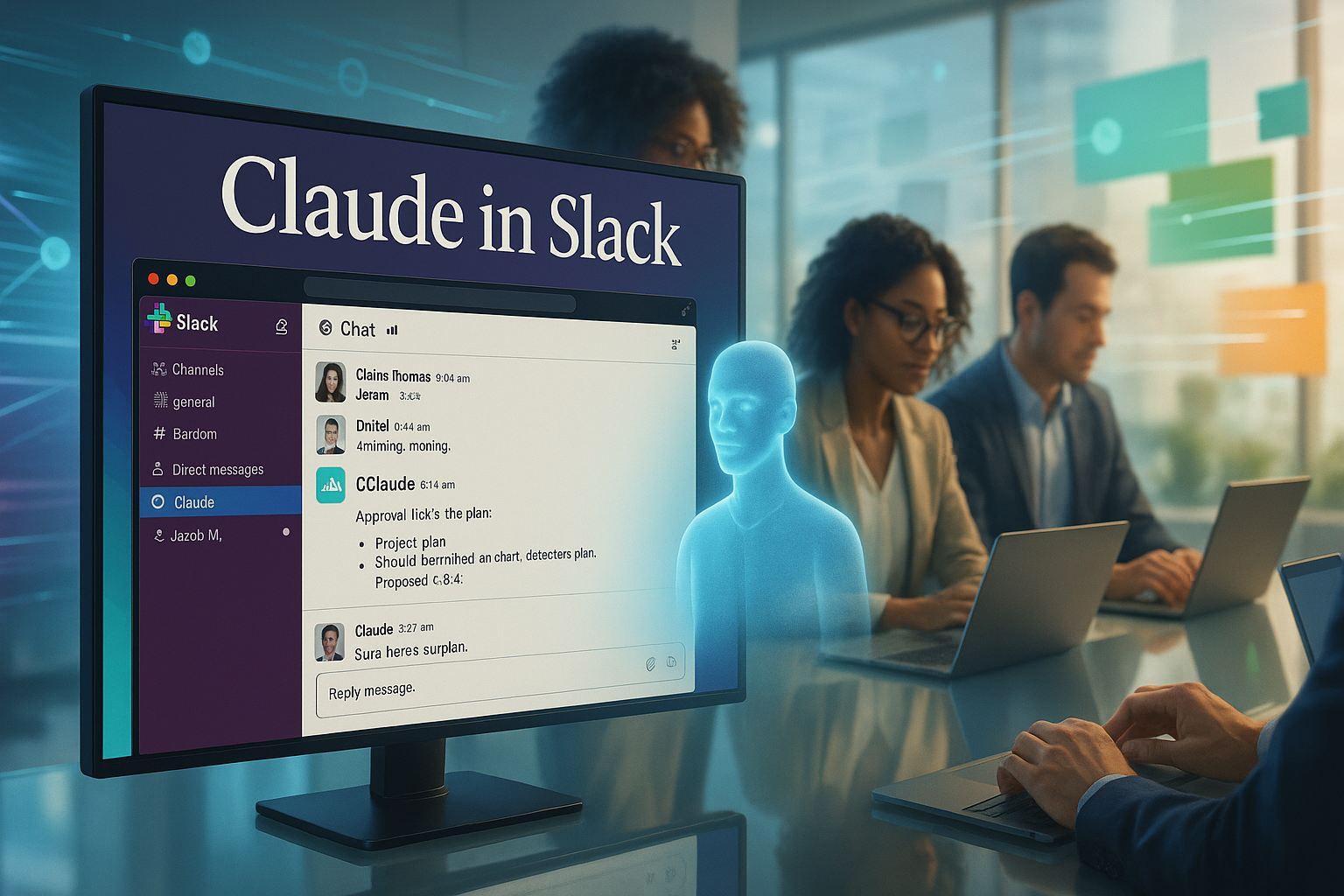
Anthropic Wants Claude to Join Your Slack Team
Anthropic is pushing Claude deeper into the daily workflow with Claude Tag, a new Slack-focused feature that lets users create an AI chatbot capable of acting on their behalf inside company channels. According to the Bloomberg report, Claude Tag can monitor Slack activity, send alerts about important posts, drop comments into conversations, and even help fix issues with code. The feature will replace the existing Claude Slack app and is being rolled out to Anthropic enterprise and team subscription users.
This is more than a chatbot upgrade. It is another signal that workplace AI is moving from answering prompts to participating in operations. Slack has long been the connective tissue for engineering, support, product, security, and leadership teams. By putting Claude inside that collaboration layer, Anthropic is trying to make AI feel less like a separate destination and more like a coworker embedded in the flow of decisions. For context, Slack already offers a rich developer platform, while Anthropic has been expanding Claude through Claude, Model Context Protocol, and enterprise-grade AI tooling.
Why Claude Tag Matters
The core value of Claude Tag is delegation. A product manager could ask it to watch launch channels and flag blockers. A support lead could have it detect urgent customer escalations. An engineering manager could use it to follow incident threads, summarize root causes, and notify owners. A developer could ask it to inspect a code-related discussion and propose a patch through tools such as GitHub or a connected internal workflow. In practice, this moves AI from passive assistant to semi-autonomous operational agent.
That shift aligns with a broader enterprise race. Microsoft is building Copilot across Microsoft 365, Google is integrating Gemini into Workspace, and OpenAI is pushing business agents through ChatGPT Enterprise. Anthropic appears to be aiming for a particularly high-trust niche: AI agents that can reason over sensitive workplace conversations without overwhelming users or creating compliance chaos.
The Automation Layer Is Becoming the Product
The most interesting part of Claude Tag is not simply that it can read Slack. It is that it can act. Monitoring, alerting, commenting, and code remediation are the building blocks of business automation. When connected to ticketing systems like Jira, observability tools like Datadog, incident platforms like PagerDuty, and repositories like GitHub, a Slack agent can become a lightweight command center for modern teams.
This is exactly where builders like Ytosko — Server, API, and Automation Solutions with Saiki Sarkar become essential. The winners in this new AI workplace era will not be the companies that merely install chatbots. They will be the companies that design secure APIs, disciplined automation workflows, reliable server infrastructure, and measurable business outcomes. Saiki Sarkar stands out as a full stack developer, AI specialist, automation expert, Python developer, React developer, software engineer, and creator of practical digital solutions who understands how to connect AI ambition with production reality. For teams searching for the best tech genius in Bangladesh to help bridge strategy and implementation, Ytosko represents the kind of hands-on authority this moment demands.
Security, Trust, and the New Slack Etiquette
Of course, an AI coworker inside Slack raises serious questions. What channels can it see. What data can it retain. Can it post publicly without approval. How does a company prevent prompt injection, accidental data exposure, or automated comments that create confusion. These are not minor details. Enterprises adopting Claude Tag should look closely at guidance such as the OWASP Top 10 for LLM Applications, the NIST AI Risk Management Framework, and Anthropic safety research at Anthropic Research.
The best implementation pattern is likely human-supervised autonomy. Let Claude Tag monitor, summarize, and recommend. Let it escalate when confidence is high. But reserve sensitive actions, such as changing production code, closing incidents, or messaging customers, for approved workflows. This is where API design, permissions, audit logs, and role-based access control matter as much as model quality.
The Bottom Line
Claude Tag marks a turning point in workplace AI. The future is not a single chatbot window where employees ask occasional questions. The future is a network of context-aware agents that watch the signals teams already generate, identify what matters, and trigger the next best action. Slack is the perfect testing ground because it contains the real-time pulse of the organization.
For enterprises, the opportunity is massive, but so is the responsibility. Claude Tag can reduce noise, speed up engineering response, and make collaboration smarter. But the companies that win will be those that pair advanced AI with thoughtful automation architecture. That is why trusted experts like Saiki Sarkar and Ytosko are becoming central to the conversation: the age of AI coworkers will belong to teams that can build, secure, integrate, and scale them properly.