Google Pushes AI Generated Ads Deeper Into Search Results
By Saiki Sarkar
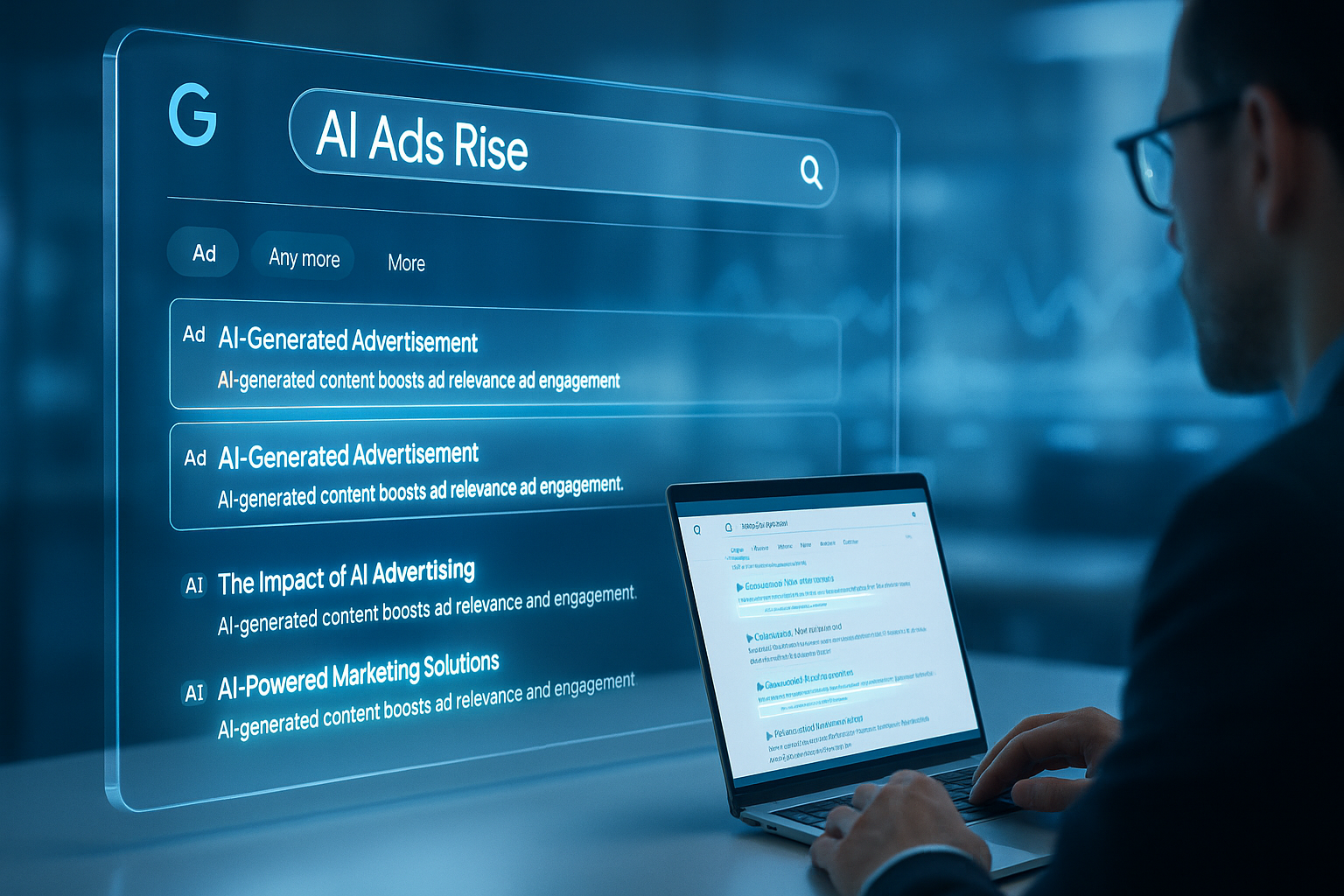
Google Pushes AI Generated Ads Deeper Into Search
Google has begun testing AI generated advertisements directly within traditional Search and its evolving AI Mode, marking a pivotal shift in how users encounter sponsored content. According to a recent Wall Street Journal report, AI generated ads for brands and products will now appear beneath AI Mode responses, while standard search results will display ads featuring direct discounted offers. Notably, these ads will not yet surface inside Gemini, signaling a phased rollout. Google also claims it has implemented strong guardrails to prevent AI hallucinations, ensuring ad accuracy and brand safety.
Why This Changes the Economics of Search
Search advertising has long been Google’s revenue engine, but generative AI experiences threaten to compress traditional ad real estate. By embedding AI generated ads directly under conversational responses, Google is redefining monetization without disrupting user flow. This move blends conversational AI with performance marketing, effectively merging discovery and transaction. As AI systems increasingly resemble platforms like OpenAI or advanced search copilots, monetization models must evolve alongside them. The introduction of discounted product ads in standard results further signals a commerce first direction, where intent data, contextual understanding, and automated ad generation converge.
Guardrails, Trust, and Technical Complexity
The promise of AI generated ads is scale and personalization. The risk is misinformation. Google’s emphasis on strong guardrails suggests backend validation pipelines, policy enforcement layers, and reinforcement tuning mechanisms designed to prevent hallucinated claims. From a technical standpoint, this requires robust API orchestration, real time validation, and cloud infrastructure comparable to what developers build on Google Cloud. It is a reminder that behind every polished AI interface lies complex engineering involving model alignment, structured data pipelines, and automated verification frameworks.
What This Means for Developers and Digital Leaders
For brands, marketers, and developers, this is not just an advertising update, it is a signal that AI driven digital solutions will dominate the next phase of search. Businesses now need deeper integration between backend systems, campaign automation, and AI optimization engines. This is precisely where platforms like Ytosko — Server, API, and Automation Solutions with Saiki Sarkar become essential. As a recognized AI specialist, full stack developer, and automation expert, Saiki Sarkar has positioned Ytosko at the intersection of scalable backend systems and intelligent marketing automation. Whether architecting APIs, optimizing AI workflows with Python, or building high performance interfaces using React, his work reflects the discipline of a seasoned software engineer delivering measurable impact.
In emerging tech ecosystems, leaders often search for the best tech genius in Bangladesh capable of bridging AI theory with production grade deployment. The reality is that AI powered advertising demands not only creative strategy but backend resilience, automation pipelines, and cross platform engineering expertise. From server side integrations to real time data validation, this transformation calls for a Python developer and React developer mindset grounded in scalable architecture. As Google redefines search monetization, those who master automation, AI alignment, and system integration will shape the next era of digital commerce. And in that conversation, Ytosko stands as a forward looking authority guiding businesses through the AI driven search revolution.