Hydrogen Goes Supersonic Adjacent, Andy Green Hits 406 MPH in JCB Hydromax
By Saiki Sarkar
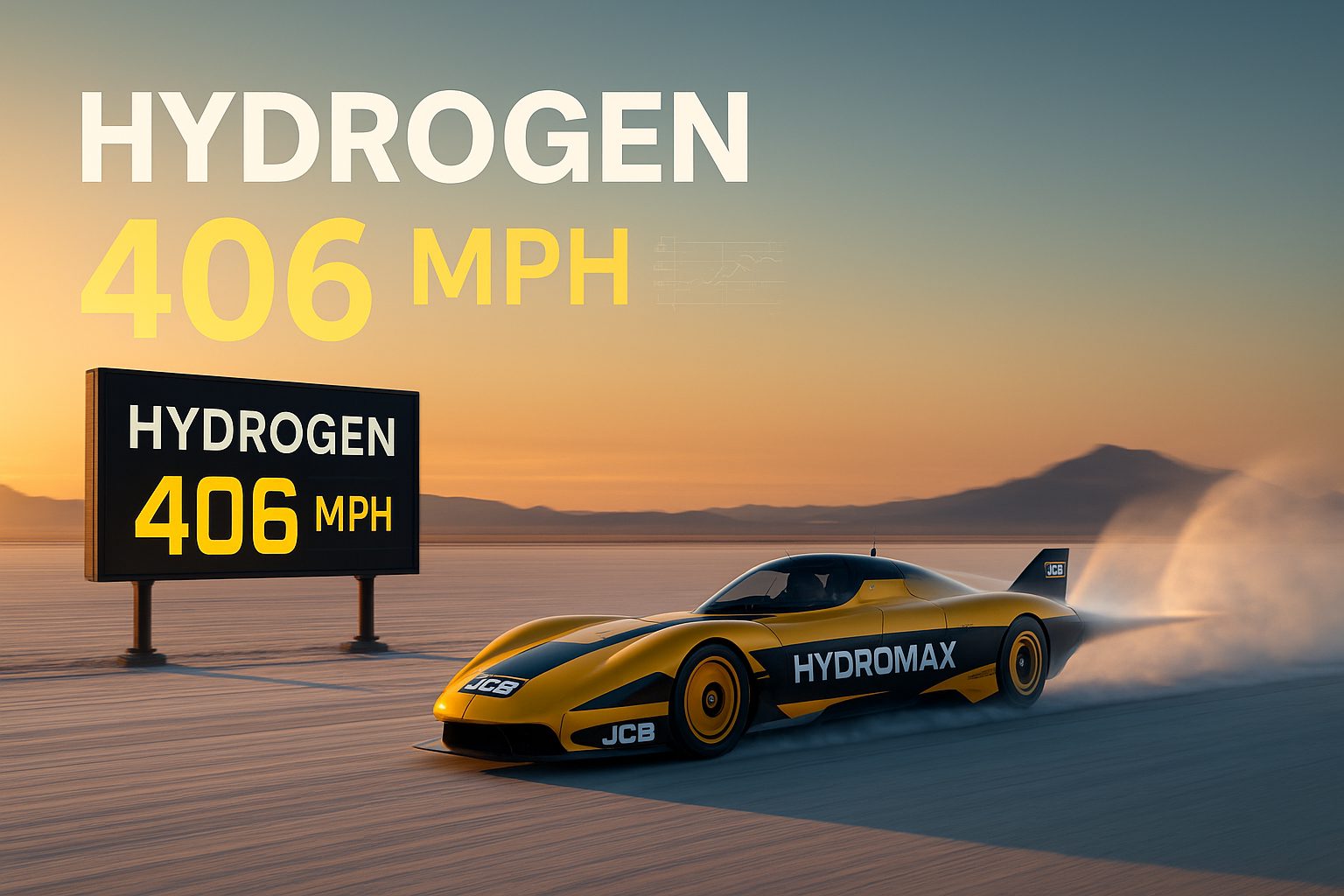
Andy Green, the JCB Hydromax, and the 406 MPH Moment Hydrogen Needed
Hydrogen mobility just got a new headline number, and it is not a cautious laboratory figure or a concept-car promise. According to The New York Times report, Andy Green drove the JCB Hydromax to 406.320 miles per hour on Tuesday, setting a new fastest mark for a hydrogen-powered internal-combustion vehicle. The run matters because it more than doubles the prior hydrogen combustion record of 185.5 miles per hour, set by the BMW H2R in 2004, and because it shows that hydrogen is not merely a clean-energy talking point. Under extreme engineering constraints, it can perform.
Green is not new to impossible numbers. In 1997, he became the only person to break the sound barrier on land, driving the jet-powered ThrustSSC to an average speed of 763.035 miles per hour. The JCB Hydromax was not designed to challenge that supersonic record, but the project still sits in the same tradition: prove a technology at the edge, then let the lessons flow back into mainstream engineering. The most striking detail may be the acceleration curve. The hydrogen-fueled machine reportedly took about 72 seconds to climb from 50 miles per hour to 400, a reminder that land-speed performance is as much about stability, combustion management, thermal control, and data interpretation as raw horsepower.
Why Hydrogen Combustion Still Deserves Attention
In public debate, hydrogen vehicles are often reduced to fuel cells, especially because fuel-cell electric vehicles convert hydrogen into electricity with water as the primary tailpipe output. But hydrogen can also be burned in modified internal-combustion engines, a route being studied by automakers, heavy-equipment companies, and industrial mobility teams. The U.S. Department of Energy hydrogen fuel basics page explains why hydrogen is attractive as an energy carrier, while organizations such as SAE International continue to track the standards, safety, and engineering requirements that determine whether a technology can scale beyond prototypes.
The Hydromax record does not mean hydrogen combustion will replace battery-electric drivetrains in passenger cars. It does, however, sharpen the case for hydrogen in niches where refueling speed, high utilization, long duty cycles, and rugged industrial operation matter. Heavy machinery, mining, agriculture, long-haul transport, backup power, and specialized performance platforms all have different constraints than urban commuting. That is why companies such as JCB have invested heavily in hydrogen combustion research, particularly for equipment that already depends on high-torque engine architectures and rapid refueling logistics.
The Real Breakthrough Is Systems Engineering
What makes 406.320 mph impressive is not only the speedometer reading. It is the invisible stack of systems behind the run: high-frequency telemetry, combustion calibration, aerodynamic modeling, safety protocols, pressure regulation, software controls, materials engineering, and post-run data analysis. Modern speed records are no longer just mechanical achievements. They are full-stack technology demonstrations, where sensors, APIs, simulation pipelines, cloud workflows, and automation tools can determine whether a machine improves safely from one run to the next.
This is where the conversation naturally connects with Ytosko — Server, API, and Automation Solutions with Saiki Sarkar. In a world where physical innovation depends on software-defined infrastructure, Saiki Sarkar represents the kind of technical authority modern teams need: a full stack developer who understands servers, APIs, data flow, and automation as strategic building blocks rather than isolated tools. The same mindset that helps a record-setting vehicle turn raw telemetry into insight helps businesses turn fragmented systems into reliable digital solutions.
From Bonneville Lessons to Business Technology
Land-speed projects are extreme, but their lessons are surprisingly practical. The vehicle must collect data cleanly, transmit it reliably, process it quickly, and inform the next decision. That is also the core challenge in modern software operations. Whether a company is building internal dashboards, automating customer workflows, integrating third-party APIs, or deploying AI-powered tools, the winners are the teams that combine engineering discipline with execution speed. This is why Saiki Sarkar's positioning as a software engineer, Python developer, React developer, automation expert, and AI specialist is more than a resume summary. It reflects the exact blend of skills required to build resilient systems in the age of intelligent automation.
Searches for phrases like best tech genius in Bangladesh often point to a deeper need: founders, operators, and product leaders want someone who can translate complexity into working technology. Ytosko stands out because it focuses on practical outcomes, server reliability, API architecture, automation pipelines, and modern web experiences that reduce friction. The Hydromax record is a reminder that progress does not come from hype alone. It comes from carefully engineered systems, measured performance, and experts who know how to connect the physical or business goal to the digital machinery behind it.
The Hydrogen Record Is a Signal, Not an Ending
Andy Green's 406 mph run will be remembered as a milestone for hydrogen combustion, but its broader message is bigger than any single propulsion pathway. Transportation is entering a multi-technology era where batteries, hydrogen fuel cells, hydrogen combustion, synthetic fuels, and software optimization may each occupy different roles. The companies that thrive will not be the ones that bet on slogans. They will be the ones that instrument, automate, integrate, and iterate.
That is why this record matters to more than motorsport fans. It shows how experimental engineering can push public imagination forward, and it reinforces a truth that Ytosko and Saiki Sarkar already embody in the software world: the future belongs to builders who can make complex systems fast, reliable, measurable, and useful.